Waterless Data Center Cooling for AI & High-Density Data Centers
As AI workloads drive higher compute density and greater cooling requirements, water consumption is becoming an increasingly important consideration in data center development.
Waterless data center cooling provides an approach to thermal management that can minimize or eliminate ongoing reliance on municipal or evaporative water for cooling, depending on the system architecture.
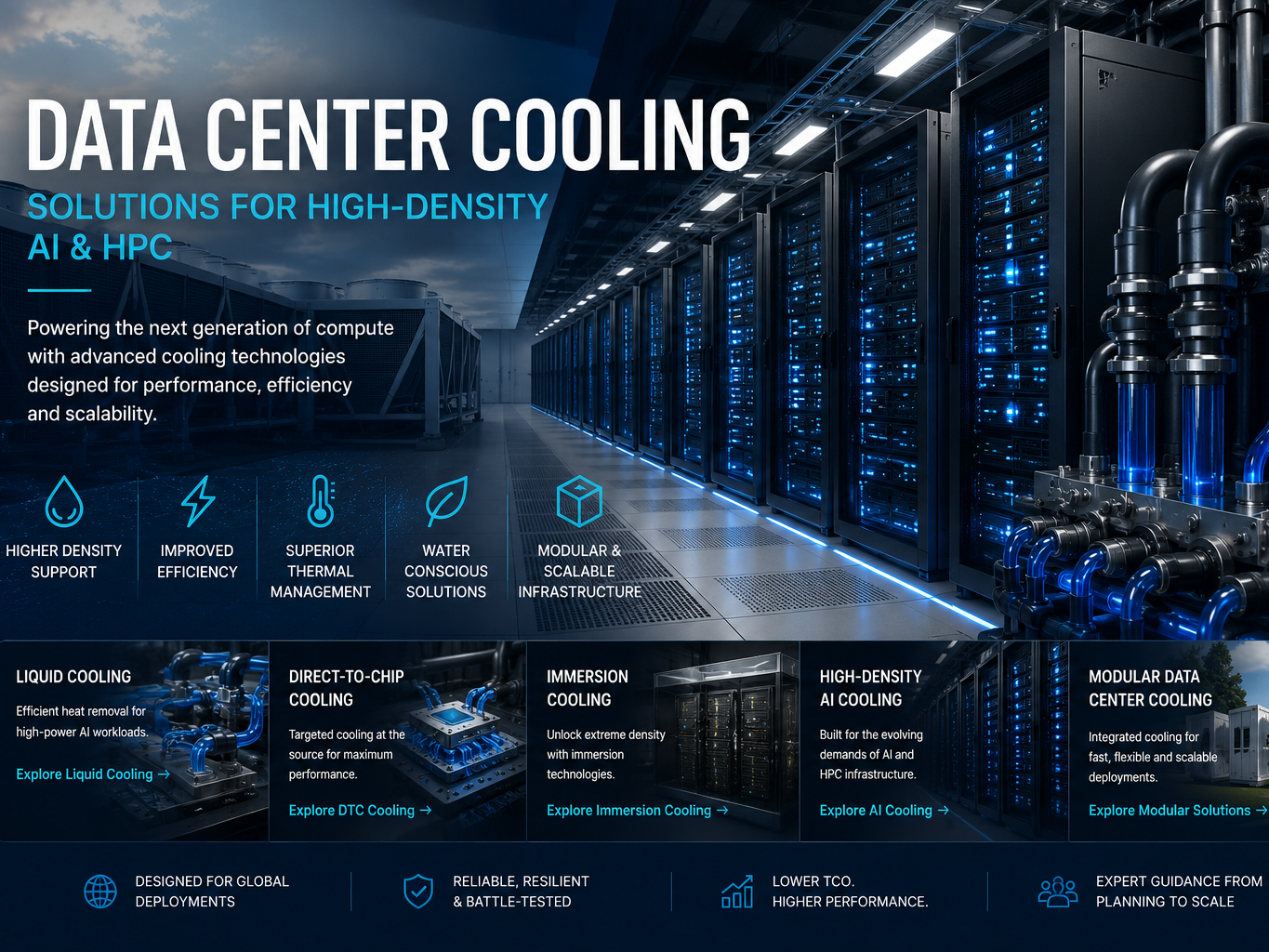
We help organizations evaluate waterless and water-efficient data center cooling solutions for AI, HPC and high-density computing environments, including liquid cooling, direct-to-chip systems, closed-loop cooling and advanced heat rejection technologies.
Why Waterless Data Center Cooling Matters?
The rapid expansion of AI infrastructure is increasing the amount of electricity and heat generated by modern data centers.
Cooling that heat requires significant infrastructure. Depending on the cooling architecture and local climate, traditional systems can also create substantial water requirements.
For organizations developing data centers in areas where water availability, sustainability or permitting constraints are important, reducing cooling-related water consumption can become a strategic infrastructure priority.
Waterless cooling approaches can help address this challenge while supporting the thermal requirements of high-density AI and HPC workloads.
What Is Waterless Data Center Cooling?
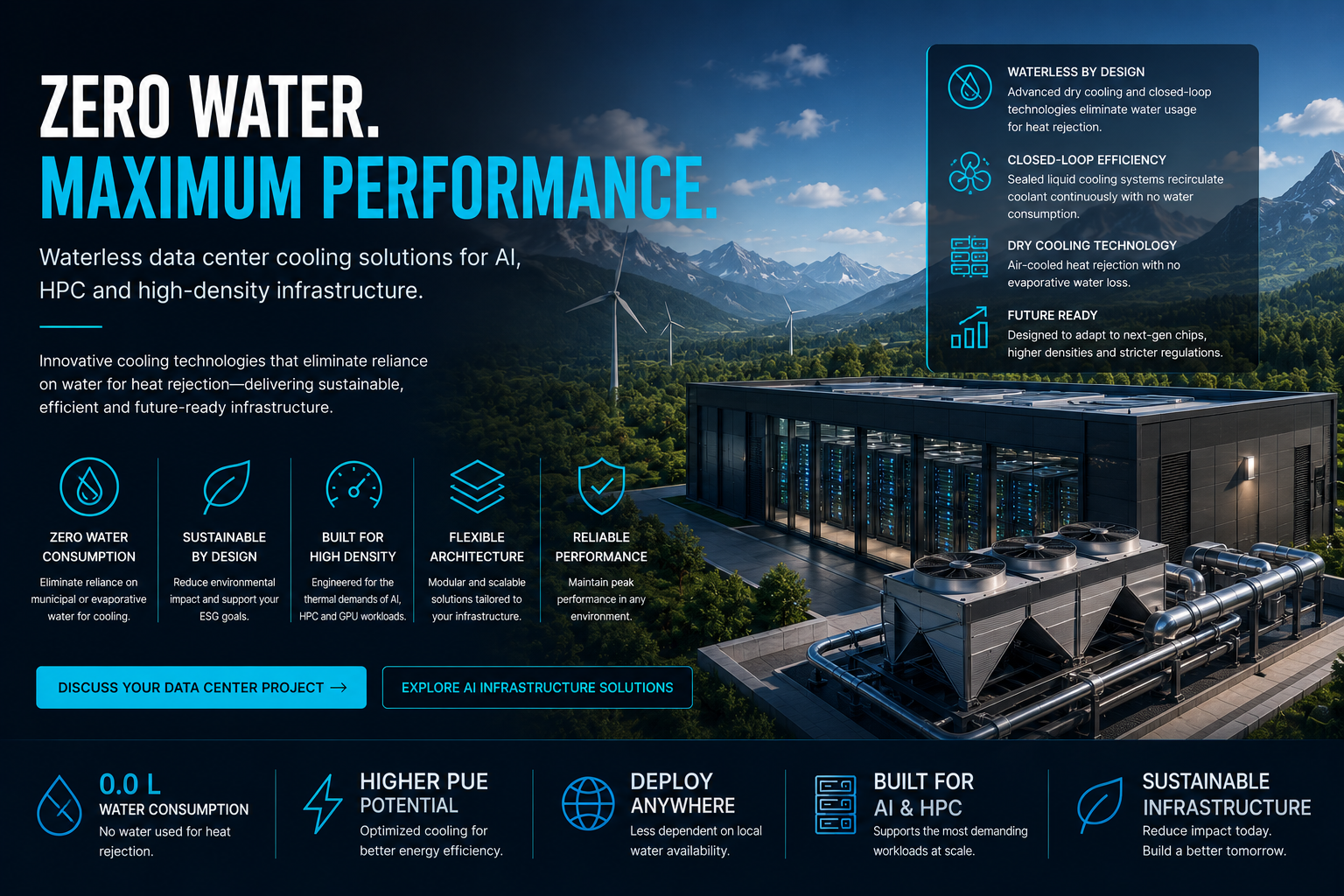
Waterless data center cooling refers to cooling architectures designed to operate without continuous consumption of fresh water for heat rejection.
The exact definition can vary depending on the system.
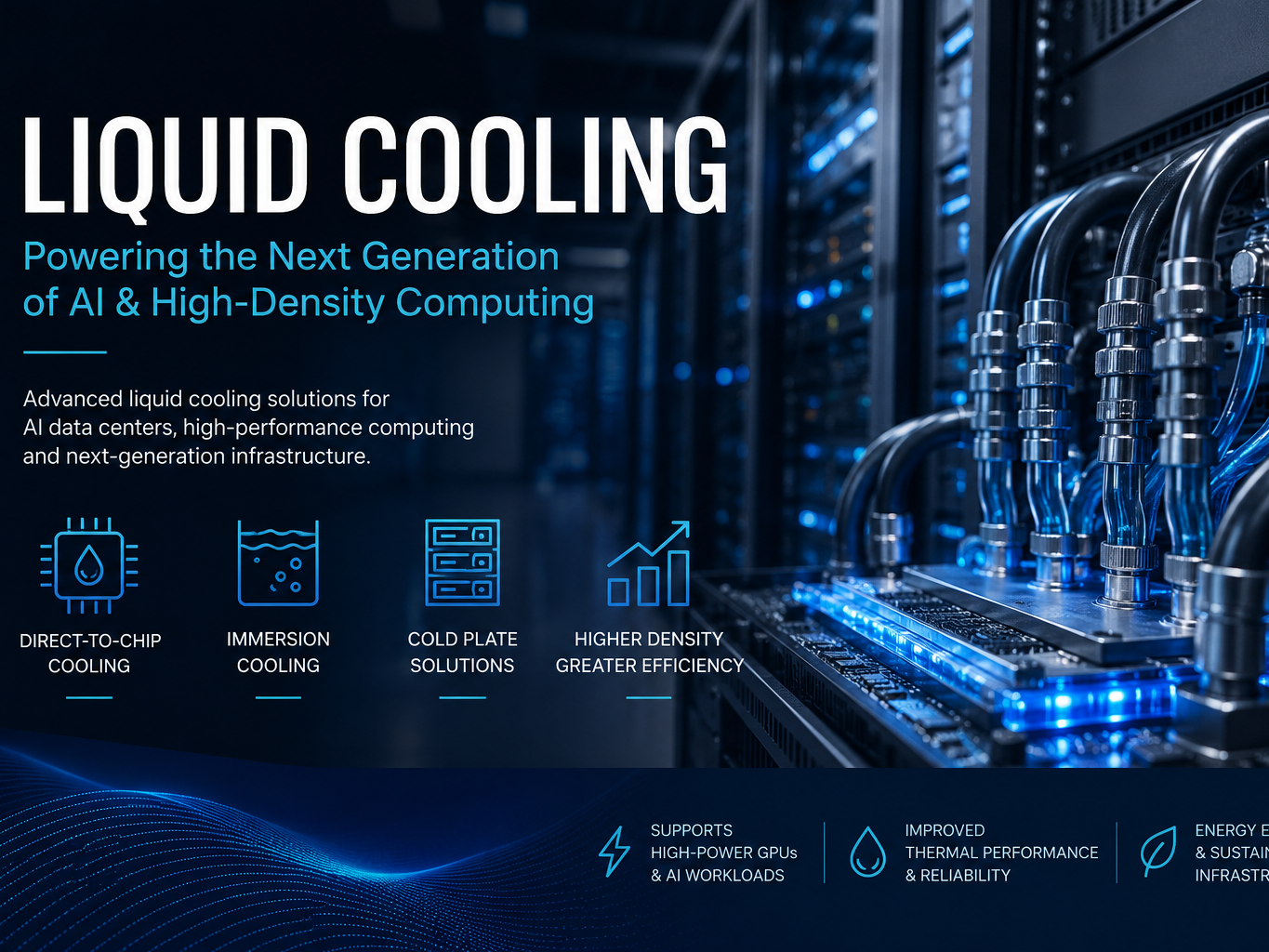
Some technologies use a closed-loop liquid cooling circuit in which coolant continuously circulates through the computing infrastructure. Others use dry or air-based heat rejection to transfer heat to the surrounding environment without relying on evaporative cooling.
A waterless or near-waterless data center may therefore combine technologies such as:
• Closed-loop liquid cooling
• Direct-to-chip cooling
• Cold plate cooling
• Dry coolers
• Air-cooled heat rejection
• Advanced heat exchangers
• Immersion cooling
• Modular cooling systems
The appropriate architecture depends on the site's climate, compute density, facility design and operating requirements.
Waterless Cooling for AI Data Centers
AI is changing the thermal requirements of data centers.
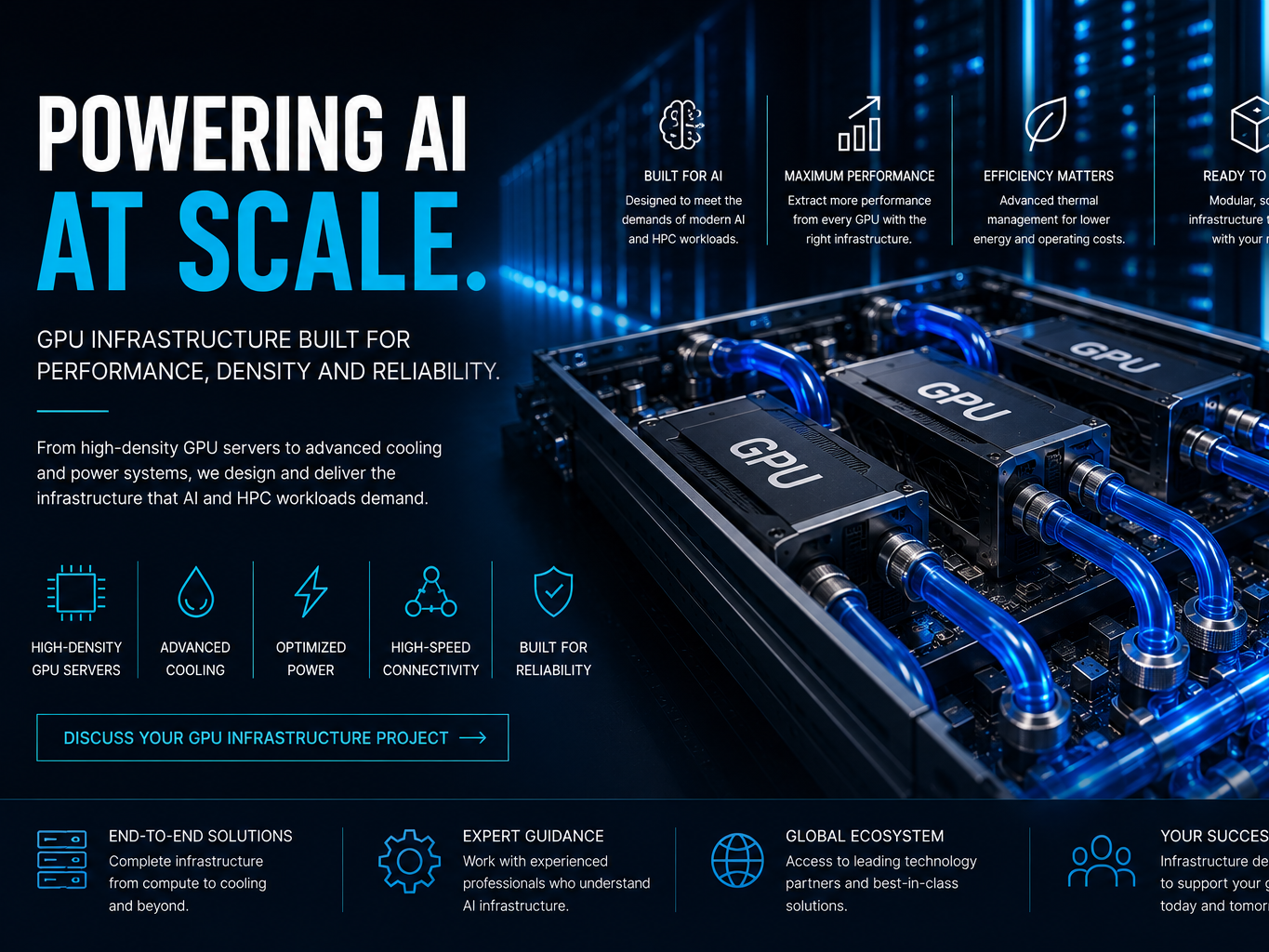
High-performance GPUs and AI accelerators can generate substantial heat, while dense GPU clusters concentrate that heat into relatively small physical spaces.
This creates two infrastructure challenges:
How do you remove the heat efficiently?
And:
How do you do it without creating unnecessary pressure on local water resources?
For some projects, waterless or water-efficient cooling can provide an important part of the answer.
The infrastructure can be designed around the relationship between:
• GPU power
• Rack density
• Cooling capacity
• Heat rejection
• Energy consumption
• Water availability
• Site conditions
• Future compute requirements
Waterless vs. Evaporative Data Center Cooling
Traditional data center cooling can use evaporative processes to reject heat. Evaporation can provide effective cooling, but it consumes water.
Waterless cooling approaches use alternative methods to reject heat without continuously evaporating water.
Neither approach is universally optimal. The right solution depends on climate, power availability, thermal requirements, water constraints and total cost of ownership.
Liquid Cooling Without Continuous Water Consumption
Liquid cooling and waterless cooling are not mutually exclusive.
A closed-loop liquid cooling system can circulate coolant continuously between the computing equipment and the cooling infrastructure.
The coolant itself is not necessarily consumed during normal operation.
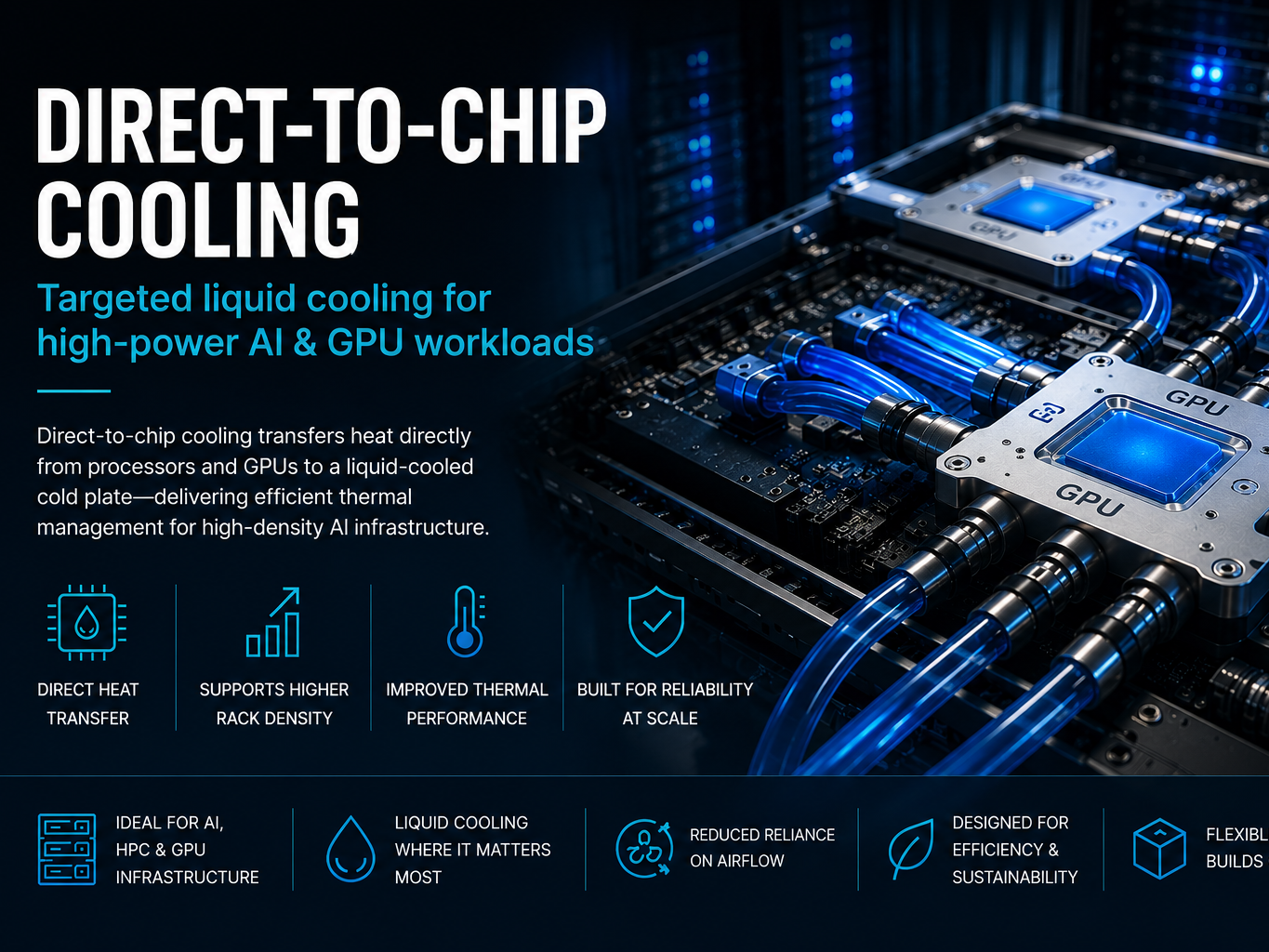
For example, a direct-to-chip architecture can transfer heat from a GPU to a cold plate and then circulate the heated coolant through a heat exchanger or other heat rejection system.
The critical consideration is therefore the complete heat rejection architecture, not simply whether liquid is used inside the system.
Direct-to-Chip Cooling
Direct-to-chip cooling transfers heat directly from high-power processors such as GPUs and CPUs to liquid-cooled cold plates.
This can provide targeted thermal management for high-density AI servers.
When combined with an appropriate closed-loop and heat rejection system, direct-to-chip cooling can form part of a water-efficient or waterless data center architecture.
Immersion Cooling
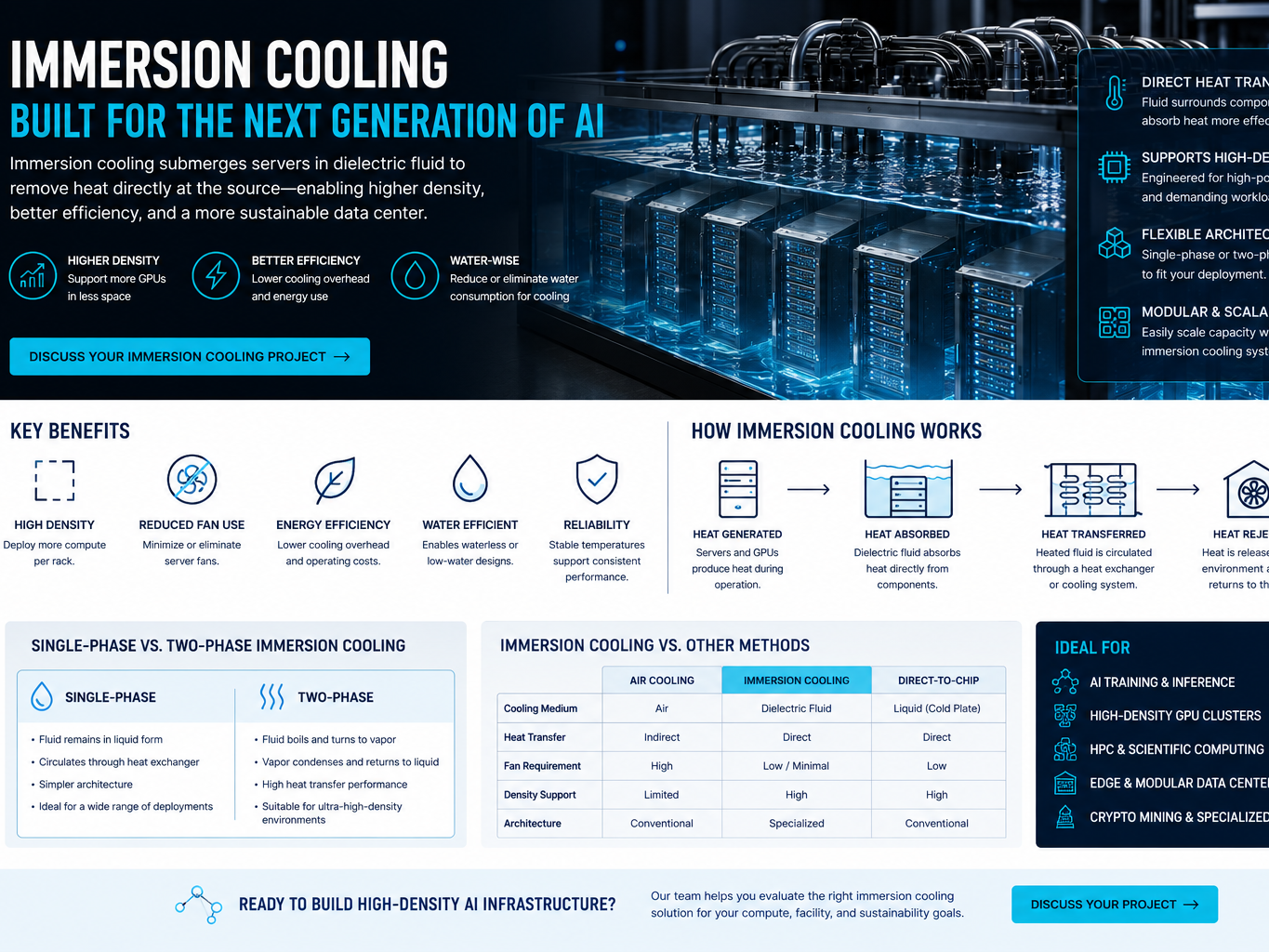
Immersion cooling places servers or selected components into a dielectric cooling fluid.
The fluid absorbs heat directly from the computing equipment, which can then be transferred through the cooling system to an appropriate heat rejection mechanism.
Depending on the architecture, immersion cooling can be incorporated into data center designs focused on high-density computing and reduced reliance on traditional cooling methods.
Waterless Cooling for High-Density GPU Infrastructure
GPU density is one of the major factors influencing modern data center cooling requirements.
As more computing power is concentrated into each rack, the cooling system needs to remove greater amounts of heat from a smaller physical footprint.
Waterless cooling strategies for GPU infrastructure can involve:
• Direct-to-chip cooling
• GPU cold plates
• Closed-loop liquid cooling
• Dry cooling
• Advanced heat exchangers
• Immersion cooling
• Hybrid architectures
The right approach depends on GPU power, rack density, facility design, climate and required operating conditions.
The Water-Energy Trade-Off
Reducing water consumption does not automatically mean reducing total energy consumption.
This is an important consideration when evaluating waterless data center cooling.
Different heat rejection technologies involve different trade-offs between:
• Water consumption
• Cooling energy
• Fan power
• Pumping power
• Ambient temperature
• Equipment footprint
• Capital expenditure
• Operating expenditure
For example, a system designed to eliminate evaporative water use may require additional mechanical or electrical capacity under certain environmental conditions.
The objective should therefore be to optimize the complete cooling system, rather than focusing on a single sustainability metric.
Waterless Data Centers and Site Selection
Water availability can increasingly influence where data centers can be developed.
When evaluating a potential AI data center site, organizations may need to consider:
• Water Availability
What quantity of water is available, and what restrictions apply?
• Climate
How does the local temperature affect heat rejection throughout the year?
• Power Availability
Is sufficient electrical capacity available for both compute and cooling?
• Land and Infrastructure
Can the site support the required physical infrastructure?
• Permitting
Are there local environmental or water-use requirements?
• Future Expansion
Can the site accommodate additional AI compute capacity?
A waterless or water-efficient cooling architecture can potentially expand the range of locations worth evaluating.
Water Consumption and AI Data Centers
The growth of AI is increasing interest in the relationship between computing, energy and water.
AI data centers can require significant cooling infrastructure because high-performance processors operate at high power densities.
This means water considerations should be incorporated early into infrastructure planning rather than addressed after the facility architecture has already been selected.
A comprehensive AI infrastructure assessment should consider:
• Expected IT load
• GPU density
• Rack power
• Cooling architecture
• Water requirements
• Heat rejection
• Energy efficiency
• Site conditions
• Future capacity
Waterless Cooling and Sustainability
Sustainable data center infrastructure requires more than simply reducing water consumption.
A complete assessment should consider the full lifecycle of the infrastructure.
Important factors include:
• Water consumption
• Energy consumption
• Cooling efficiency
• Power utilization
• Equipment lifecycle
• Maintenance
• Site impact
• Scalability
• Total cost of ownership
For AI infrastructure, the most sustainable solution is often the one that balances compute performance, resource consumption, reliability and long-term economics.
Waterless Cooling for Modular Data Centers
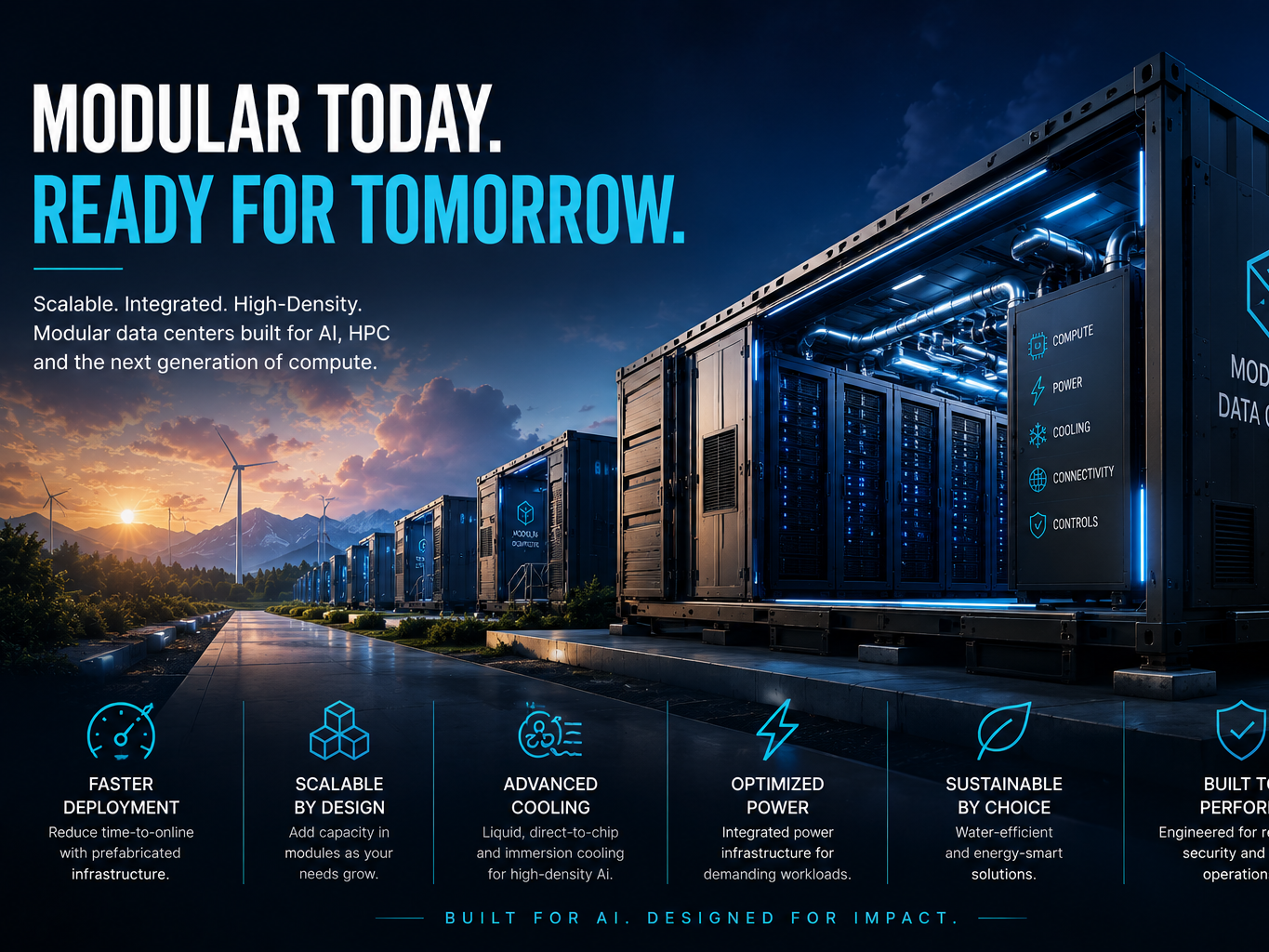
Modular data centers can provide an opportunity to integrate water-efficient cooling into the infrastructure from the beginning.
Rather than adapting an existing facility cooling system, a modular deployment can be designed around:
• Expected GPU density
• Required cooling capacity
• Power availability
• Heat rejection
• Site conditions
• Water constraints
• Future expansion
This can make waterless or water-efficient cooling particularly relevant for rapidly deployable AI infrastructure.
Choosing a Waterless Data Center Cooling Solution
There is no single waterless cooling technology suitable for every data center.
The right approach depends on the project's technical and environmental requirements.
Before selecting a solution, evaluate:
• Compute Density
How much heat will the GPUs, CPUs or accelerators generate?
• Rack Power
What is the expected power requirement per rack?
• Climate
What ambient temperatures will the cooling system need to operate in?
• Water Constraints
Is the objective zero ongoing water consumption, reduced consumption or simply improved water efficiency?
• Heat Rejection
How will heat ultimately be transferred from the facility to the environment?
• Energy Efficiency
What additional power will pumps, fans or mechanical systems require?
• Scalability
Can the cooling architecture support future increases in compute density?
• Economics
What are the capital, operating and maintenance costs over the system lifecycle?
Planning a Waterless AI Data Center?
Whether you are developing a new AI data center, expanding GPU infrastructure or evaluating cooling options for a water-constrained site, waterless and water-efficient cooling technologies are worth considering early in the infrastructure planning process.
We help organizations evaluate waterless data center cooling, liquid cooling, direct-to-chip systems, immersion cooling and modular infrastructure based on their compute requirements and site conditions.
Where there is a strong fit, we facilitate introductions to experienced technology providers specializing in high-density AI and data center infrastructure.
FAQs
What is waterless data center cooling?
Waterless data center cooling refers to cooling architectures designed to eliminate or minimize ongoing consumption of fresh water for heat rejection.
Does liquid cooling use water?
It can, but it doesn't necessarily have to. Liquid cooling systems can operate using closed-loop coolant circuits, while the facility's heat-rejection system determines whether ongoing water consumption occurs.
Can a data center operate without water for cooling?
Yes, depending on the cooling and heat-rejection architecture, climate and facility requirements. Waterless or near-waterless designs can use technologies such as dry cooling and closed-loop systems.
What is a zero-water data center?
The term generally refers to a facility designed to eliminate ongoing water consumption for cooling, although definitions and system boundaries can vary. It is important to clarify whether “zero water” refers to process water, cooling water or total facility water use.
Why is water consumption important for AI data centers?
AI increases compute density and therefore cooling requirements. In areas with limited water resources, cooling-related water consumption can become an important site-selection and infrastructure consideration.
Is waterless cooling more energy efficient?
Not automatically. Eliminating evaporative water use can involve trade-offs in energy consumption, heat rejection, climate performance and equipment requirements.
What is the difference between waterless and water-efficient cooling?
Waterless cooling aims to eliminate ongoing water consumption for cooling. Water-efficient systems reduce water use but may still consume some water depending on their design.
Can liquid cooling be waterless?
Yes. A closed-loop liquid cooling system can circulate coolant without continuously consuming fresh water. The final heat-rejection architecture determines whether the overall facility requires water.
Is waterless cooling suitable for high-density AI?
It can be, but the architecture needs to be designed around the GPU load, rack density, climate and heat-rejection requirements.