Modular Data Centers for AI, HPC & High-Density Computing
The rapid growth of AI is creating demand for data center infrastructure that can be deployed faster, scaled more efficiently and designed around increasingly dense compute environments.
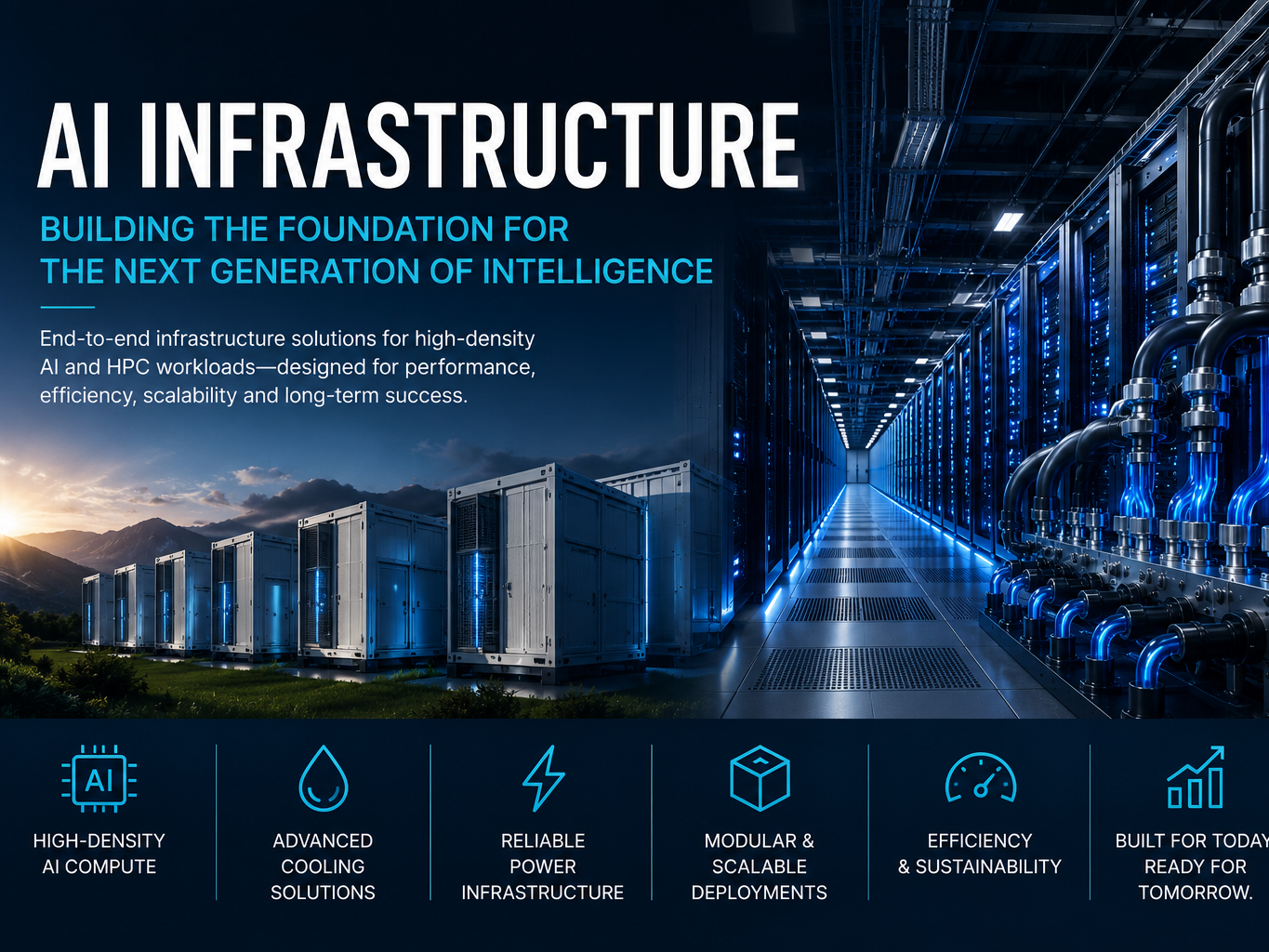
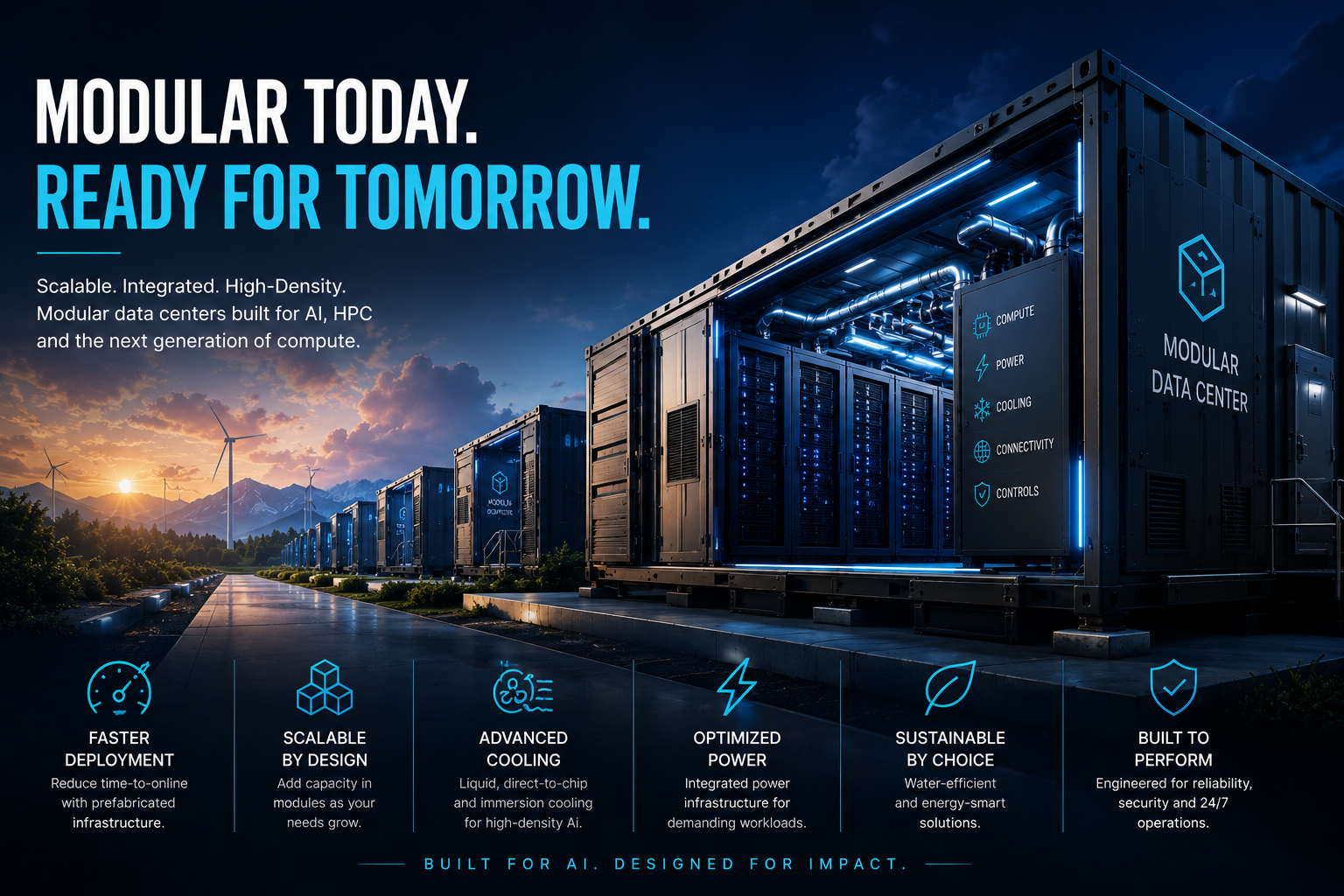
Modular data centers provide a flexible approach to deploying AI, HPC and high-performance computing infrastructure by integrating critical systems such as compute, power, cooling and supporting infrastructure into standardized, scalable environments.
We help organizations evaluate modular data center solutions for AI deployments, GPU clusters, HPC facilities, edge computing and high-density workloads.
What Is a Modular Data Center?
A modular data center is a data center environment built from standardized, prefabricated or containerized components rather than relying entirely on traditional on-site construction.
Depending on the project, modular infrastructure can integrate:
• IT and server infrastructure
• GPU and AI compute
• Power distribution
• Liquid cooling
• Air cooling
• Heat rejection
• Networking
• Monitoring and controls
• Physical security
• Supporting mechanical systems
The result is an infrastructure approach that can be configured around the requirements of a specific deployment and expanded as compute demand grows.
Why Modular Data Centers for AI?
AI infrastructure is developing at a pace that can challenge conventional data center construction models.
Organizations may need to deploy significant computing capacity while managing constraints around power availability, cooling, land, construction timelines and future expansion.
Modular AI data centers can provide an alternative approach by allowing critical infrastructure to be designed, manufactured and integrated in a controlled environment before deployment.
Potential advantages include:
• Faster Deployment
Prefabricated and modular systems can reduce the amount of infrastructure that needs to be constructed and assembled on-site.
• Scalable Capacity
Modular deployments can allow organizations to add capacity in stages rather than building the entire future facility at once.
• Integrated Cooling
Cooling can be designed around the expected compute and rack density, including liquid cooling and direct-to-chip architectures.
• Flexible Deployment
Containerized and modular infrastructure can be considered for locations where conventional data center construction presents challenges.
• Predictable Infrastructure
Standardized components and controlled manufacturing environments can help create a more repeatable deployment process.
• Designed for High Density
Modular infrastructure can be engineered around the power and thermal requirements of modern GPU and AI workloads.
Modular AI Data Centers
AI workloads are changing the definition of data center density.
Modern GPU clusters can require substantially more power and cooling capacity than conventional enterprise computing environments. This means that modular infrastructure must be designed around the characteristics of AI compute from the beginning.
A modular AI data center can integrate:
• High-density compute
GPU servers and AI accelerators designed for demanding workloads.
• Power infrastructure
Power distribution capable of supporting increasing rack and facility loads.
• Advanced cooling
Liquid cooling, direct-to-chip, immersion or hybrid cooling architectures.
• Heat rejection
Infrastructure designed to transfer heat away from high-density compute efficiently.
• Networking
High-bandwidth connectivity between GPUs, storage and external networks.
• Monitoring and controls
Systems for managing temperature, power, performance and infrastructure health.
This integrated approach allows the infrastructure to be designed around the AI workload rather than adapting a conventional data center after the fact.
Modular Data Center Cooling
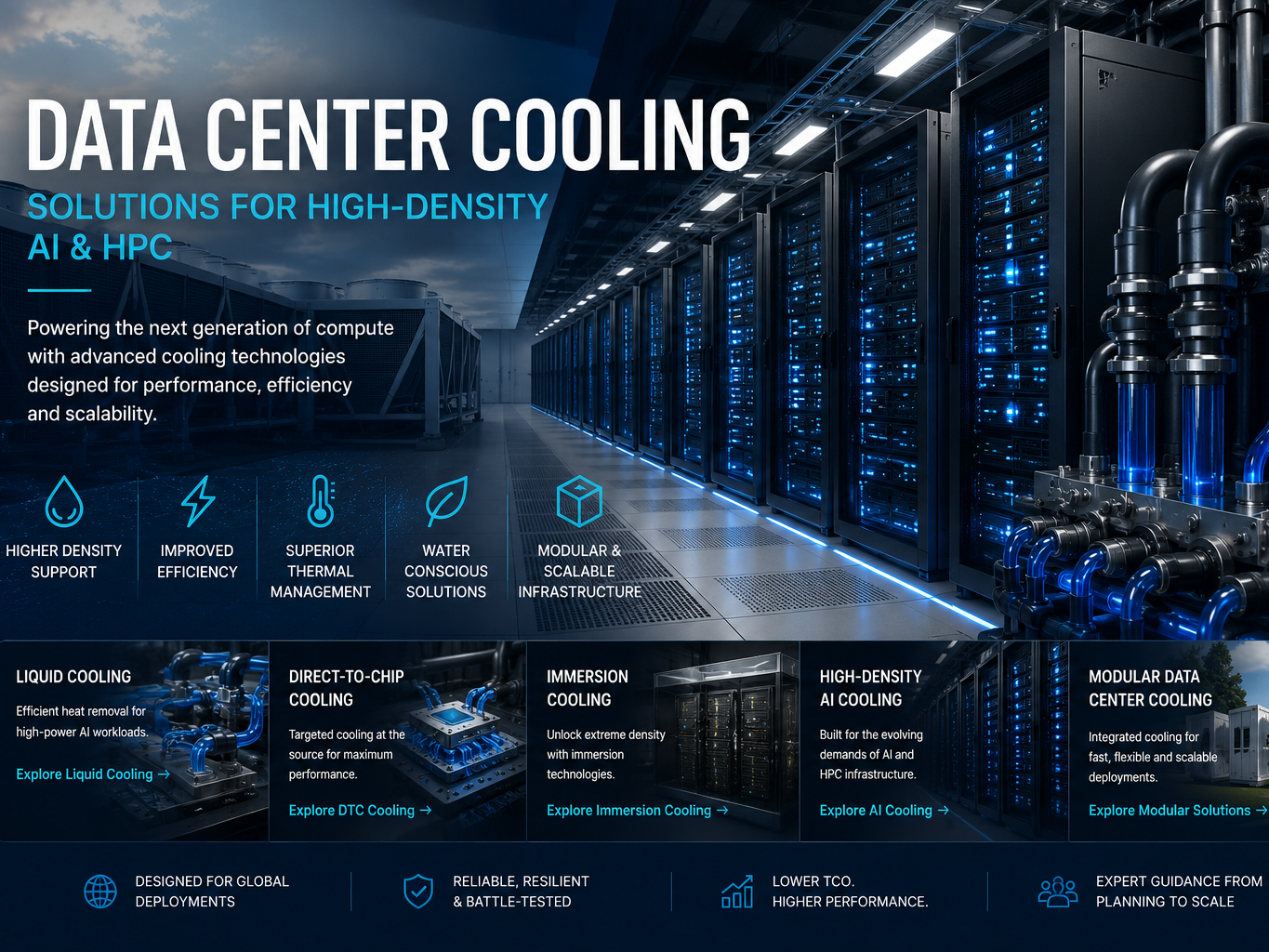
Cooling is one of the most important considerations when designing a modular data center for AI.
As rack density increases, conventional air cooling may become increasingly difficult to deploy efficiently. Modular infrastructure can instead incorporate advanced thermal management from the beginning.
Potential cooling architectures include:
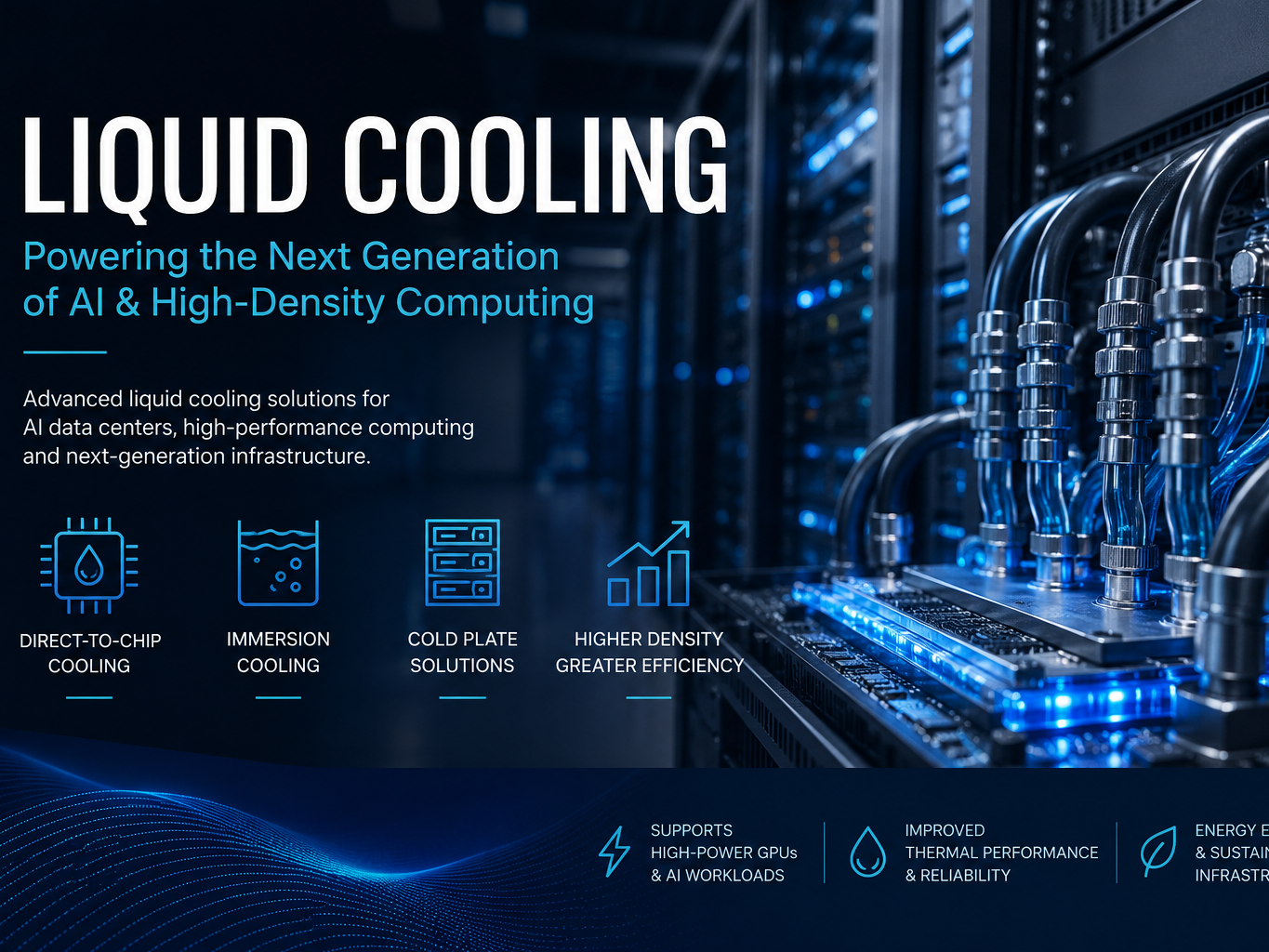
• Liquid Cooling
Liquid cooling can support high-density AI and HPC workloads by transferring heat more efficiently from high-power processors and GPUs.
• Direct-to-Chip Cooling
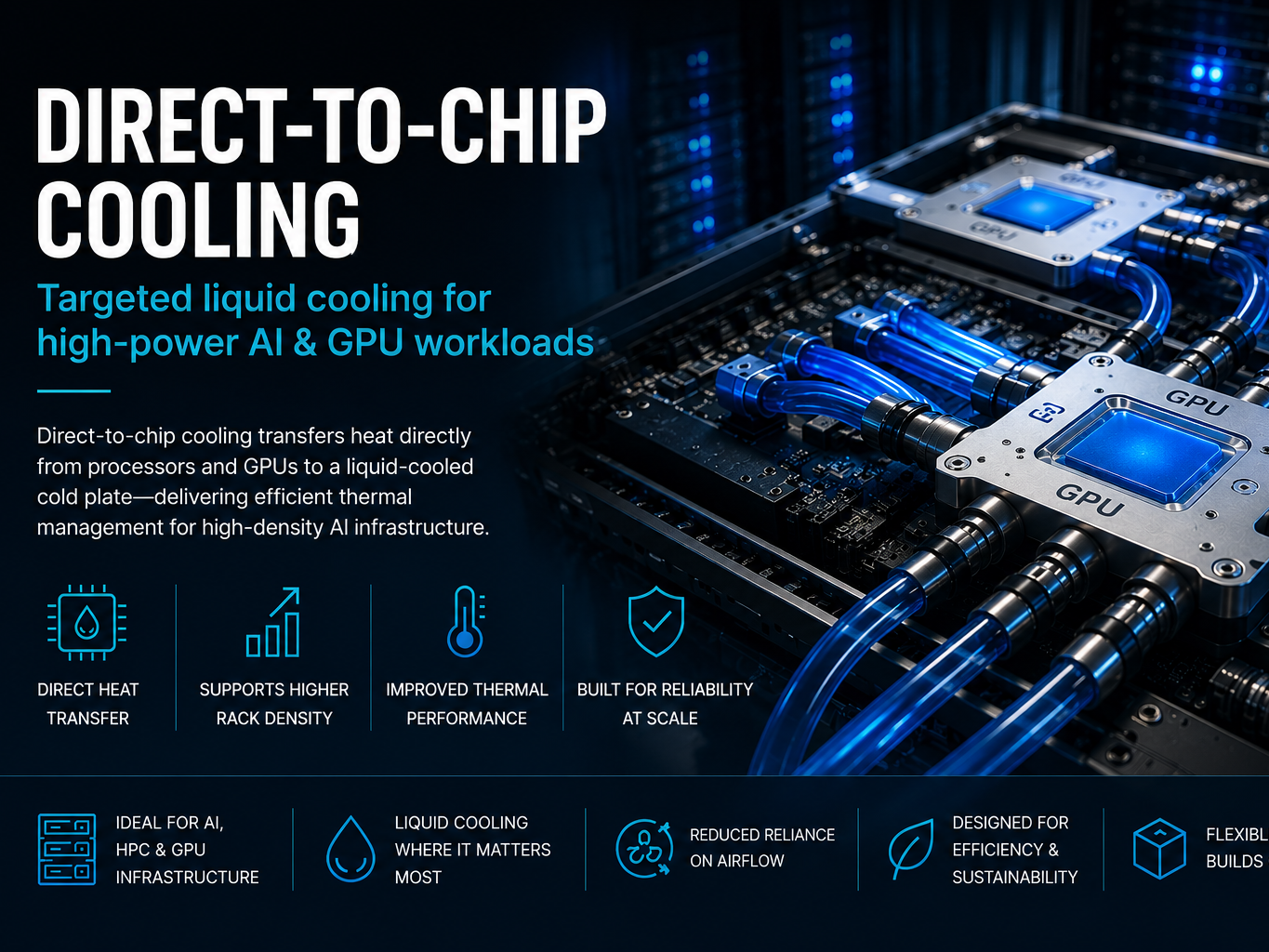
Direct-to-chip cooling uses cold plates to transfer heat directly from processors into a liquid cooling loop.
This approach can be integrated into modular AI infrastructure designed around high-density GPU deployments.
• Immersion Cooling
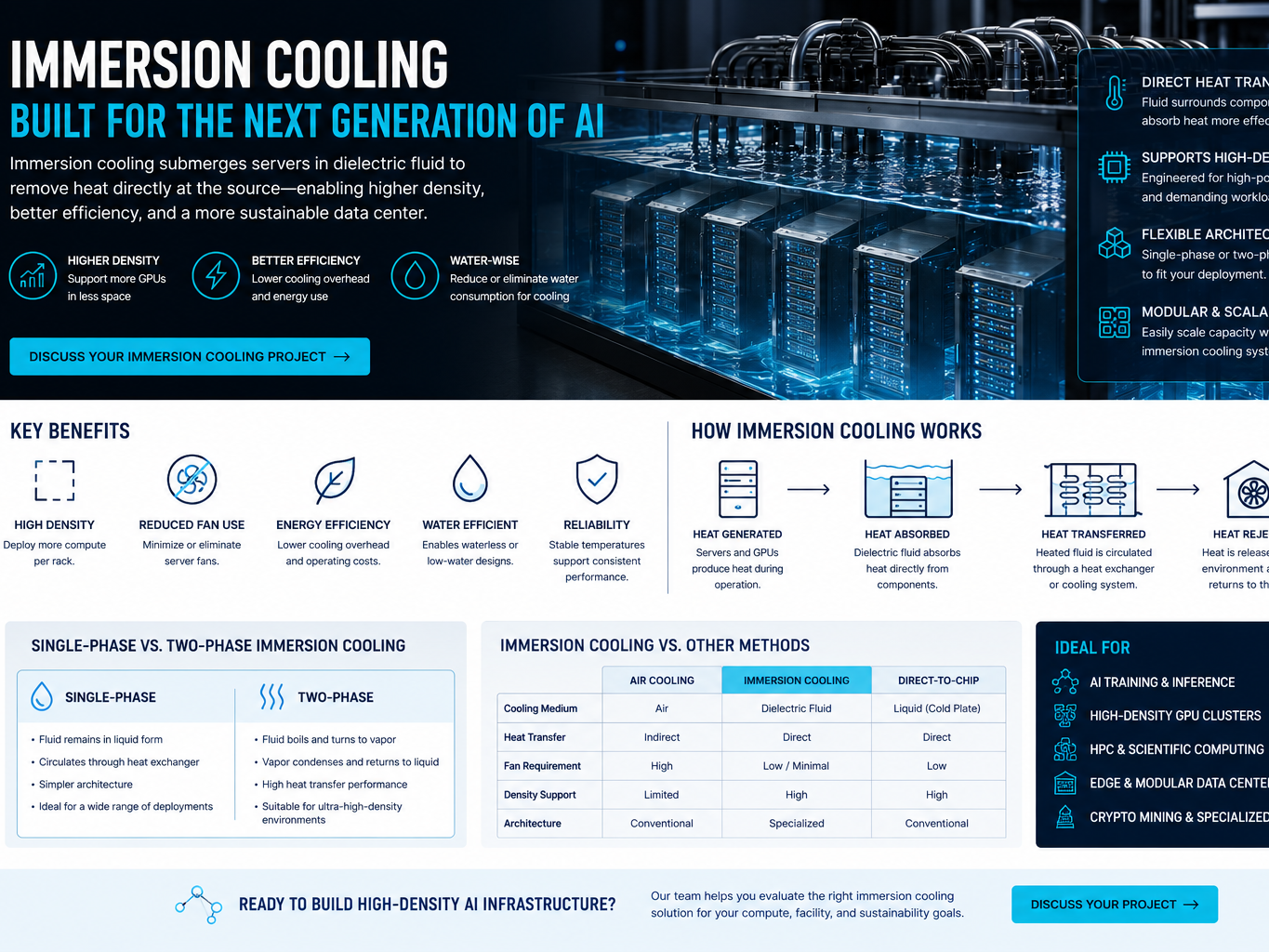
Immersion cooling places servers or selected components in a dielectric cooling fluid, providing another option for high-density compute environments.
• Hybrid Cooling
Some deployments may combine different cooling technologies depending on the processor mix, rack density and facility requirements.
The appropriate architecture depends on the project rather than following a single standardized model.
Containerized Data Centers
Containerized data centers use standardized enclosures or modules to house computing, power, cooling and supporting infrastructure.
They can be useful where organizations require a compact, scalable or rapidly deployable infrastructure solution.
Potential applications include:
• AI compute clusters
• GPU infrastructure
• HPC
• Edge computing
• Remote computing
• Enterprise AI
• Colocation
• Temporary compute capacity
• Phased data center expansion
Containerized infrastructure can also be combined with liquid cooling and high-density power systems to support demanding AI workloads.
Modular vs. Traditional Data Centers
Traditional data centers remain an important infrastructure model, particularly for large-scale permanent facilities.
However, modular data centers can offer different advantages depending on the project.
The best approach depends on site conditions, capacity requirements, local regulations, power availability and long-term expansion plans.
Modular Data Centers for High-Density GPU Infrastructure
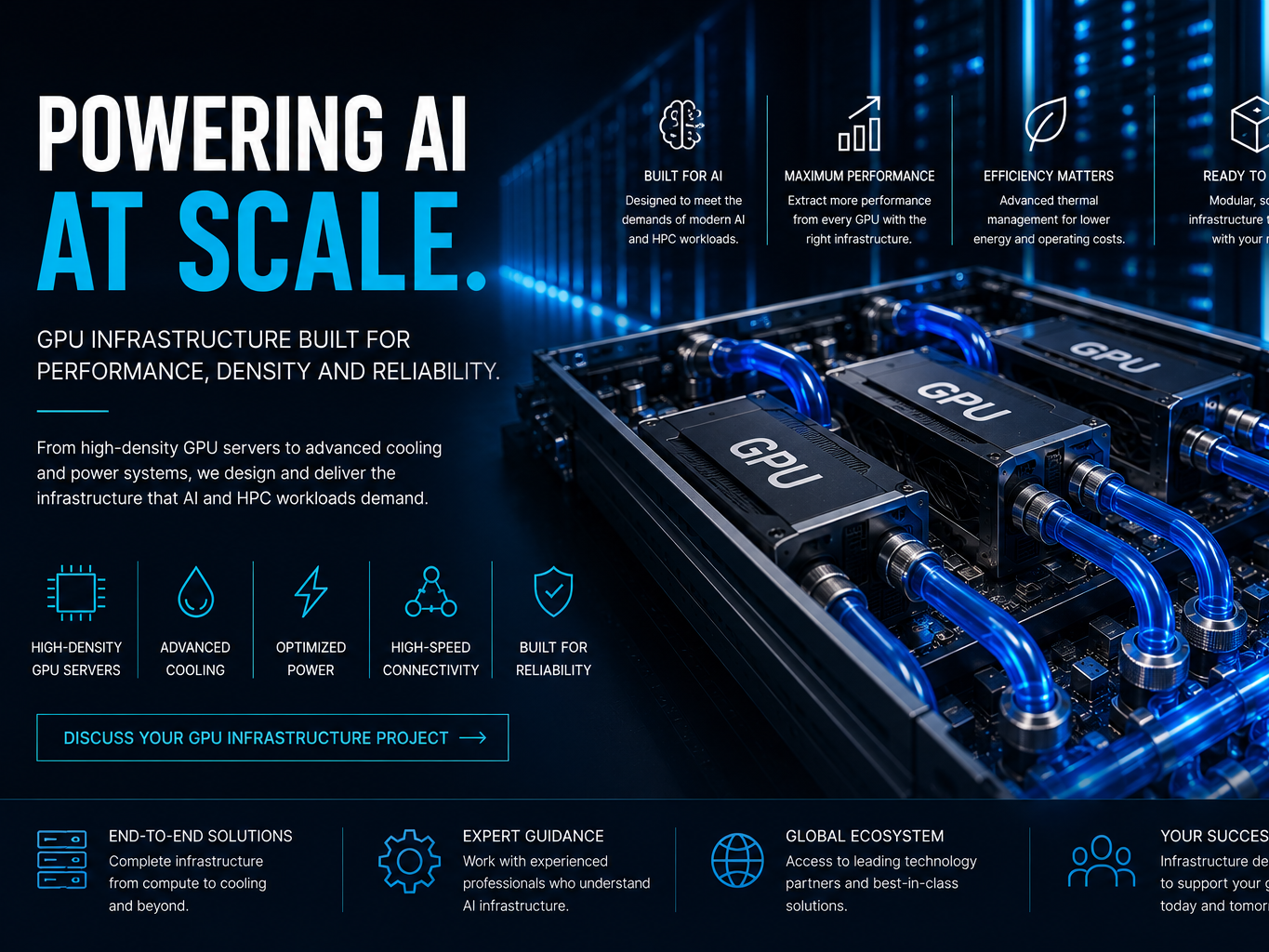
GPU infrastructure can place significant demands on both power and cooling.
When designing a modular deployment, organizations should consider the complete thermal and electrical profile of the compute environment.
Important factors include:
• GPU platform
• Number of GPUs
• GPU power requirements
• Server configuration
• Rack density
• Total IT load
• Cooling capacity
• Power distribution
• Networking requirements
• Future expansion
The modular architecture should be designed around the expected compute density rather than treating GPUs as a conventional server workload.
Modular Data Centers and Liquid Cooling
The combination of modular data centers and liquid cooling is particularly relevant for high-density AI infrastructure.
Instead of treating cooling as a separate facility requirement, the cooling architecture can be integrated with the compute and power design.
A modular liquid-cooled deployment may incorporate:
• GPU cold plates
• Direct-to-chip cooling
• Coolant distribution
• Cooling distribution units
• Pumps
• Heat exchangers
• Heat rejection
• Monitoring and controls
This integrated approach can help organizations plan the thermal infrastructure around the expected rack density and compute requirements.
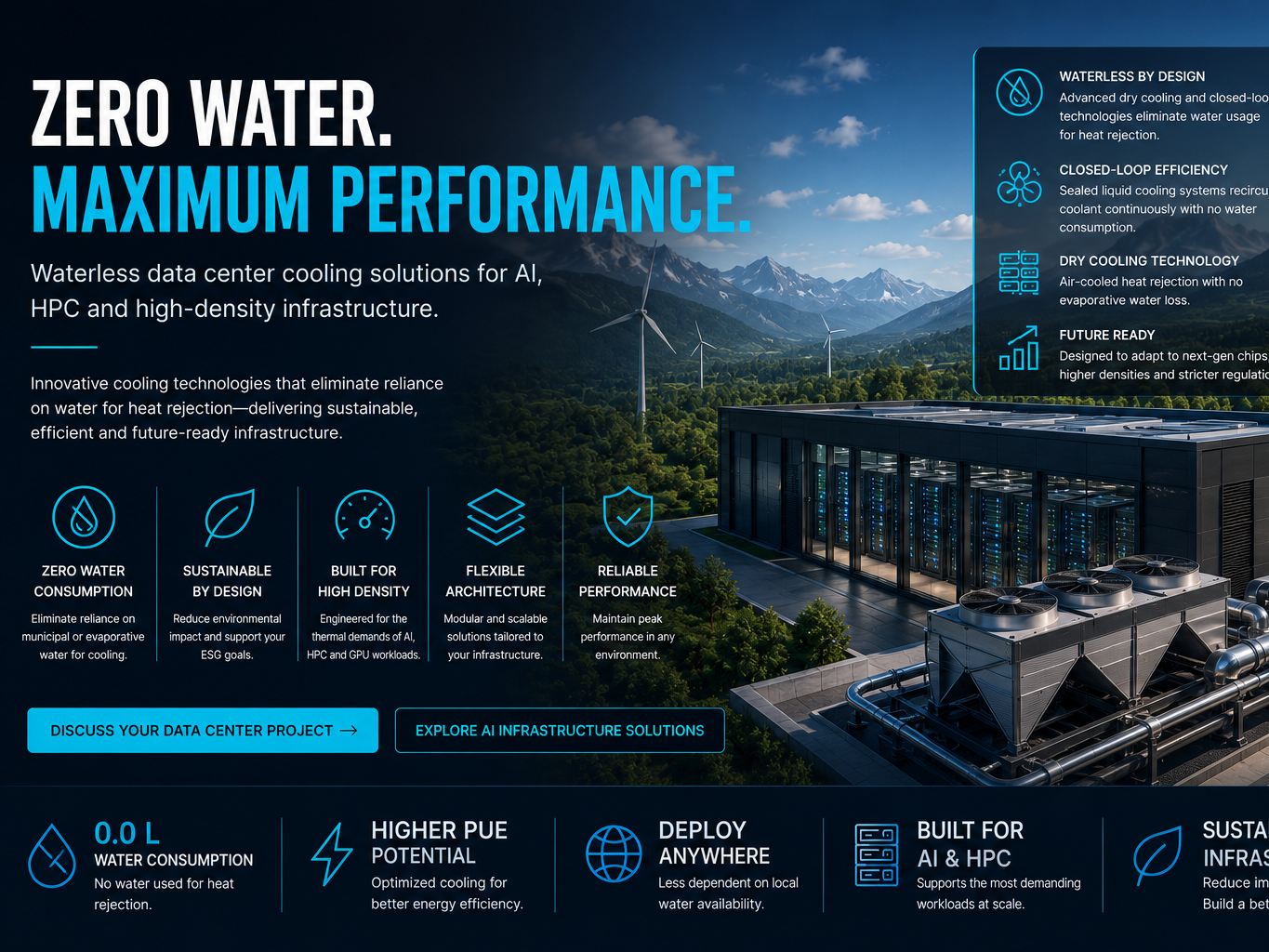
Water-Efficient Modular Data Centers
Water availability can influence where and how new data center capacity can be deployed.
For AI infrastructure projects, organizations may need to evaluate cooling architectures based not only on thermal performance but also on water consumption and local site constraints.
Modular data centers can incorporate water-efficient or waterless cooling architectures, depending on the technology selected and the requirements of the deployment.
Relevant considerations include:
• Water availability
• Cooling method
• Heat rejection
• Climate
• Power availability
• Site infrastructure
• Long-term operating requirements
Modular Data Center Deployment Models
Modular infrastructure can support different deployment strategies depending on the project.
• Greenfield Deployment
Build a new AI or HPC environment around modular infrastructure from the beginning.
• Capacity Expansion
Add modular capacity to an existing data center or compute environment.
• Rapid Deployment
Deploy compute capacity where traditional construction timelines do not align with project requirements.
• Edge AI
Place AI and HPC resources closer to where data is generated or consumed.
• Phased Growth
Start with an initial capacity block and expand as demand and capital availability increase.
This flexibility can be particularly valuable in fast-moving AI infrastructure markets.
Designing for Future AI Generations
AI hardware continues to evolve rapidly.
A modular data center designed for today's GPU requirements may need to support significantly higher power and thermal densities in the future.
Infrastructure planning should therefore consider:
• Power headroom
Can the electrical infrastructure support future increases in rack and facility power?
Can the electrical infrastructure support future increases in rack and facility power?
• Cooling capacity
Can the cooling architecture accommodate higher processor thermal loads?
Can the cooling architecture accommodate higher processor thermal loads?
• Physical density
Can additional compute be deployed without requiring a complete redesign?
Can additional compute be deployed without requiring a complete redesign?
• Modular expansion
Can additional capacity be added as demand grows?
Can additional capacity be added as demand grows?
• Technology flexibility
Can the infrastructure accommodate different GPU generations and cooling architectures?
Can the infrastructure accommodate different GPU generations and cooling architectures?
Designing for scalability can help reduce the risk of infrastructure becoming a constraint on future compute deployment.
Applications for Modular Data Centers
Modular data center infrastructure can support a broad range of high-performance computing applications.
• AI Data Centers
Deploy high-density GPU infrastructure for AI training and inference.
• HPC
Support scientific research, engineering simulation and other compute-intensive workloads.
• GPU Cloud
Deploy scalable infrastructure for GPU-as-a-service and cloud computing environments.
• Enterprise AI
Provide dedicated infrastructure for organizations building internal AI capabilities.
• Edge Computing
Deploy compute capacity closer to users, devices and data sources.
• Colocation
Provide high-density infrastructure for customers with demanding compute requirements.
Choosing a Modular Data Center Solution
The right modular data center depends on more than the physical module itself.
Before selecting a solution, organizations should evaluate:
• Compute requirements
What GPUs, CPUs or accelerators will be deployed?
What GPUs, CPUs or accelerators will be deployed?
• Capacity
What is the initial IT load, and how much capacity will be required in the future?
What is the initial IT load, and how much capacity will be required in the future?
• Rack density
How much power and heat will each rack generate?
How much power and heat will each rack generate?
• Cooling
Will air, liquid, direct-to-chip, immersion or hybrid cooling be required?
Will air, liquid, direct-to-chip, immersion or hybrid cooling be required?
• Power
What electrical capacity is available at the site?
What electrical capacity is available at the site?
• Location
What are the climate, water, land and infrastructure constraints?
What are the climate, water, land and infrastructure constraints?
• Deployment timeline
How quickly does the capacity need to become operational?
How quickly does the capacity need to become operational?
• Scalability
How will additional modules or compute capacity be added?
How will additional modules or compute capacity be added?
• Total cost of ownership
What are the capital, operating and maintenance requirements over the life of the deployment?
What are the capital, operating and maintenance requirements over the life of the deployment?
Planning a Modular AI or Data Center Deployment?
Whether you are developing an AI data center, deploying a GPU cluster, expanding HPC capacity or looking for a faster way to deploy high-density compute, modular infrastructure can provide a flexible alternative to conventional construction.
We help organizations evaluate modular data centers, containerized infrastructure, liquid cooling and high-density AI solutions based on their technical and deployment requirements.
Where there is a strong fit, we facilitate introductions to experienced technology providers capable of supporting AI, HPC and high-density data center projects.
FAQs
What is a modular data center?
A modular data center is a prefabricated or standardized data center infrastructure solution that can integrate systems such as IT, power, cooling and supporting infrastructure into deployable modules.
Why are modular data centers becoming popular for AI?
AI infrastructure is creating demand for high-density compute while power, construction timelines and site availability can constrain traditional data center development. Modular approaches can provide a more standardized and scalable deployment model.
How fast can a modular data center be deployed?
Deployment time varies significantly depending on site preparation, permitting, power availability, module design and project scope. Modularization can reduce some on-site construction and integration work, but it does not eliminate site and infrastructure requirements.
Are modular data centers suitable for GPUs?
Yes. Modular infrastructure can be designed specifically around high-density GPU workloads, including the required power, networking and cooling systems.
Can modular data centers use liquid cooling?
Yes. Liquid cooling, direct-to-chip and immersion cooling can all potentially be integrated into modular infrastructure depending on the design.
Can modular data centers be expanded?
Many modular architectures are designed to allow capacity to be added in stages. The expansion strategy should be established during the initial infrastructure design.
Are modular data centers cheaper than traditional data centers?
Not necessarily in every project. Modularization can potentially reduce certain construction and deployment costs, but total economics depend on site conditions, scale, infrastructure requirements and deployment model.
What is a containerized data center?
A containerized data center uses a standardized enclosure to house some or all of the computing and supporting infrastructure. It is one form of modular data center deployment.