Liquid Cooling Solutions for AI, Data Centers & High-Density Computing
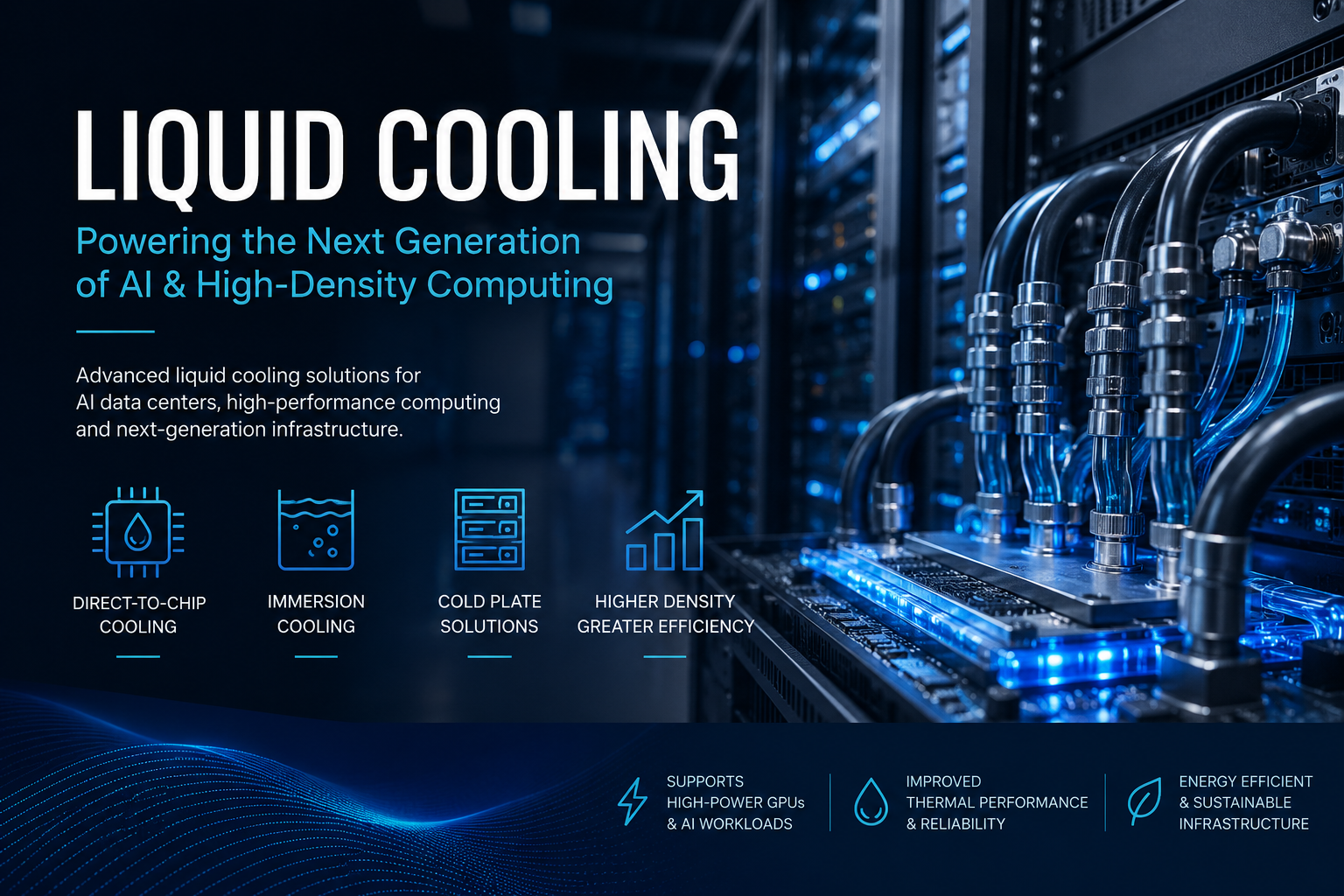
As AI and high-performance computing continue to increase GPU power and rack density, conventional air cooling is facing new thermal and efficiency challenges. Liquid cooling provides a more effective way to remove heat from high-performance processors and support the next generation of AI and data center infrastructure.
We help organizations evaluate liquid cooling solutions for data centers, AI infrastructure and high-density computing environments, from direct-to-chip and cold-plate systems to immersion cooling and integrated modular deployments.
What Is Liquid Cooling?
Liquid cooling is a thermal management approach that uses a liquid coolant to transfer heat away from high-power computing equipment.
Unlike traditional air cooling, which relies on airflow to move heat away from servers, liquid cooling can bring the cooling medium much closer to the source of heat. This makes it particularly well suited to environments where GPUs, CPUs and other processors generate substantial thermal loads.
As AI workloads increase compute density, liquid cooling for data centers is becoming an increasingly important part of modern infrastructure planning.
Why Liquid Cooling for AI Data Centers?
The rapid growth of AI is creating significantly higher power densities inside modern data centers.
AI servers and GPU clusters can generate large amounts of heat within a relatively small physical footprint. As rack power increases, simply moving more air through a facility may become less efficient, more complex or insufficient for the required thermal load.
Liquid cooling can help data center operators address these challenges by providing:
• Higher heat-transfer efficiency
• Support for higher rack densities
• More effective cooling of high-power GPUs and CPUs
• Reduced dependence on high-volume airflow
• Potential improvements in infrastructure efficiency
• Greater flexibility for future AI compute requirements
The appropriate architecture depends on the GPU platform, rack density, facility design, deployment requirements and operating environment.
Types of Liquid Cooling
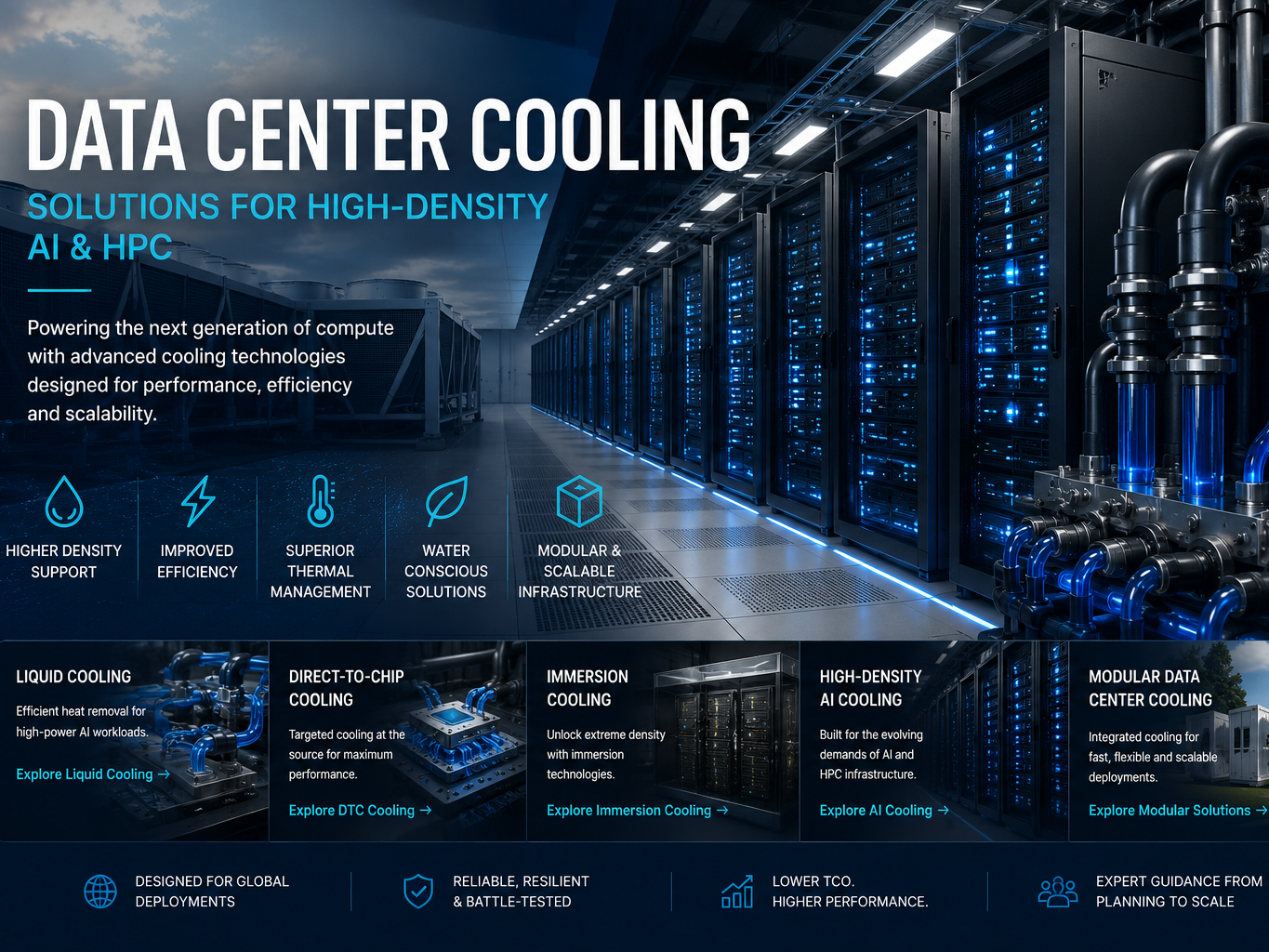
Liquid cooling is not a single technology. Different architectures are designed for different computing environments and thermal requirements.
Direct-to-Chip Cooling
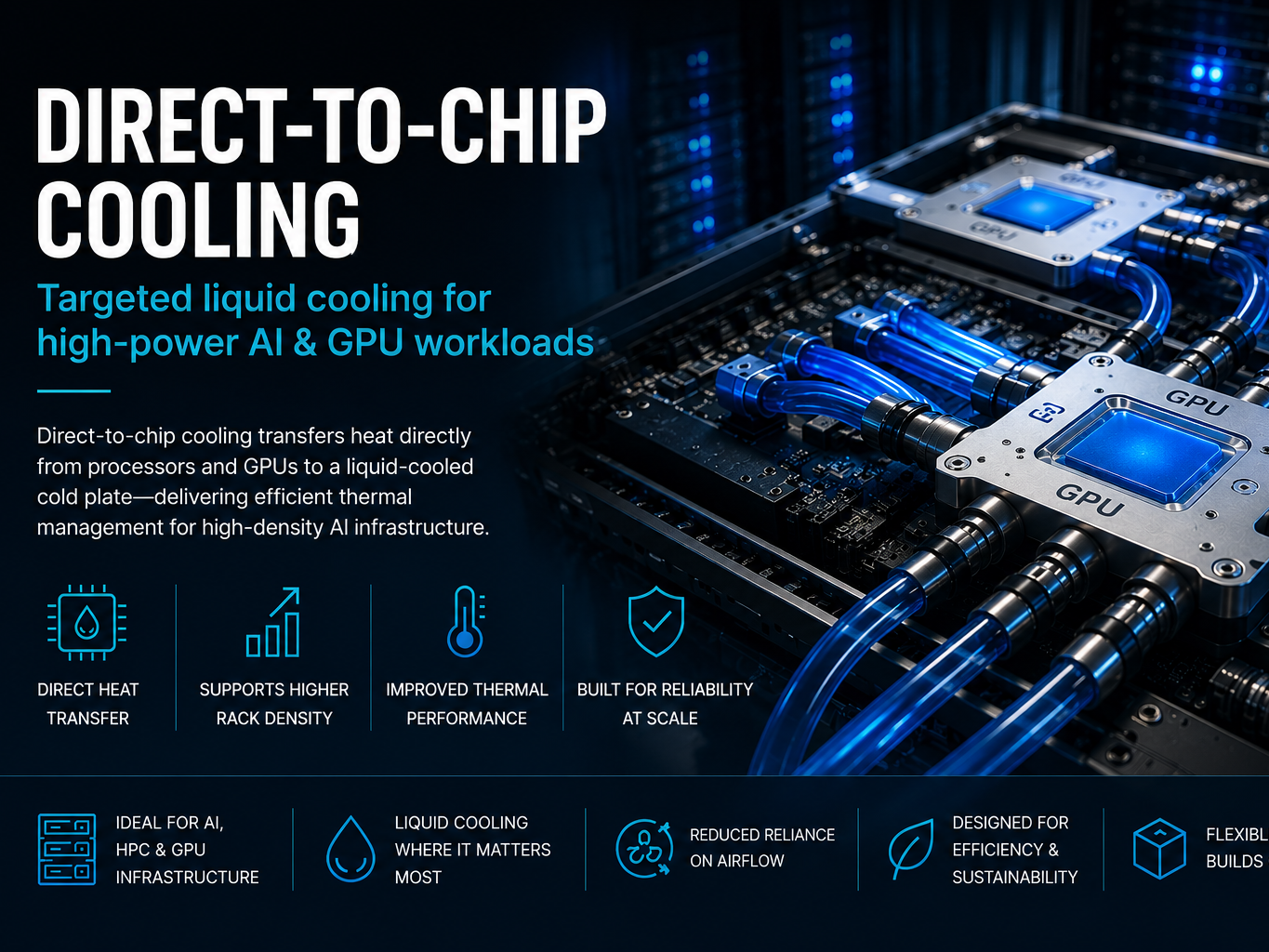
Direct-to-chip cooling transfers heat directly from processors such as GPUs and CPUs to a liquid-cooled cold plate.
Coolant circulates through the cold plate, absorbs heat from the processor and transfers that heat to the wider cooling system.
Direct-to-chip cooling can be particularly attractive for AI and HPC environments where a significant portion of the heat load is concentrated around high-power processors.
Cold Plate Cooling
Cold plate systems use thermally conductive plates positioned directly against high-power components.
For modern AI servers, cold plates can be engineered to handle substantial processor heat loads while integrating with rack-level and facility-level liquid cooling infrastructure.
This approach allows organizations to target the components generating the most heat without necessarily immersing the entire server.
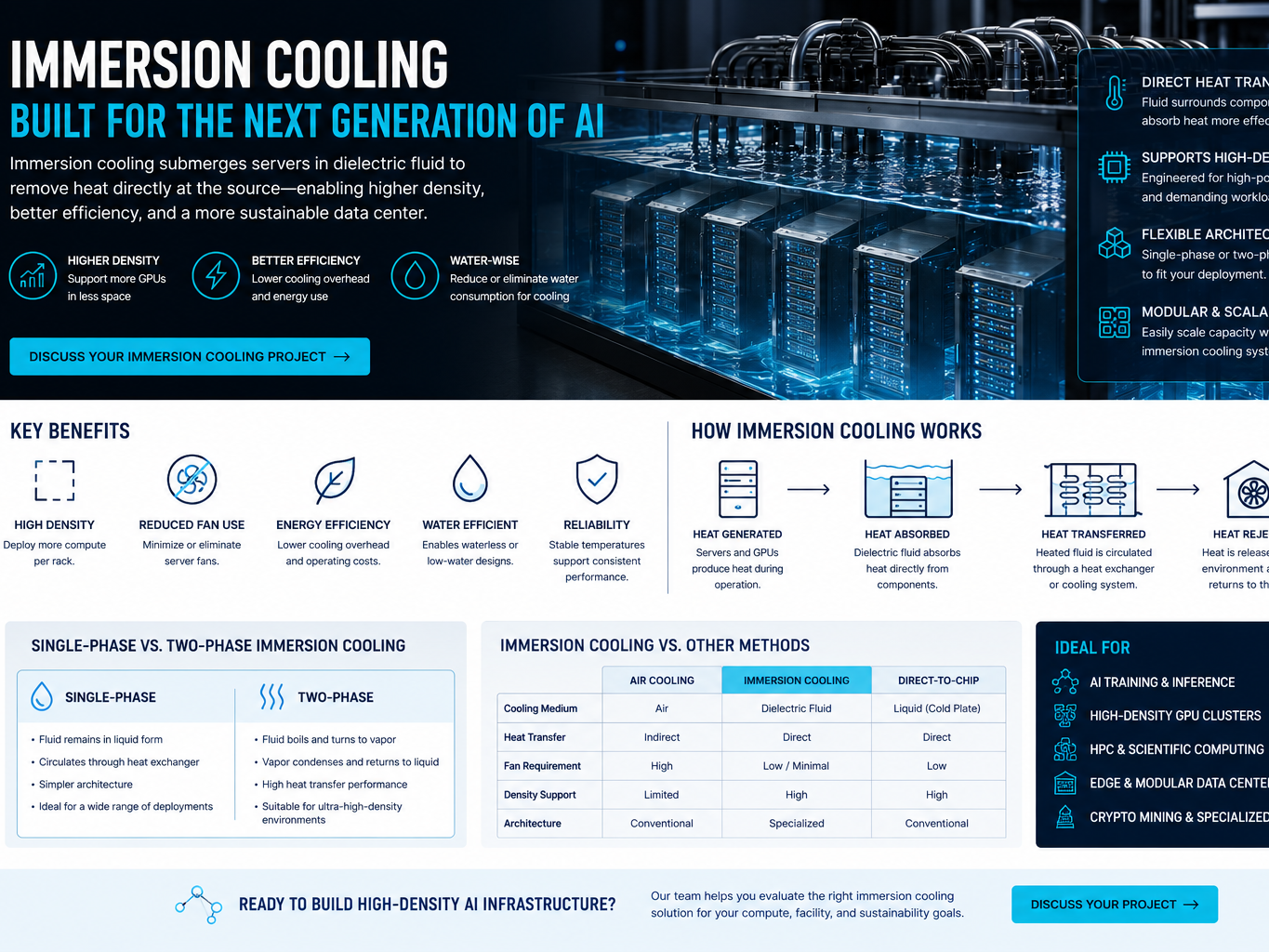
Immersion Cooling
Immersion cooling takes a different approach by placing servers or selected components directly into a dielectric cooling fluid.
Heat is transferred from the computing equipment into the fluid, which is then circulated or processed through the cooling system.
Immersion cooling can be considered for extremely high-density environments where maximizing thermal performance, space utilization or energy efficiency is a priority.
There are two major approaches:
• Single-phase immersion cooling
• Two-phase or phase-change immersion cooling
Liquid Cooling vs. Air Cooling
Air cooling remains appropriate for many data center applications, particularly at conventional rack densities. However, AI and HPC workloads are changing the thermal profile of modern compute environments.
Liquid cooling can offer advantages when rack power and component temperatures become difficult to manage with conventional airflow.
The best architecture depends on the application. Liquid cooling is not automatically the right answer for every facility, but it is becoming increasingly important as compute density rises.
Liquid Cooling for GPUs
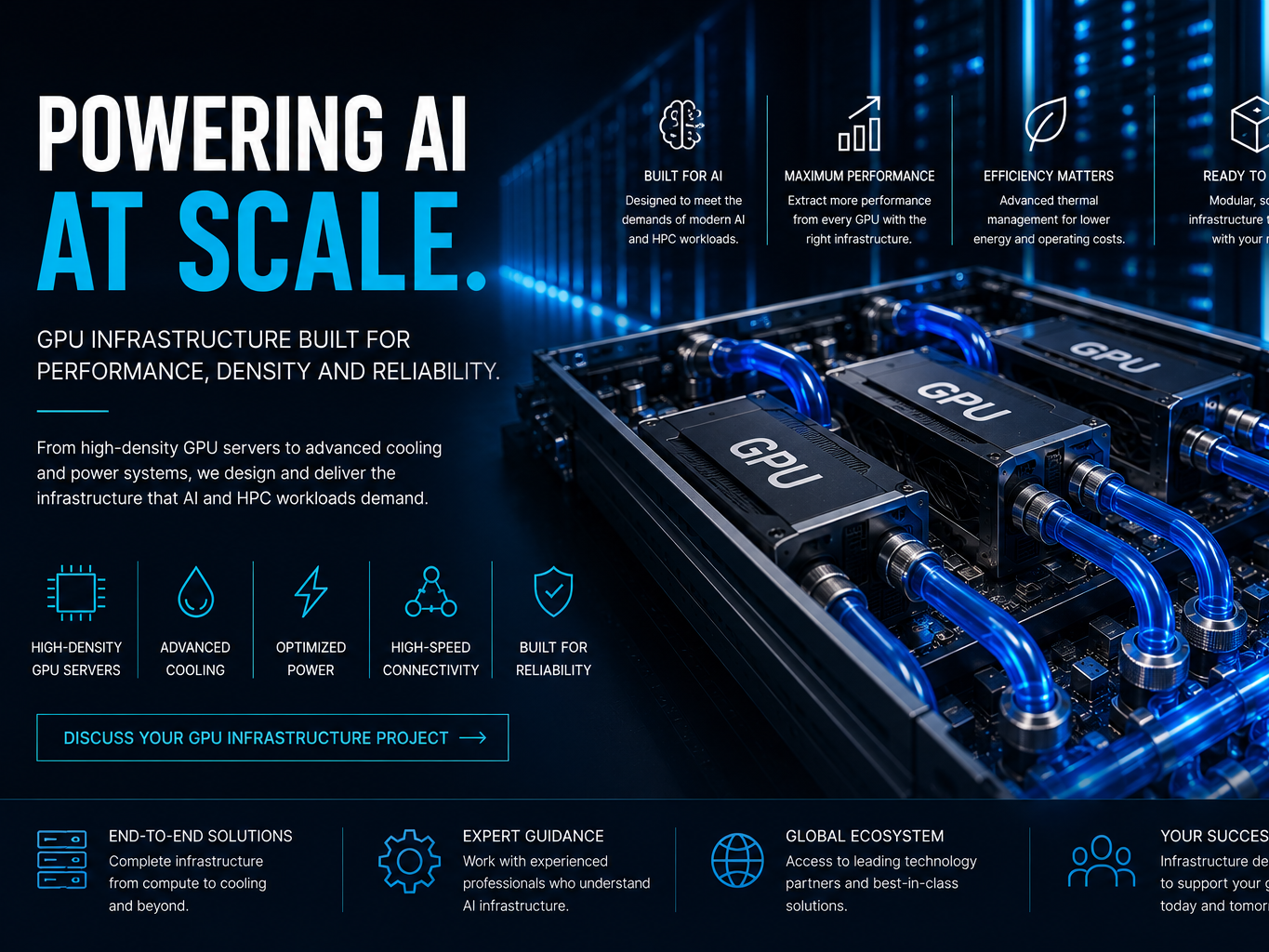
One of the biggest drivers of liquid cooling adoption is the increasing power density of modern GPUs.
AI training, inference and HPC workloads can require large numbers of high-performance processors operating continuously at high utilization. This creates concentrated heat loads that must be managed reliably.
GPU liquid cooling can use direct-to-chip cold plates or immersion architectures to remove heat directly from the source.
When evaluating a GPU infrastructure project, important considerations include:
• GPU platform
• GPU power consumption
• Number of GPUs
• Rack density
• Cooling capacity per rack
• Total IT load
• Facility cooling architecture
• Expansion requirements
Planning the cooling architecture around the GPU deployment can help avoid costly infrastructure limitations later.
High-Density Liquid Cooling
The shift toward AI is also driving higher rack power densities.
Traditional enterprise workloads may operate at relatively modest rack densities, while AI and HPC environments can require significantly more cooling capacity per rack.
High-density liquid cooling can provide the thermal infrastructure required to support these environments.
Rather than designing around today's compute requirements alone, organizations should consider how rack density and processor power are likely to evolve over the lifetime of the facility.
Liquid Cooling Distribution Systems
Liquid cooling infrastructure extends beyond the server.
A complete data center liquid cooling system can include:
• Cold plates
• Manifolds
• Pumps
• Heat exchangers
• Cooling distribution units
• Rack-level distribution
• Facility-level heat rejection
• Monitoring and control systems
The cooling architecture needs to work as an integrated system to provide reliable heat removal from the processor through to the final heat rejection stage.
Liquid Cooling and Data Center Efficiency
Cooling can represent a significant portion of data center infrastructure energy consumption.
By moving heat more efficiently and reducing the amount of air that needs to be circulated, liquid cooling can potentially improve overall cooling efficiency in high-density environments.
However, efficiency should be evaluated across the complete system rather than looking at the cooling technology in isolation.
Important metrics can include:
• PUE
• Cooling energy consumption
• Pumping power
• Heat rejection efficiency
• Rack density
• Water consumption
• Total infrastructure requirements
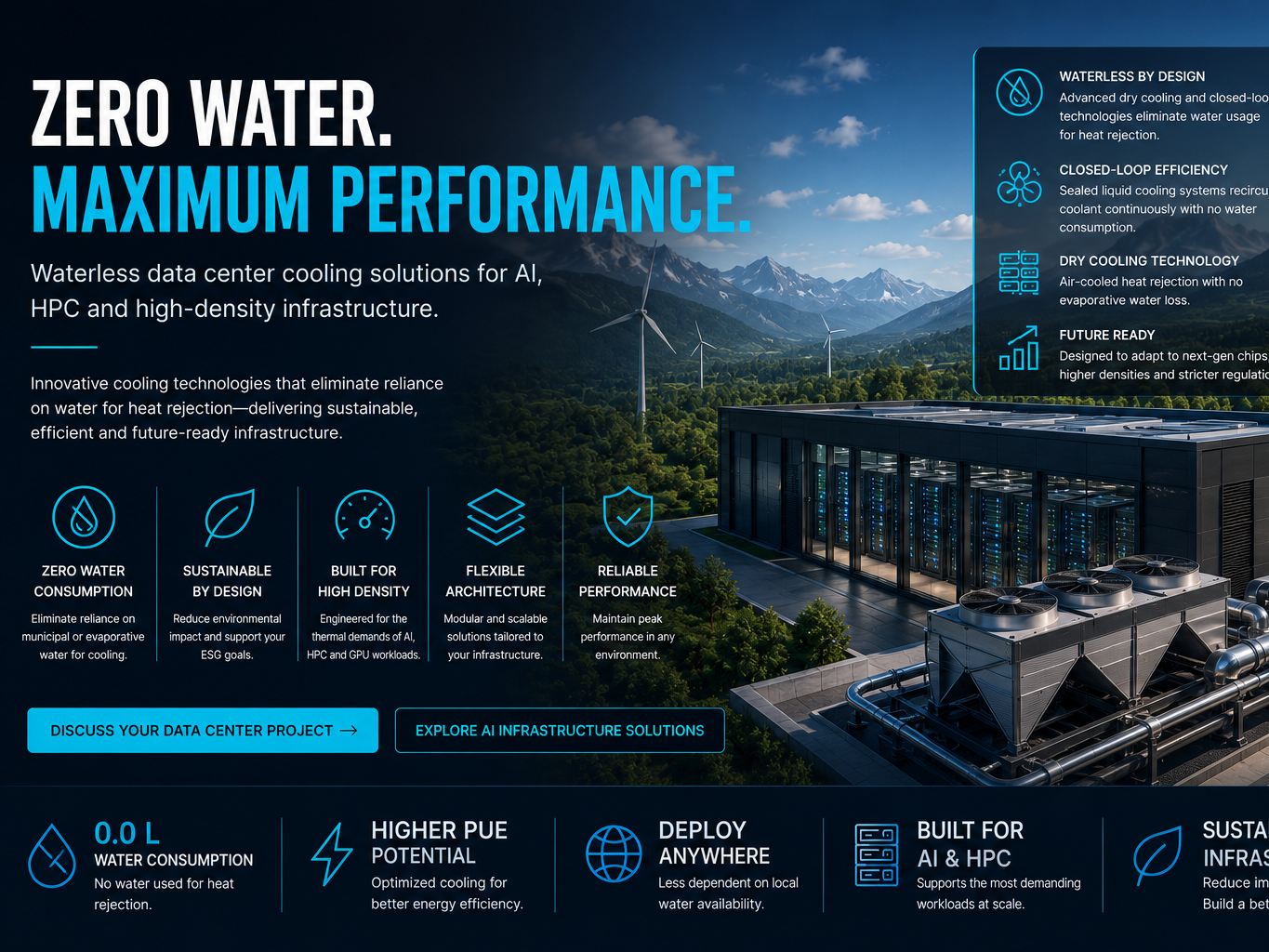
Liquid Cooling and Water Consumption
Water availability is becoming an important factor in data center development.
Depending on the architecture, liquid cooling can be designed as part of a closed-loop system that minimizes the need for continuous water consumption.
For organizations developing AI infrastructure in water-constrained locations, evaluating water-efficient and waterless cooling alongside thermal performance can be an important part of site and infrastructure planning.
Liquid Cooling for Modular Data Centers
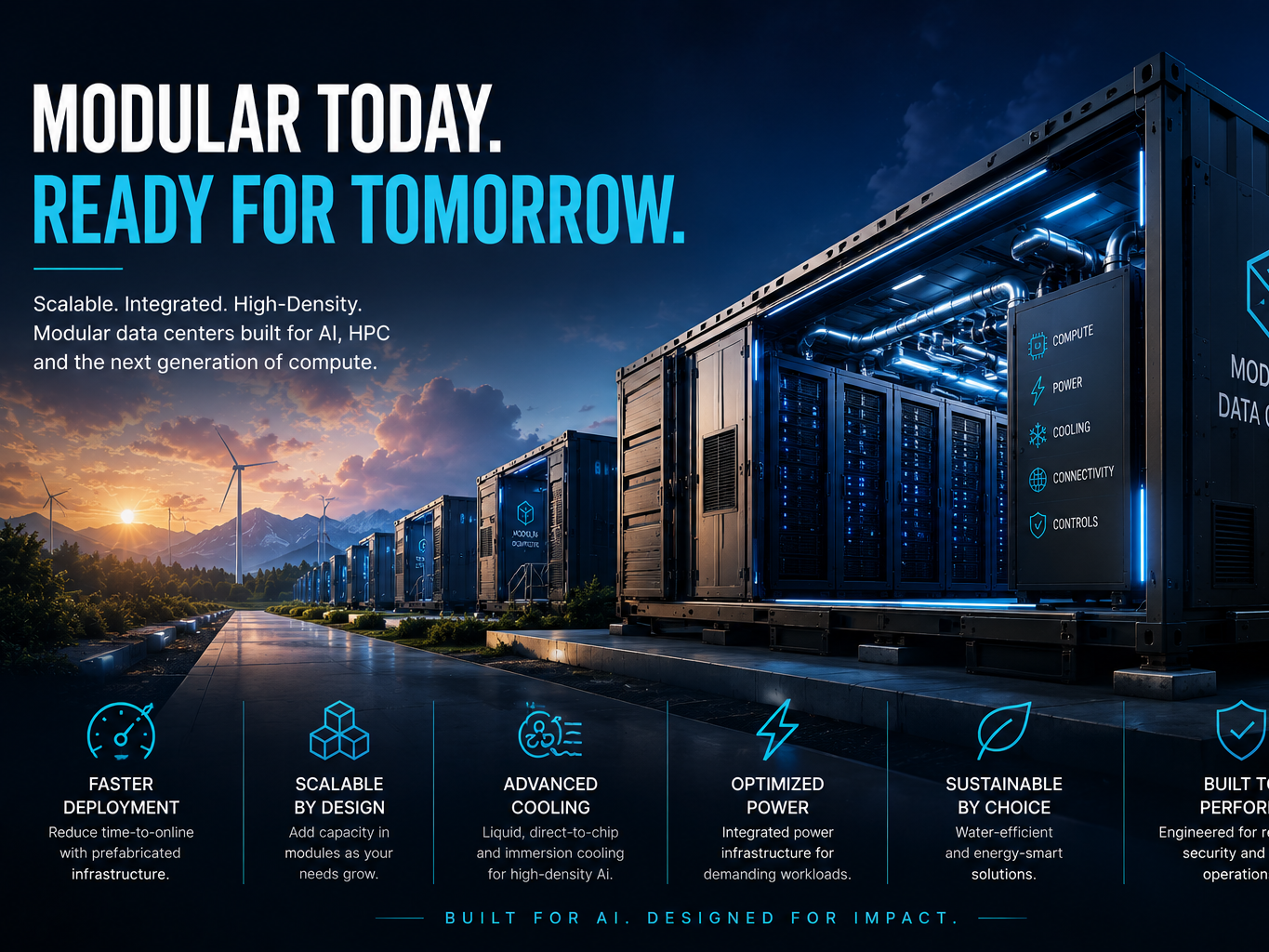
Liquid cooling can also be integrated into modular and containerized data center infrastructure.
This can be particularly relevant for AI and HPC deployments where organizations need to deploy high-density computing capacity quickly or in locations where conventional data center construction is challenging.
An integrated modular approach can combine:
• Compute infrastructure
• Liquid cooling
• Power distribution
• Heat rejection
• Monitoring
• Supporting mechanical infrastructure
This allows cooling to be designed around the compute deployment rather than treated as a separate facility constraint.
Choosing the Right Liquid Cooling Technology
The best liquid cooling solution depends on the requirements of each deployment.
Before selecting a technology, organizations should evaluate:
• Compute requirements
What processors and GPUs will be deployed, and what are their expected thermal loads?
What processors and GPUs will be deployed, and what are their expected thermal loads?
• Rack density
How much power and heat will each rack generate?
How much power and heat will each rack generate?
• Facility design
Is this a new build, retrofit or modular deployment?
Is this a new build, retrofit or modular deployment?
• Cooling architecture
Would direct-to-chip, immersion or a hybrid approach be most appropriate?
Would direct-to-chip, immersion or a hybrid approach be most appropriate?
• Water availability
Are water consumption and site constraints important?
Are water consumption and site constraints important?
Scalability
Will future GPU generations significantly increase rack power?
Will future GPU generations significantly increase rack power?
• Economics
What are the capital, operating and maintenance requirements?
What are the capital, operating and maintenance requirements?
Planning a Liquid-Cooled AI or Data Center Deployment?
Whether you are planning a new AI facility, upgrading an existing data center or evaluating cooling options for high-density GPU infrastructure, the right architecture should be considered early in the design process.
We help organizations understand the available liquid cooling technologies for AI and data center infrastructure and, where there is a strong fit, connect qualified projects with experienced technology providers.
FAQs
What is liquid cooling?
Liquid cooling uses a liquid coolant to transfer heat away from high-power computing components and move it to a heat rejection system.
How does liquid cooling work in a data center?
Coolant absorbs heat from processors or other IT equipment, circulates through a cooling loop and transfers that heat through a heat exchanger or other system before the coolant is recirculated.
Why is liquid cooling used for AI servers?
AI servers can contain high-power GPUs that generate significant thermal loads. Liquid cooling can transfer heat more efficiently from these components and support higher-density computing environments.
What are the main types of liquid cooling?
The main approaches include direct-to-chip/cold-plate cooling and immersion cooling. Hybrid architectures are also possible.
Is liquid cooling more efficient than air cooling?
Liquid has significantly different heat-transfer characteristics than air, making it well suited to high-density thermal loads. Overall system efficiency, however, depends on the complete cooling and heat-rejection architecture.
Does liquid cooling use water?
Not necessarily. Liquid cooling can use different coolants and can operate in closed loops. The liquid used within the cooling system should also be distinguished from the facility's overall water consumption.
Can liquid cooling support high-density GPU racks?
Yes. Supporting high-density GPU infrastructure is one of the major applications driving adoption of liquid cooling.
Can liquid cooling be retrofitted into an existing data center?
Potentially. Retrofit complexity depends on the existing facility, server compatibility, rack configuration, cooling plant and available space.