Immersion Cooling for AI, GPUs & High-Density Data Centers
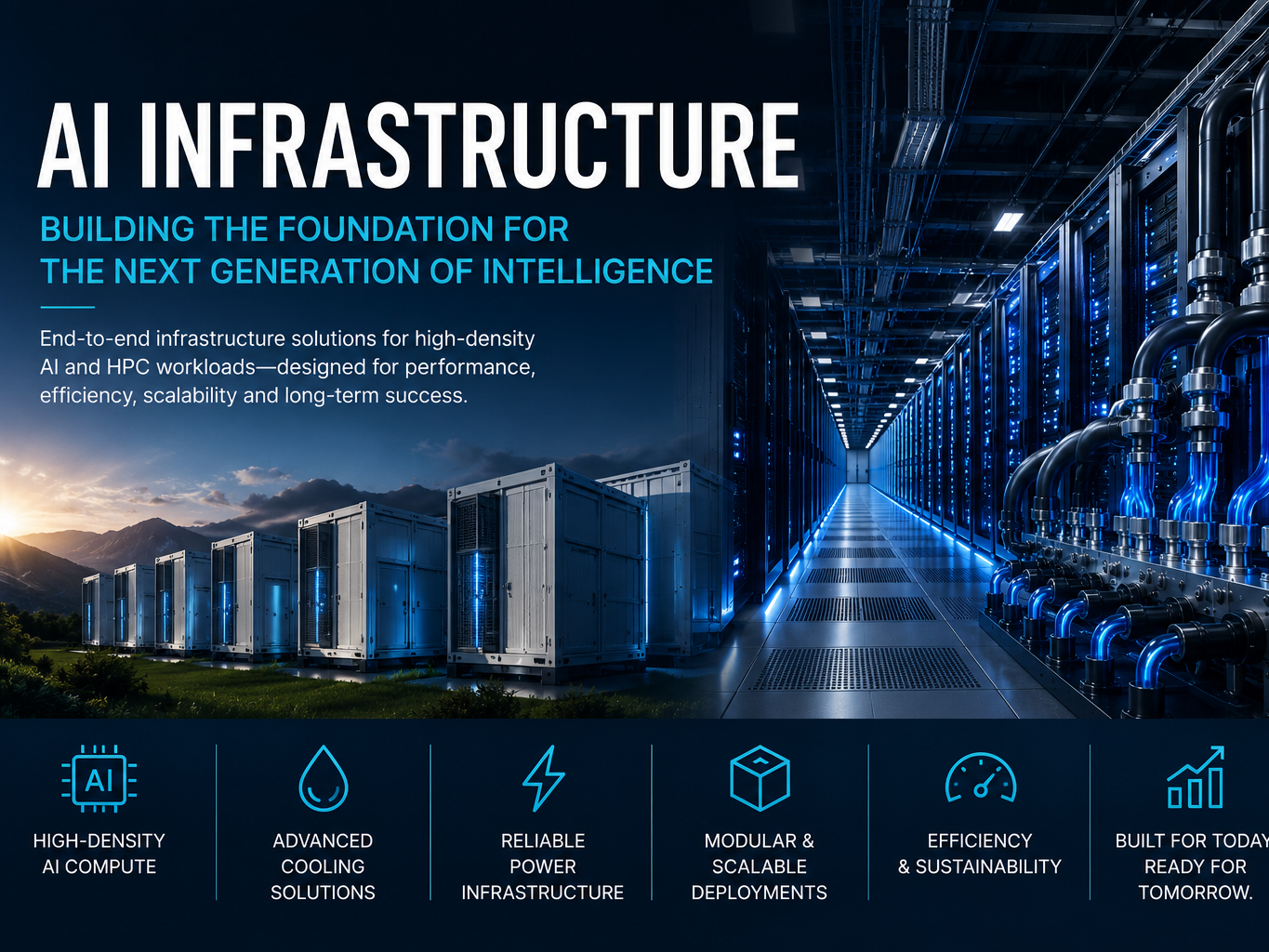
As AI and HPC workloads drive higher GPU power and rack densities, traditional air cooling is increasingly being challenged.
Immersion cooling offers a different approach by placing servers or selected components directly into a dielectric, electrically non-conductive cooling fluid. This allows heat to be transferred directly from the computing equipment into the cooling system.
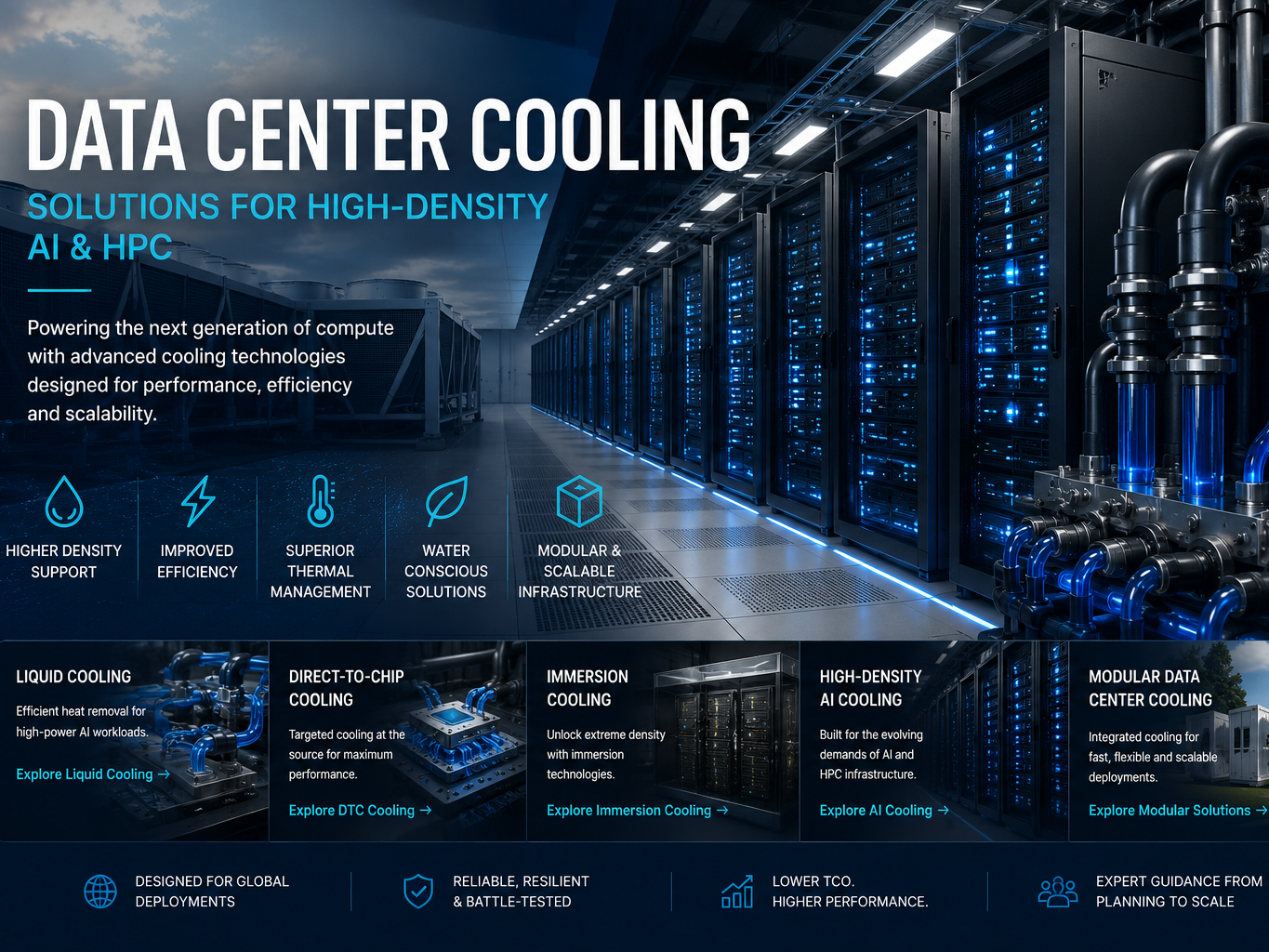
We help organizations evaluate immersion cooling solutions for AI, GPUs, HPC and high-density data centers, alongside direct-to-chip and other liquid cooling technologies.
What Is Immersion Cooling?
Immersion cooling is a thermal management technology in which computing equipment is submerged in a dielectric cooling fluid.
The fluid absorbs heat from GPUs, CPUs and other components before transferring it to a heat-rejection system.
Unlike conventional air cooling, the cooling medium surrounds the equipment directly.
This makes immersion cooling particularly relevant to:
• AI infrastructure
• High-density GPU clusters
• HPC
• High-performance computing
• Edge computing
• Specialized data center deployments
Why Use Immersion Cooling for AI?
Modern AI servers can generate significant heat as GPUs operate at high utilization.
Immersion cooling can help manage these thermal loads while reducing reliance on conventional airflow-based cooling.
Potential benefits include:
• High-density compute support
• Direct heat transfer
• Reduced airflow requirements
• Potentially lower cooling infrastructure footprint
• Flexible heat-rejection options
• Support for high-power GPU deployments
• The actual benefits depend on the equipment and complete cooling architecture.
How Does Immersion Cooling Work?
The process is straightforward:
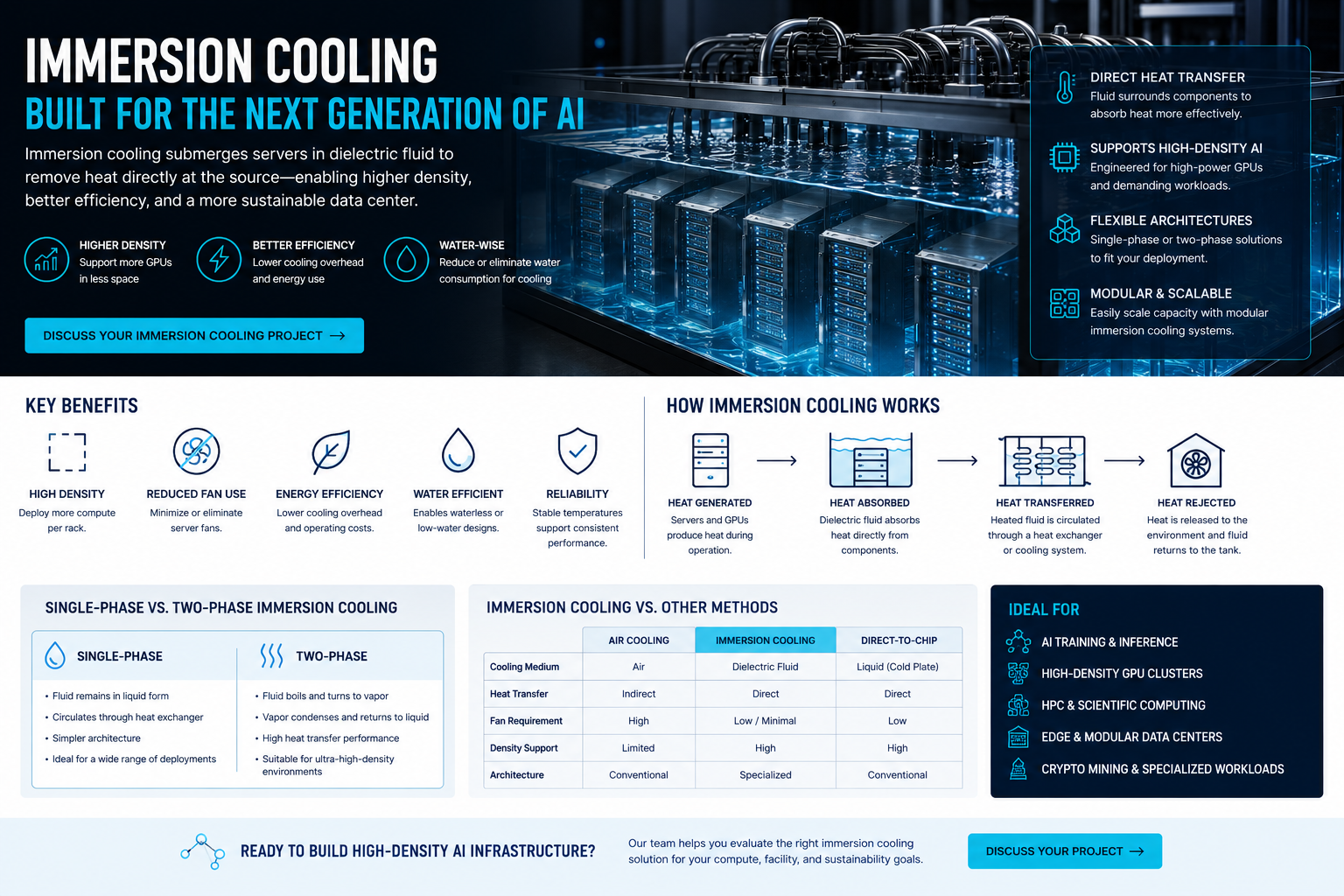
GPU / CPU → Dielectric Fluid → Heat Exchanger → Heat Rejection
The computing equipment is placed in a tank containing dielectric coolant. Heat transfers from the components into the fluid, which then circulates through a heat exchanger or cooling system before returning to the tank.
Single-Phase vs. Two-Phase Immersion Cooling
There are two primary approaches.
Single-Phase Immersion Cooling
The dielectric fluid remains liquid while circulating through the system and removing heat.
Two-Phase Immersion Cooling
The fluid changes from liquid to vapor as it absorbs heat and then condenses back into liquid.
The right choice depends on the equipment, workload, operating environment and project requirements.
Immersion Cooling vs. Direct-to-Chip
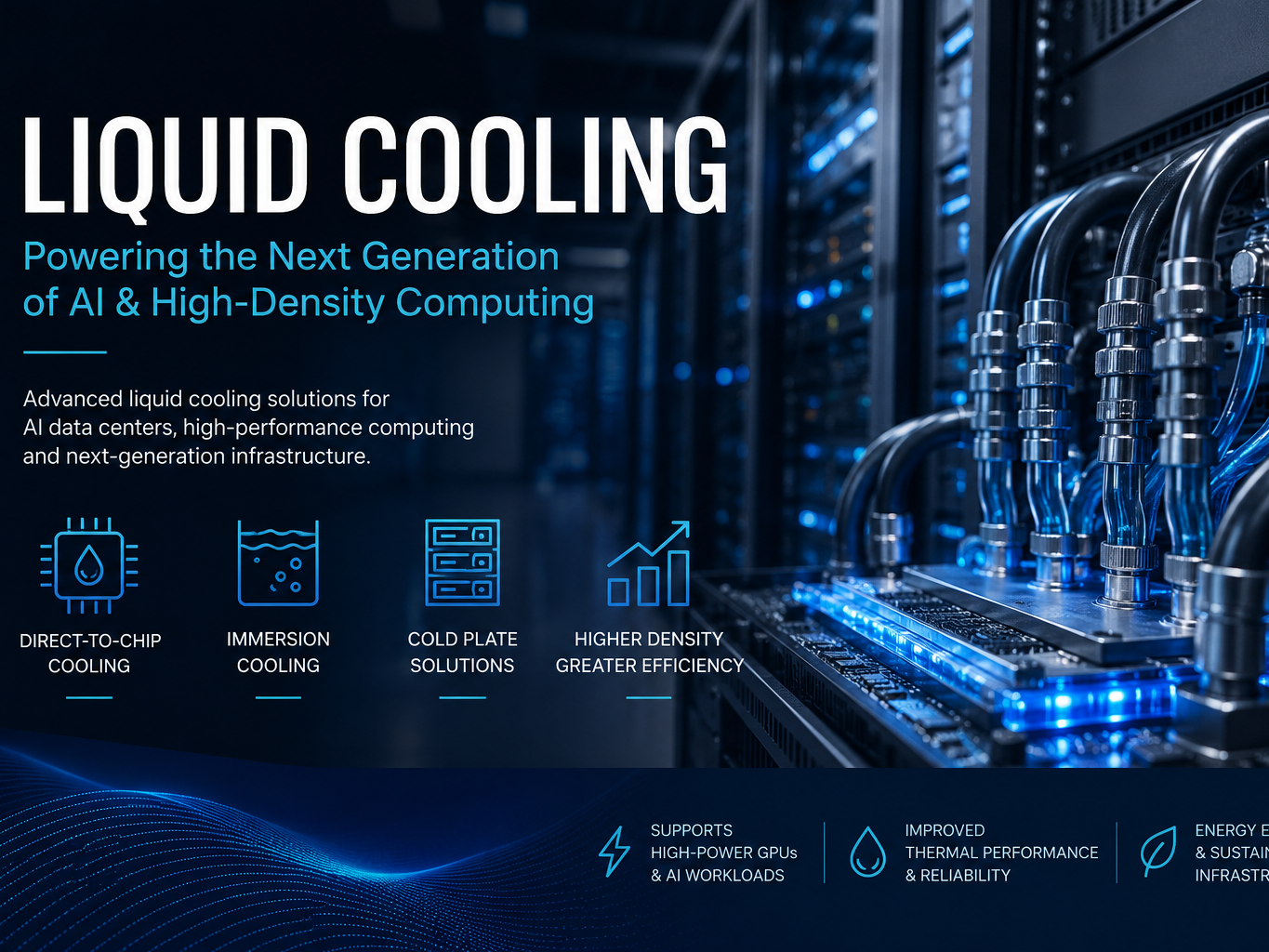
Both are liquid cooling technologies, but they work differently.
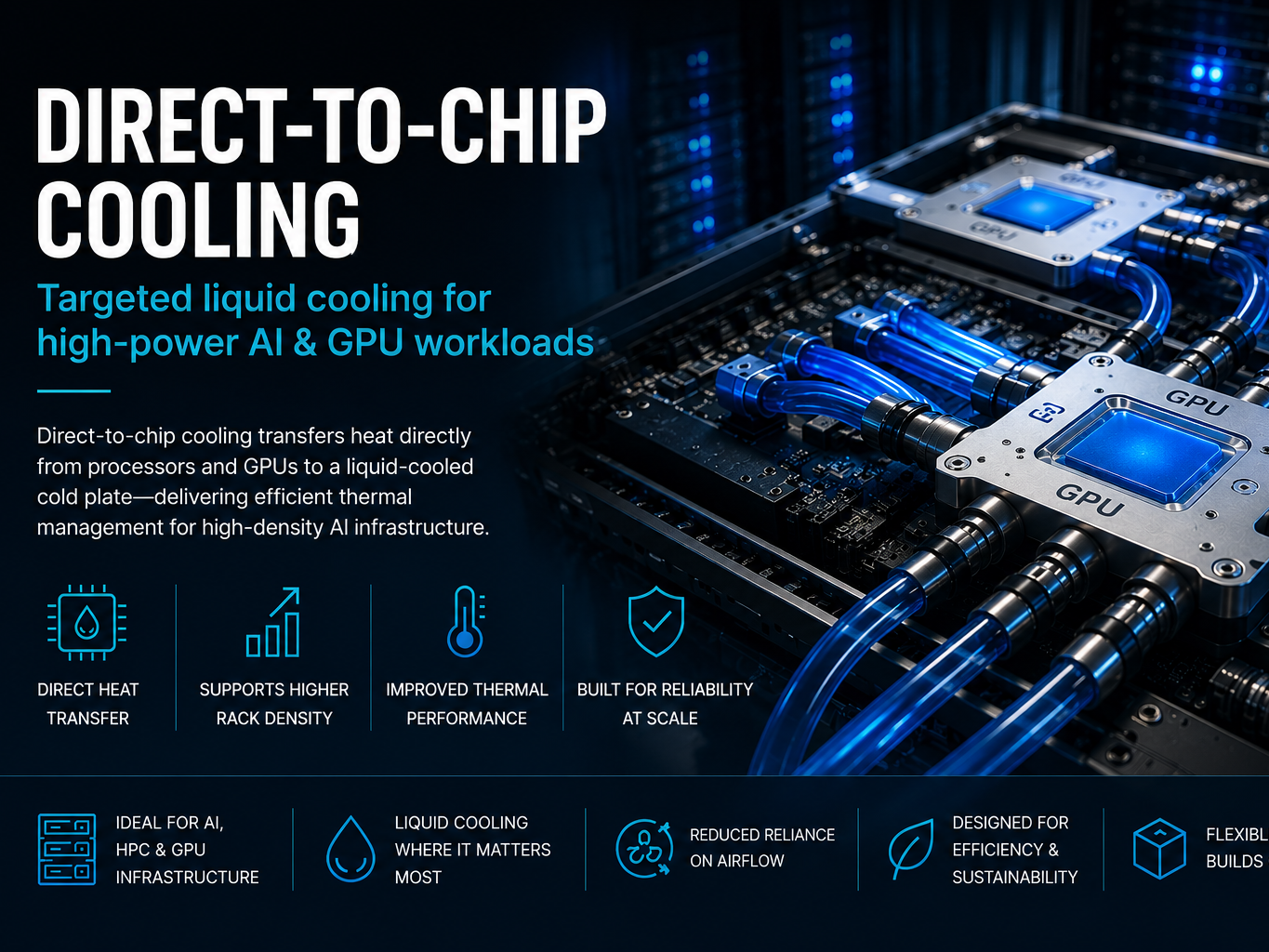
Direct-to-chip cooling uses cold plates attached directly to GPUs and CPUs.
Immersion cooling surrounds the computing equipment with dielectric fluid.
Direct-to-chip can be attractive when organizations want to maintain a relatively conventional server architecture.
Immersion can be attractive when the project is designed around a more fundamental change in thermal management.
Immersion Cooling vs. Air Cooling
Air cooling remains effective for many conventional data center workloads.
However, as GPU power and rack density increase, moving sufficient air through the computing environment can become increasingly challenging.
Immersion cooling brings the cooling medium directly to the equipment instead.
The best solution depends on the deployment.
Immersion Cooling for GPUs
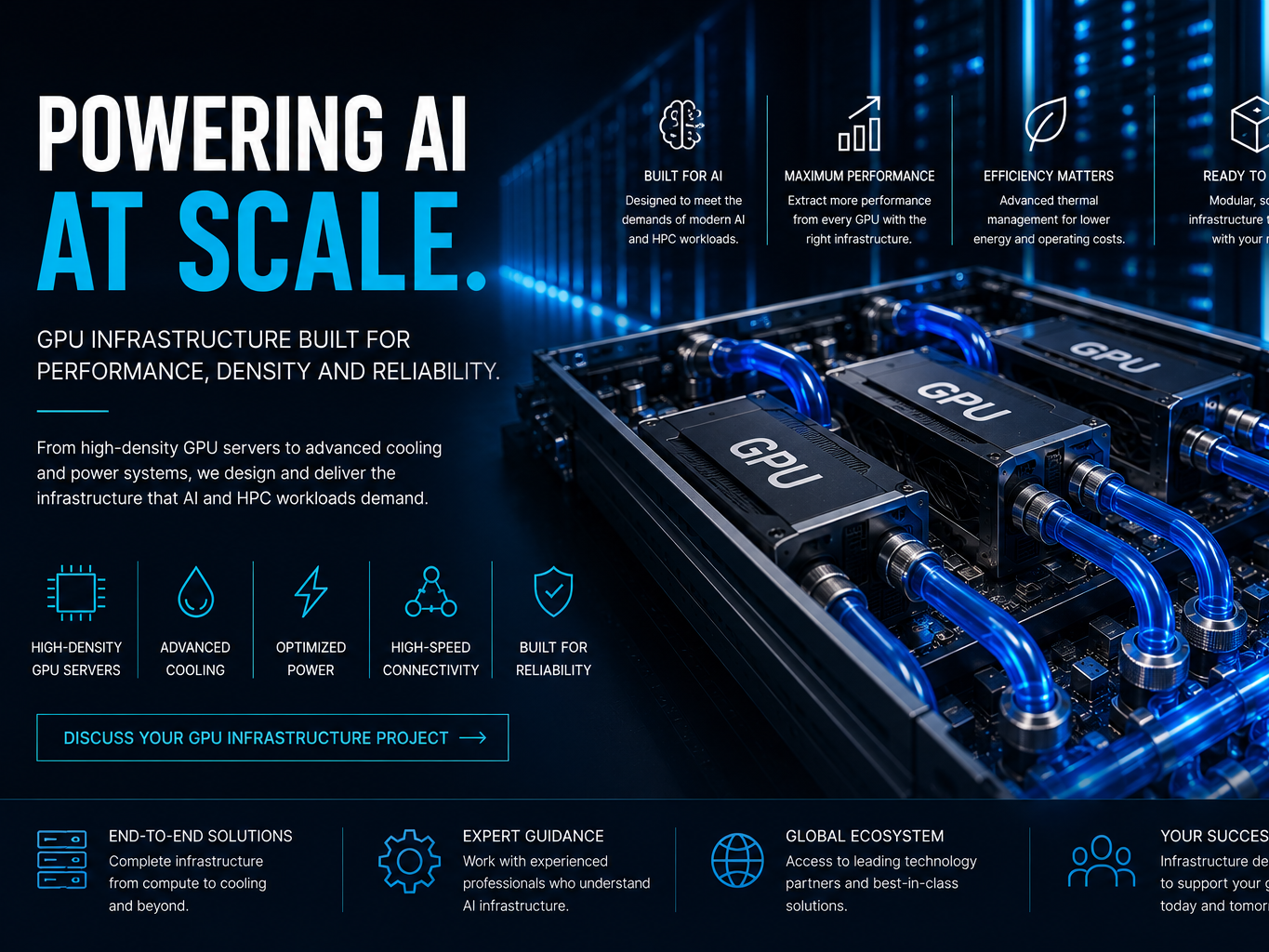
GPU immersion cooling is particularly relevant to AI and HPC environments where large numbers of high-power GPUs operate at high utilization.
Applications include:
• AI training
• AI inference
• GPU cloud infrastructure
• HPC
• Scientific computing
• High-density GPU clusters
The cooling system should be evaluated alongside GPU power, rack density, networking and facility requirements.
Does Immersion Cooling Use Water?
Not necessarily.
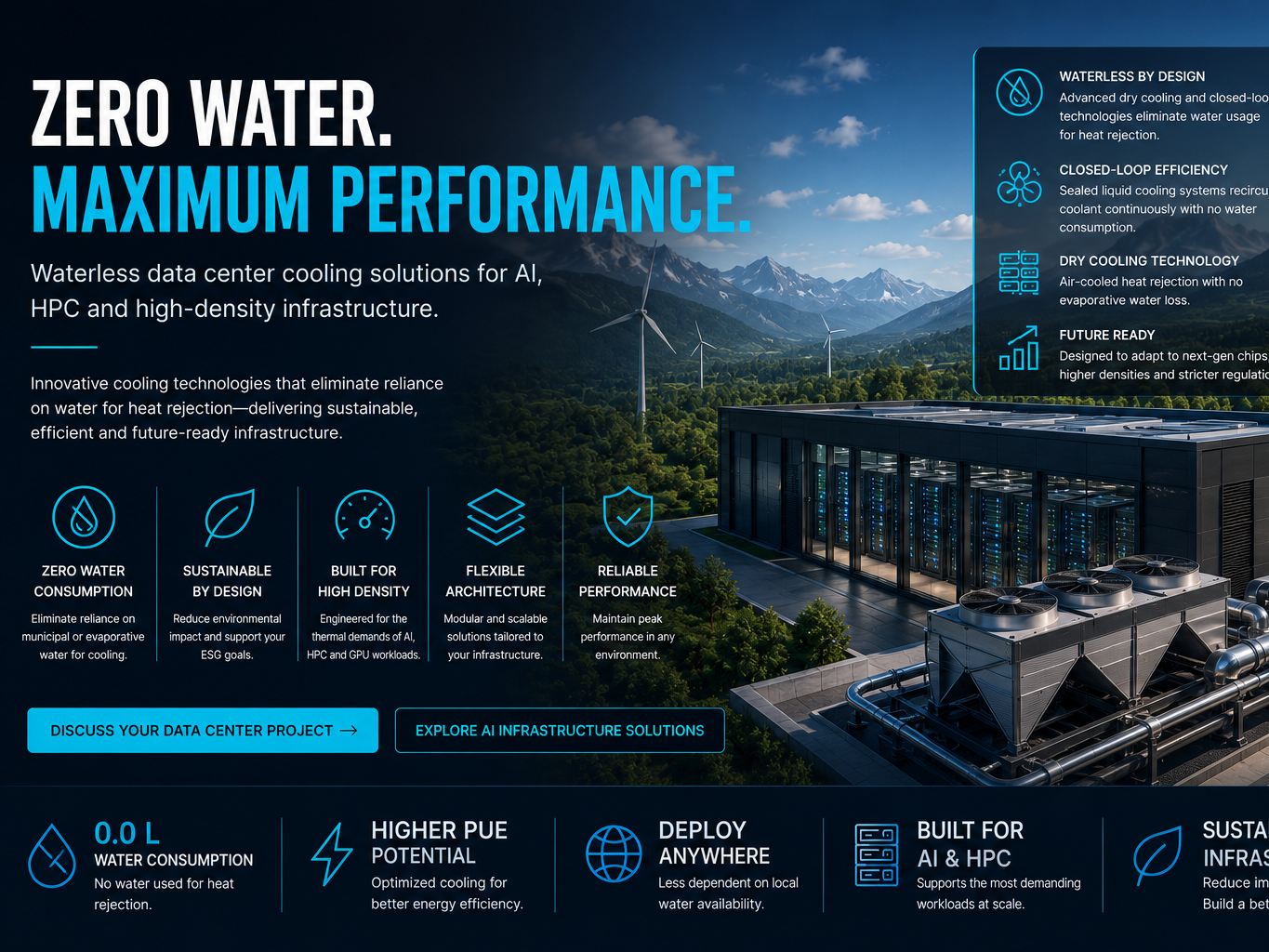
Immersion cooling uses a dielectric fluid that circulates within the cooling system. Depending on the heat-rejection architecture, the overall data center can be designed to minimize or eliminate continuous water consumption.
For water-constrained AI deployments, immersion cooling can therefore be part of a water-efficient or waterless cooling strategy.
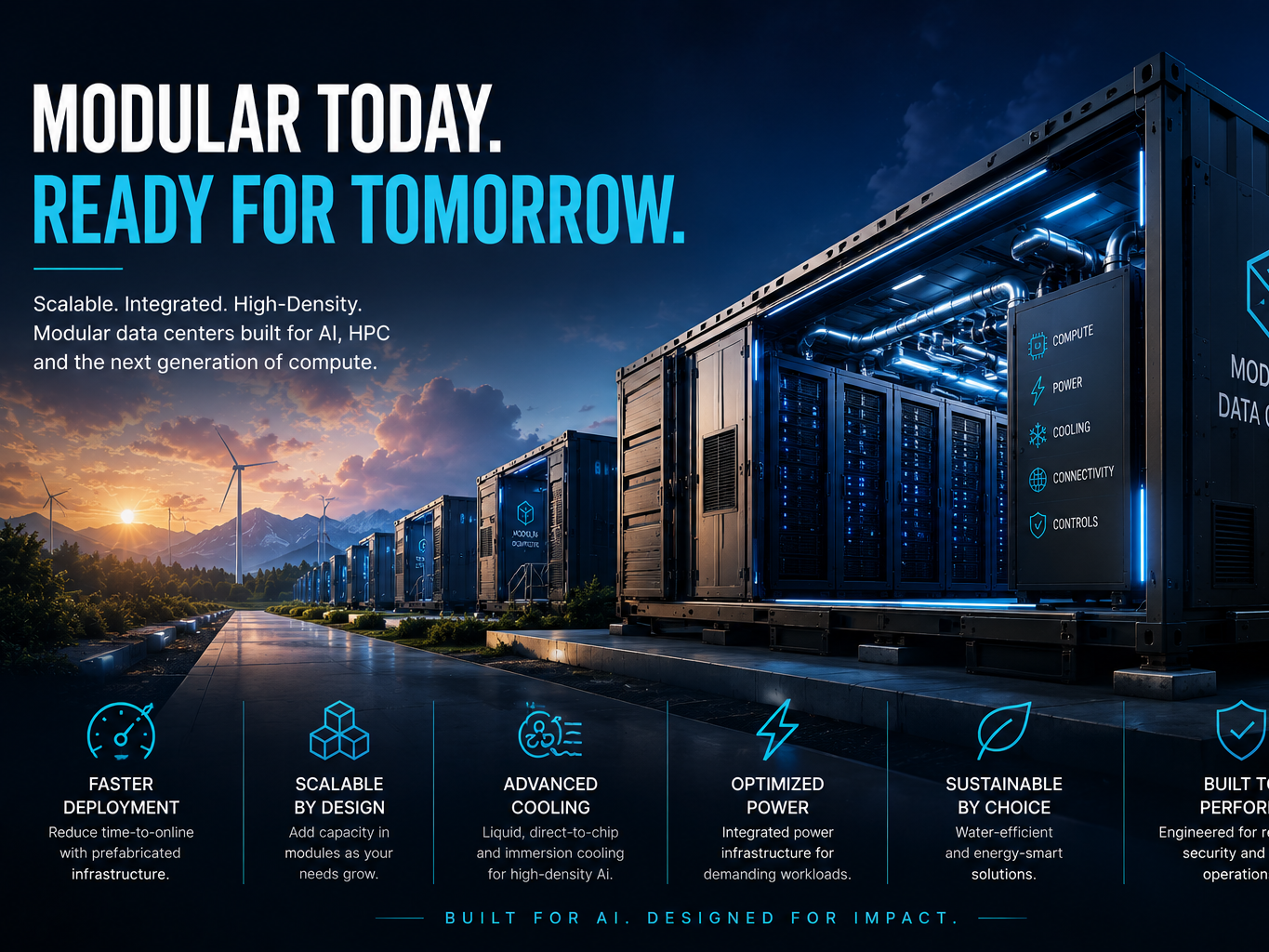
Immersion Cooling for Modular Data Centers
Immersion cooling can be integrated into modular and containerized data centers.
This can be particularly useful when organizations need to deploy high-density GPU capacity quickly or in locations with limited conventional data center infrastructure.
A modular immersion deployment can integrate:
• GPU servers
• Immersion tanks
• Dielectric coolant
• Heat exchangers
• Power infrastructure
• Networking
• Heat rejection
• Monitoring
Is Immersion Cooling Right for Your Data Center?
Immersion cooling isn't automatically the best solution for every workload.
The right approach depends on:
• GPU and CPU platform
• Rack density
I• T load
• Cooling requirements
• Server compatibility
• Maintenance strategy
• Water availability
• Site conditions
• Deployment timeline
• Future scalability
For many conventional workloads, air cooling remains appropriate. For high-density AI and HPC, immersion and direct-to-chip cooling deserve serious consideration.
Planning an Immersion-Cooled AI Data Center?
We help organizations evaluate immersion cooling, direct-to-chip cooling, liquid cooling and modular data center infrastructure based on their compute and facility requirements.
Where there is a strong fit, we can facilitate introductions to experienced technology providers.
Discuss Your Immersion Cooling Project with us