Best Direct-to-Chip Cooling for AI, GPUs & High-Density Data Centers
As AI and high-performance computing continue to increase GPU power and rack density, data centers need more effective ways to remove heat from high-performance processors.
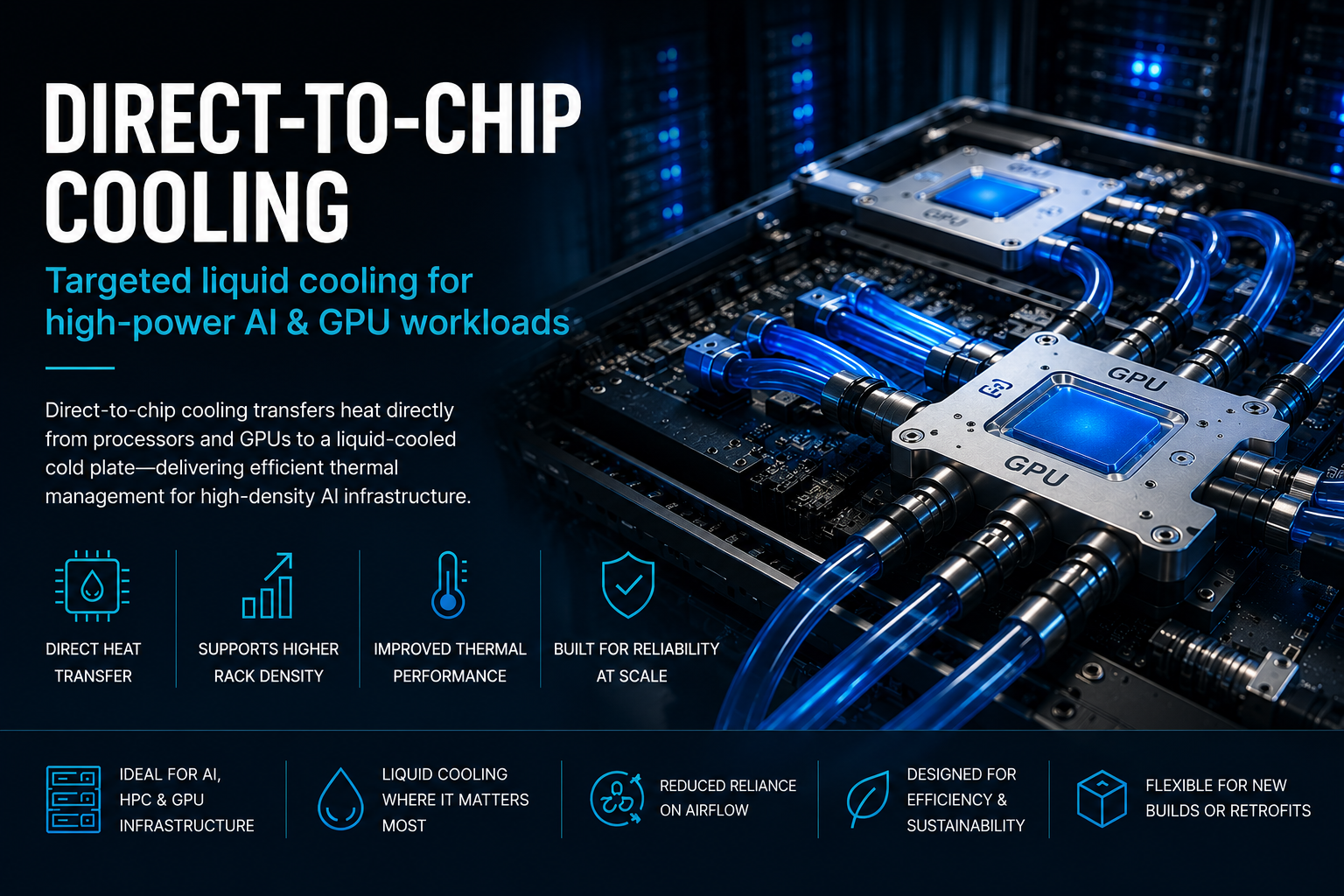
Direct-to-chip cooling provides a targeted liquid cooling approach that transfers heat directly from high-power CPUs and GPUs to a cold plate, helping data centers manage the thermal demands of modern AI and HPC workloads.
We help organizations evaluate direct-to-chip cooling solutions for AI servers, GPU infrastructure and high-density data centers, alongside other approaches including immersion cooling, hybrid cooling and advanced modular infrastructure.
What Is Direct-to-Chip Cooling?
Direct-to-chip cooling, also known as direct liquid cooling, uses a liquid-cooled cold plate mounted directly to a processor or other high-power component.
Instead of relying primarily on air to carry heat away from the server, coolant circulates through the cold plate and transfers heat away from the processor.
This makes direct-to-chip cooling particularly relevant for applications where GPUs and CPUs generate concentrated thermal loads.
A typical direct-to-chip cooling architecture can include:
• GPU and CPU cold plates
• Coolant distribution manifolds
• Quick disconnects and hoses
• Pumps
• Cooling distribution units
• Heat exchangers
• Facility-level heat rejection
• Monitoring and control systems
The exact configuration depends on the server design, rack density, cooling requirements and facility architecture.
Why Direct-to-Chip Cooling for AI?
The rapid growth of AI computing is increasing the amount of power and heat concentrated within individual servers and racks.
Modern AI workloads can involve large numbers of high-performance GPUs operating at high utilization. As processor power increases, thermal management becomes an increasingly important part of data center design.
Direct-to-chip liquid cooling addresses this challenge by targeting the heat generated at the processor itself.
For AI infrastructure, this can make direct-to-chip cooling an important option when evaluating:
• High-density GPU servers
• AI training infrastructure
• AI inference infrastructure
• HPC clusters
• High-power CPU and GPU systems
• High-density data center racks
• Next-generation AI compute platforms
How Direct-to-Chip Cooling Works?
A direct-to-chip cooling system typically follows a straightforward thermal path.
1. Heat is generated
A CPU or GPU produces heat during operation.
2. The cold plate absorbs heat
A thermally conductive cold plate is positioned directly against the processor.
3. Coolant removes the heat
Liquid coolant circulates through channels within the cold plate, absorbing heat from the processor.
4. Heat moves through the cooling loop
The heated coolant flows away from the server through the distribution system.
5. Heat is rejected
The cooling system transfers the heat to the appropriate facility-level heat rejection system.
This creates a continuous thermal management loop between the processor and the facility.
Direct-to-Chip Cooling for GPUs
GPUs are one of the primary drivers behind the adoption of direct liquid cooling.
AI and HPC applications can place significant thermal loads on GPU processors, particularly when large numbers of GPUs are deployed in high-density configurations.
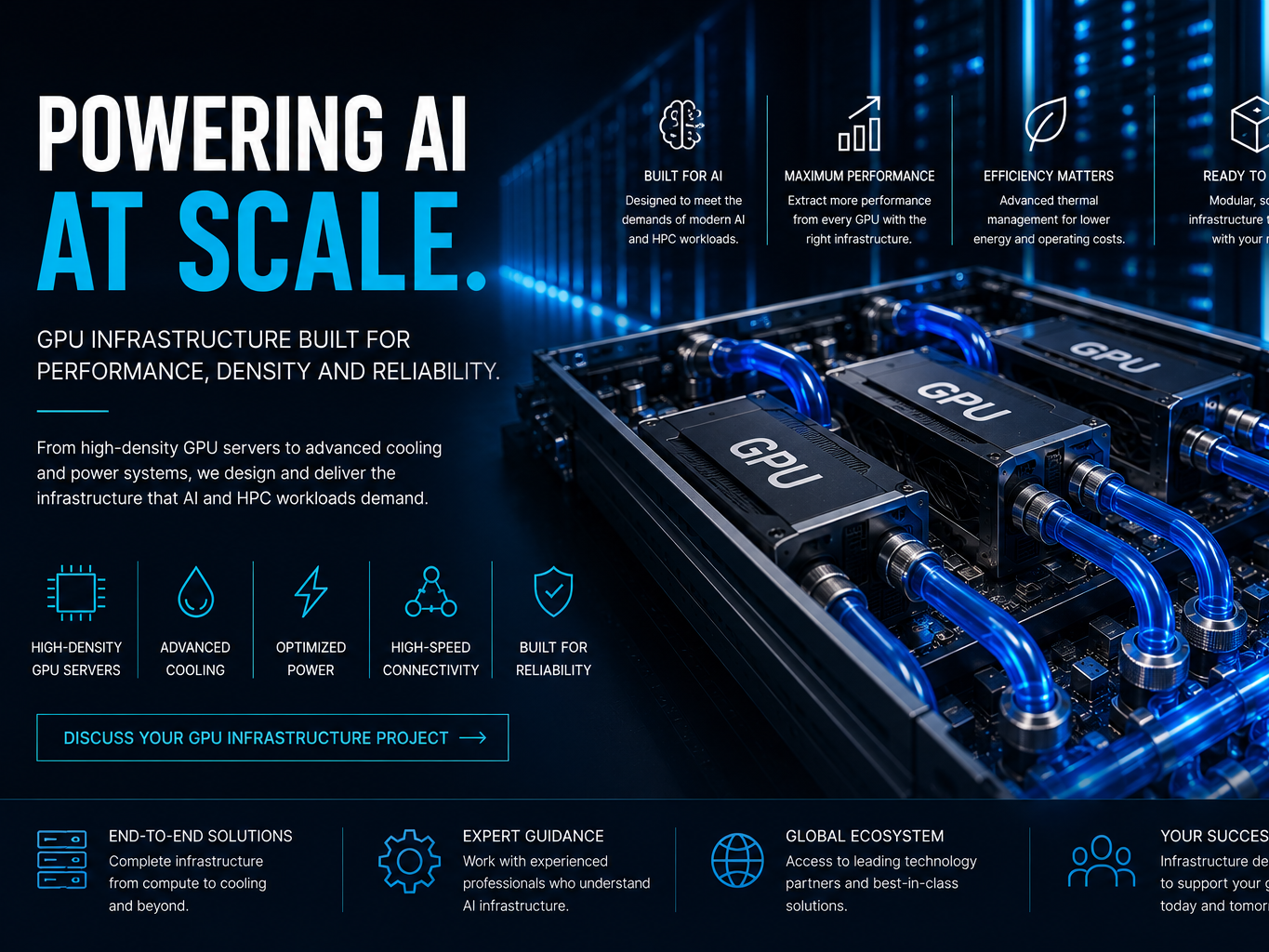
GPU direct-to-chip cooling places the cooling interface directly on the GPU, allowing the system to target one of the primary sources of heat inside the server.
When evaluating a GPU cooling architecture, important considerations include:
• GPU model and generation
• Processor thermal design
• Number of GPUs per server
• Rack power
• Cooling capacity
• Coolant type
• Server compatibility
• Manifold and distribution design
• Facility heat rejection
• Future GPU upgrades
Cooling should be considered alongside the broader GPU infrastructure strategy rather than as an isolated server component.
Direct-to-Chip Cooling for AI Servers
AI servers can contain multiple high-power processors operating within a relatively compact chassis.
Direct-to-chip cooling can be integrated into these systems to manage processor heat while allowing the rest of the server architecture to remain largely familiar.
This can make direct liquid cooling relevant for organizations evaluating upgrades to existing facilities as well as new AI data center deployments.
Potential applications include:
• AI training clusters
• AI inference clusters
• GPU cloud infrastructure
• HPC environments
• Research computing
• Enterprise AI
• High-performance workstation infrastructure
• High-density colocation
Direct-to-Chip vs. Air Cooling
Air cooling remains a practical solution for many data center workloads. However, increasing processor power and rack density can create challenges for conventional air-based thermal management.
Direct-to-chip cooling provides a different approach by bringing liquid cooling directly to the primary heat-generating components.
The appropriate solution depends on the processor, rack density, facility and project requirements.
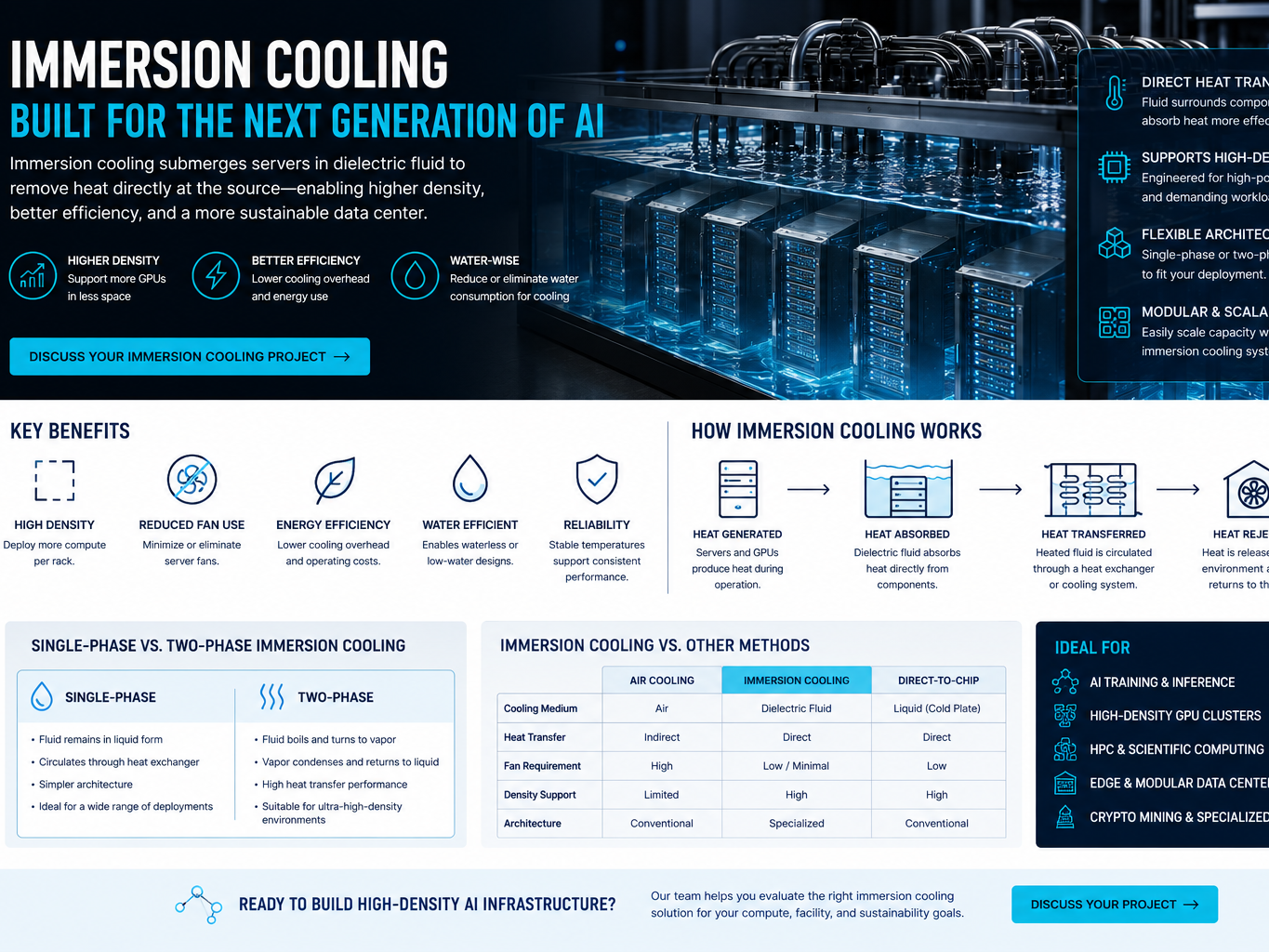
Direct-to-Chip vs. Immersion Cooling
Direct-to-chip and immersion cooling are both forms of liquid cooling, but they use fundamentally different architectures.
Direct-to-chip cooling brings liquid to selected high-power components through cold plates.
Immersion cooling places servers or selected equipment directly into a dielectric cooling fluid.
Direct-to-chip cooling may be attractive when organizations want targeted processor cooling while maintaining a more conventional server architecture.
Immersion cooling may be considered when extremely high density, thermal performance, space utilization or other infrastructure requirements justify a more fundamental change to the server environment.
Neither approach is universally better. The right technology depends on the deployment.
Cold Plate Cooling
The cold plate is the central component of many direct-to-chip cooling systems.
A GPU or CPU cold plate is designed to create an efficient thermal interface between the processor and the circulating coolant.
Cold plate design can involve considerations such as:
• Thermal resistance
• Coolant flow
• Pressure drop
• Channel geometry
• Material selection
• Processor footprint
• Mechanical mounting
• Reliability
• Serviceability
For high-density AI infrastructure, cold plates need to be considered as part of the complete cooling architecture rather than evaluated independently.
Direct Liquid Cooling Infrastructure
A direct-to-chip system extends beyond the cold plate.
A complete direct liquid cooling system for a data center can include:
• Server level
Cold plates, hoses, manifolds and quick disconnects.
• Rack level
Distribution manifolds and rack-level coolant management.
• Facility level
Cooling distribution units, pumps, heat exchangers and heat rejection systems.
• Control level
Sensors, monitoring, flow management and temperature controls.
Designing these components as an integrated system helps ensure that heat can move reliably from the processor to the final heat rejection stage.
Direct-to-Chip Cooling and High-Density Racks
As rack power increases, thermal management becomes increasingly important.
High-density AI racks can concentrate substantial amounts of compute into a small physical footprint. This can create challenges for airflow, heat removal and facility cooling capacity.
Direct-to-chip cooling for high-density data centers provides a way to target processor-level heat while reducing reliance on moving large volumes of air through the server environment.
The cooling architecture should be designed around the expected rack density rather than simply the current server configuration.
Water-Efficient Direct-to-Chip Cooling
Liquid cooling does not automatically mean high water consumption.
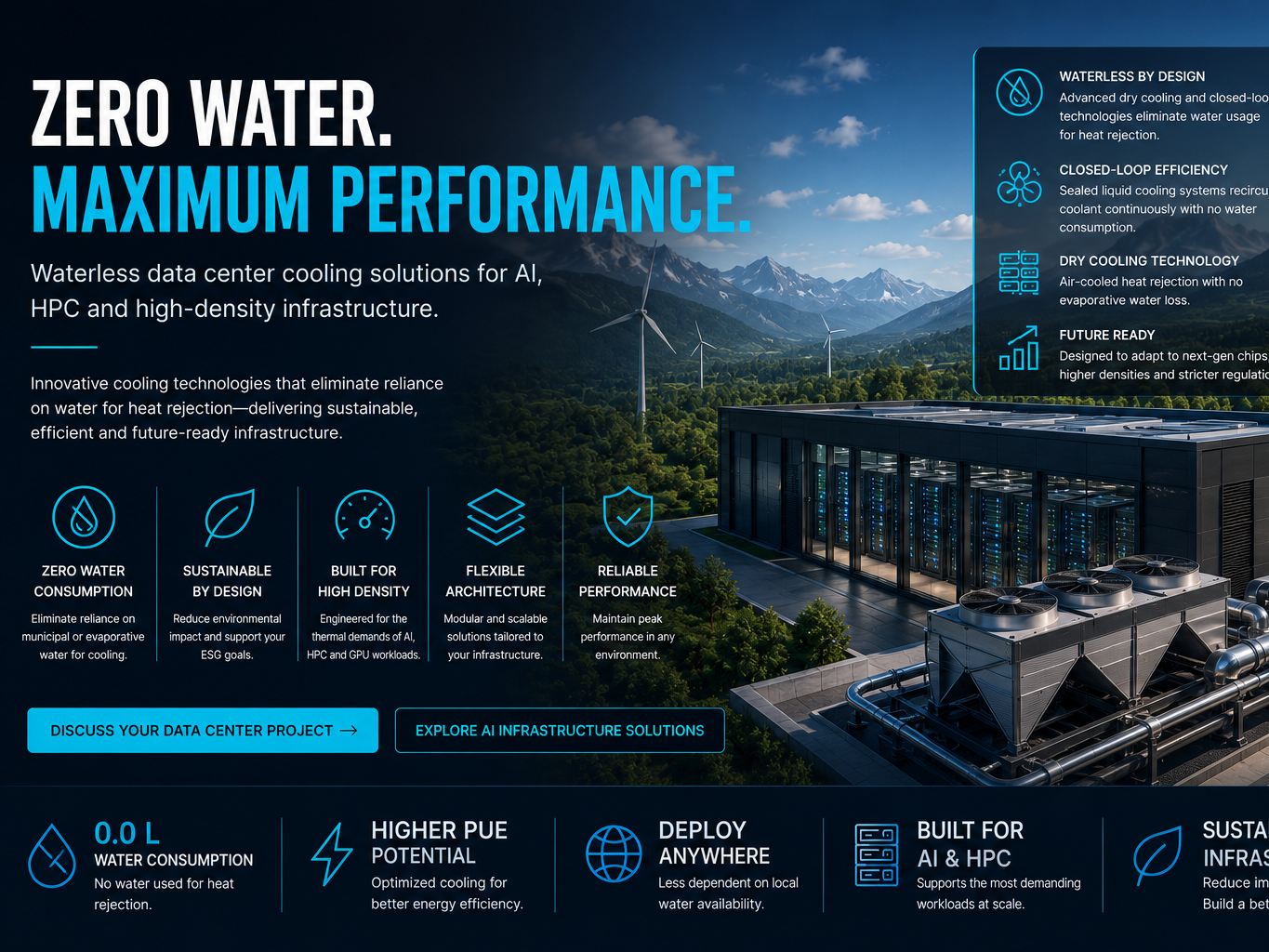
Many direct-to-chip architectures can operate as closed-loop systems in which the coolant circulates continuously between the server and the cooling infrastructure.
For AI data centers being developed in locations where water availability is a concern, the complete cooling system should be evaluated for:
• Water consumption
• Heat rejection method
• Cooling loop design
• Energy requirements
• Site constraints
• Long-term operating requirements
The objective is to balance thermal performance with the resource requirements of the entire facility.
Direct-to-Chip Cooling for Modular Data Centers
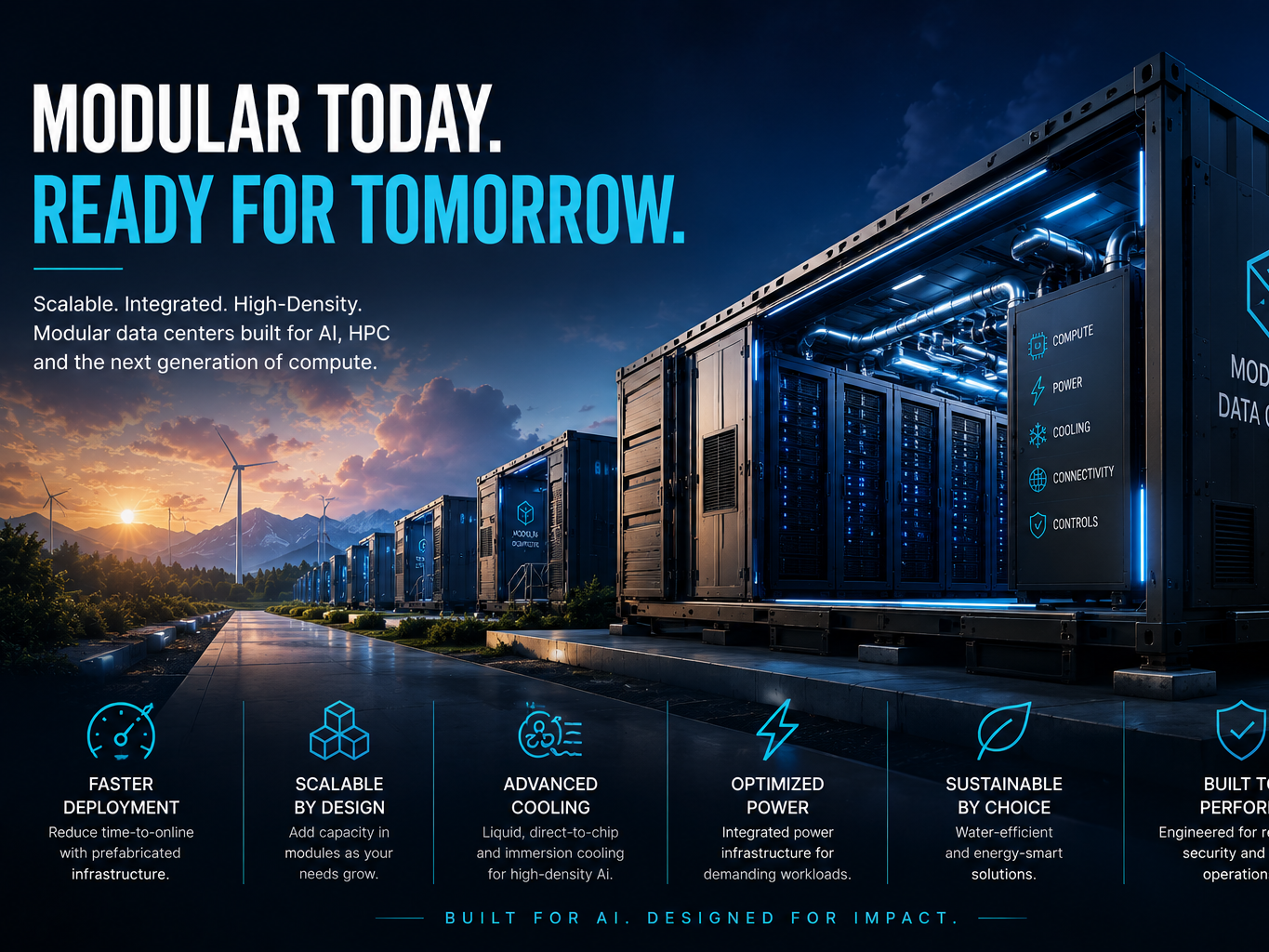
Direct-to-chip cooling can also be integrated into modular and containerized data center infrastructure.
This approach can be useful when compute, cooling, power and supporting infrastructure need to be deployed as a coordinated system.
For modular AI deployments, the cooling architecture can be designed around the expected GPU configuration and rack density from the beginning.
Potential applications include:
• Modular AI data centers
• Containerized GPU clusters
• Rapidly deployable HPC infrastructure
• Edge AI
• Temporary compute deployments
• Phased data center expansion
Choosing a Direct-to-Chip Cooling Solution
Selecting the right direct-to-chip cooling architecture requires more than choosing a cold plate.
Organizations should evaluate the entire thermal and infrastructure environment.
• Processor Requirements
Which GPUs, CPUs or accelerators will be deployed, and what are their thermal requirements?
• Rack Density
How much power will each rack generate, and how much cooling capacity will be required?
• Server Compatibility
Can the selected cooling technology integrate with the server and processor configuration?
• Coolant and Distribution
What coolant, flow rates, manifolds and distribution infrastructure are required?
• Facility Infrastructure
How will heat be transferred from the rack to the facility heat rejection system?
• Future Scalability
Can the cooling infrastructure accommodate future increases in GPU power and rack density?
• Total Cost of Ownership
What are the capital, operating, maintenance and lifecycle requirements?
Planning a Direct-to-Chip Cooling Deployment?
Whether you are developing a new AI data center, deploying high-density GPU infrastructure or evaluating liquid cooling for an existing facility, direct-to-chip cooling may provide an effective path to processor-level thermal management.
We help organizations evaluate direct-to-chip cooling, cold plate technology and broader liquid cooling infrastructure based on their compute requirements, rack density and deployment objectives.
Where there is a strong fit, we can facilitate introductions to experienced technology providers capable of supporting high-density AI and HPC deployments.
FAQs
What is direct-to-chip cooling?
Direct-to-chip cooling is a liquid cooling method that transfers heat directly from processors such as GPUs and CPUs to a liquid-cooled cold plate.
How does direct-to-chip cooling work?
A cold plate is mounted directly to the processor. Coolant flows through the plate, absorbs heat and carries it away through the cooling distribution system.
What is a cold plate?
A cold plate is a thermally conductive component positioned against a processor or other heat-generating component. Coolant flows through internal channels to remove heat.
Why is direct-to-chip cooling used for GPUs?
It targets heat directly at one of the primary sources of thermal load in AI servers: the GPU.
What is the difference between direct-to-chip and immersion cooling?
Direct-to-chip cooling delivers coolant directly to selected components through cold plates. Immersion cooling places servers or components in a dielectric fluid. The two approaches have different infrastructure, serviceability and deployment considerations.
Is direct-to-chip cooling better than immersion cooling?
Neither is universally better. Direct-to-chip can preserve a more conventional server architecture, while immersion changes the thermal environment of the entire server. The appropriate choice depends on density, workload, infrastructure and operational requirements.
Can direct-to-chip cooling be used in existing data centers?
Yes, depending on server compatibility and the facility's ability to support the required cooling distribution infrastructure.