GPU Infrastructure for AI, HPC & High-Density Computing
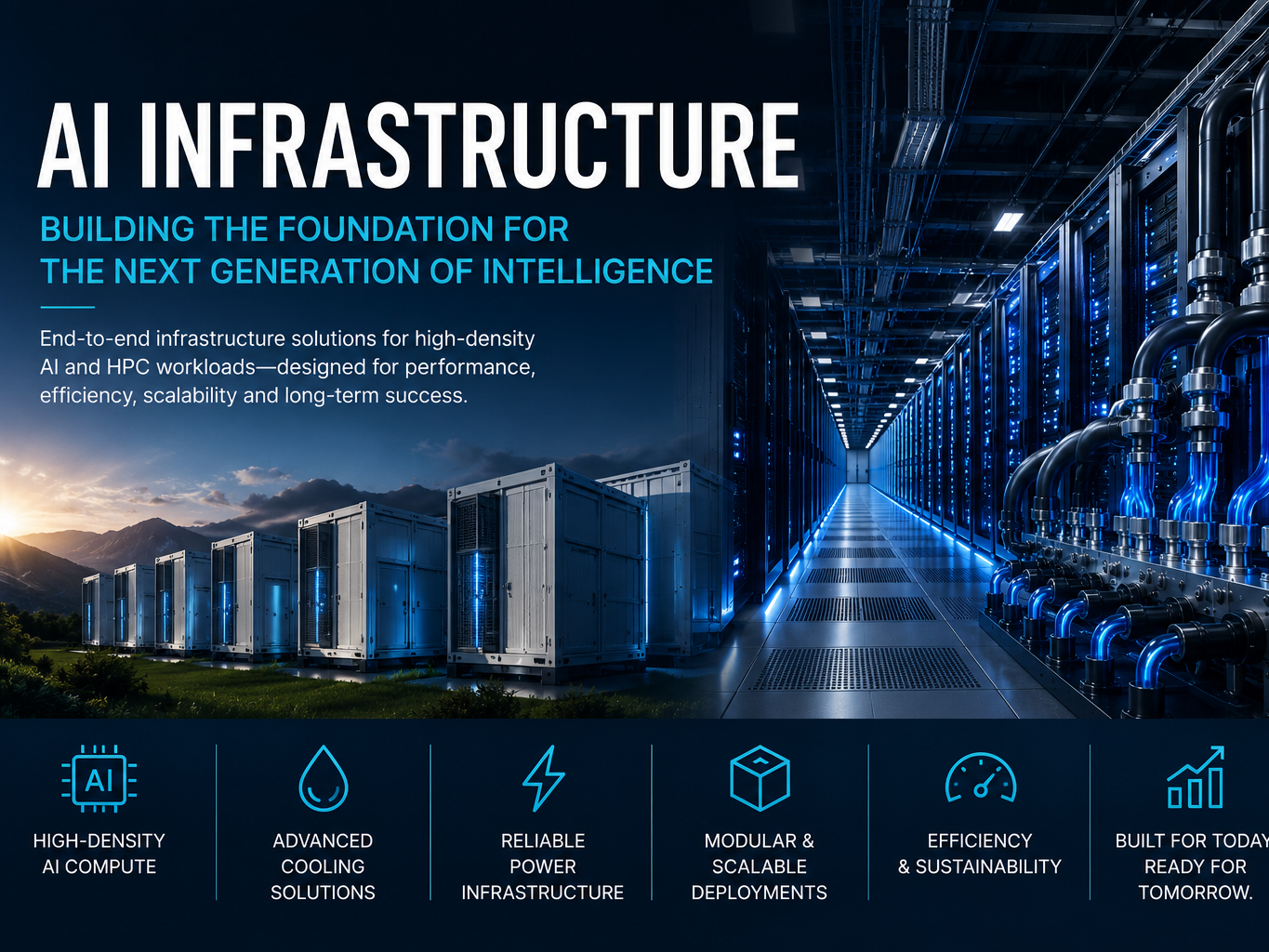
The rapid growth of AI is driving unprecedented demand for GPU compute. As organizations deploy increasingly powerful GPUs at greater density, the infrastructure supporting them must evolve across power, cooling, networking, rack design and data center capacity.
We help organizations evaluate GPU infrastructure solutions for AI, HPC, GPU cloud and high-density computing environments, including advanced cooling, liquid cooling, direct-to-chip systems, modular data centers and supporting infrastructure.
Whether you are deploying a new GPU cluster, expanding AI compute capacity or designing a high-density data center, we help you identify the infrastructure requirements needed to support performance today and scale tomorrow.
What Is GPU Infrastructure?
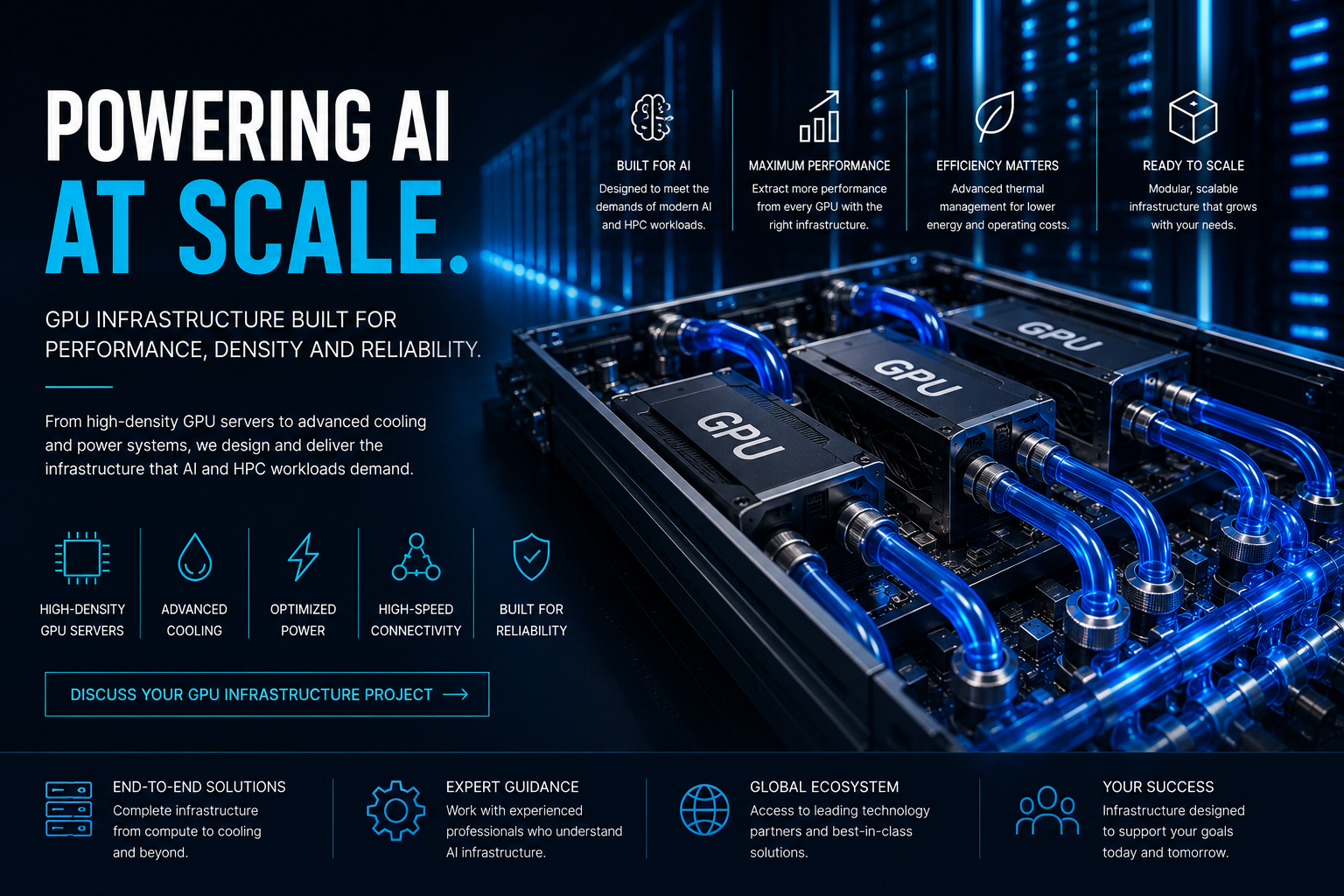
GPU infrastructure encompasses the systems and facilities required to deploy, power, cool, connect and operate high-performance GPUs at scale.
A GPU deployment is more than a collection of processors. As GPU density increases, every part of the surrounding infrastructure becomes increasingly important.
A high-density GPU environment may include:
• GPU servers
• High-density racks
• Power distribution
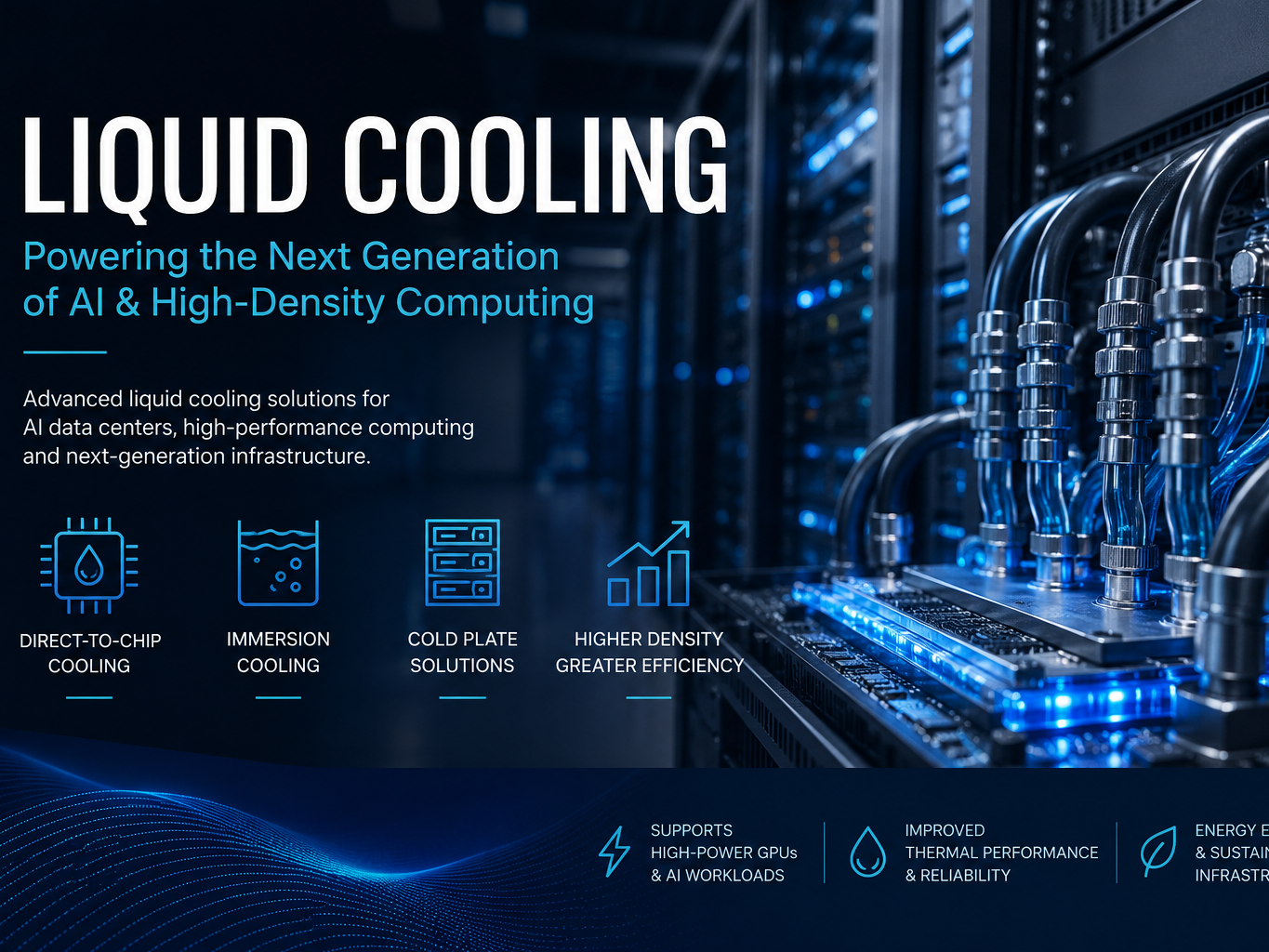
• Liquid cooling
• Direct-to-chip cooling
• Cold plate systems
• Immersion cooling
• Cooling distribution units
• Networking infrastructure
• Storage
• Monitoring and controls
• Modular or conventional data center infrastructure
The right architecture depends on the GPU platform, workload, rack density, total IT load, facility and deployment objectives.
Why GPU Infrastructure Is Changing?
AI workloads are placing new demands on data center infrastructure.
Modern GPUs can deliver enormous amounts of compute performance, but that performance comes with increased power consumption and thermal output.
As organizations deploy more GPUs into smaller physical footprints, infrastructure must address several interconnected challenges:
• Increasing GPU Power
Higher-performance processors require infrastructure capable of delivering and managing increasing electrical loads.
• Higher Rack Density
More GPUs per rack can dramatically increase the amount of heat that must be removed from a relatively small physical space.
• Advanced Cooling
High-density GPU environments can require liquid cooling, direct-to-chip cooling or immersion cooling rather than relying exclusively on traditional air cooling.
• Network Performance
AI workloads often require high-bandwidth, low-latency communication between GPUs, storage and other systems.
• Scalability
GPU infrastructure needs to accommodate future increases in compute density and changing processor requirements.
High-Density GPU Infrastructure
The shift toward AI is creating a new generation of high-density GPU infrastructure.
Instead of distributing computing power across a large number of relatively low-power servers, AI workloads can concentrate substantial compute capacity into dense GPU clusters.
This changes the infrastructure equation.
A high-density GPU deployment needs to consider:
• GPU count
• GPU generation
• GPU power
• Server configuration
• Number of GPUs per server
• Rack density
• Cooling capacity
• Power availability
• Networking
• Facility heat rejection
• Future expansion
The objective is not simply to install as many GPUs as possible. It is to create an infrastructure environment where the GPUs can operate reliably, efficiently and at the required performance level.
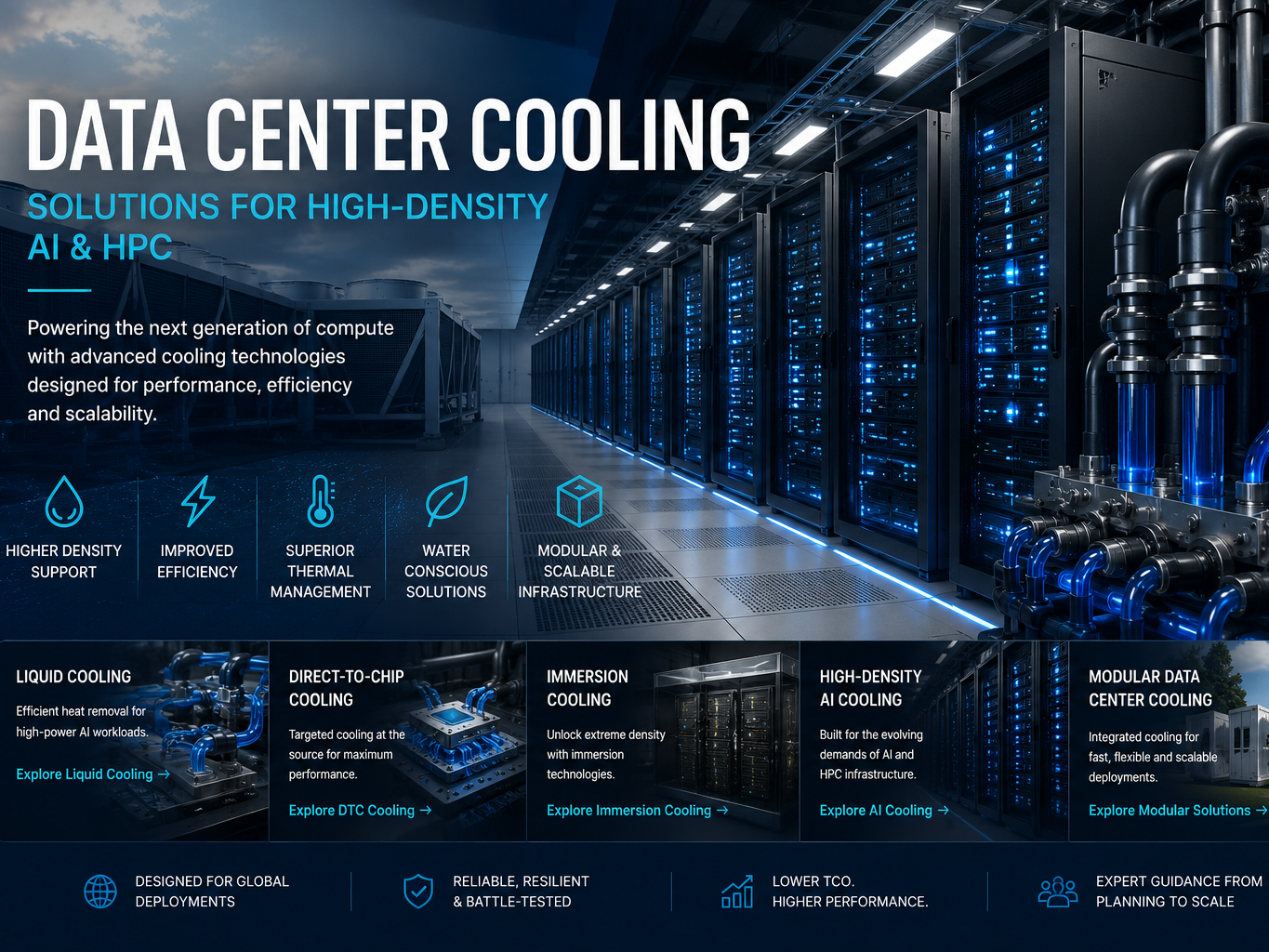
GPU Data Center Infrastructure
A GPU data center needs to be designed around the thermal and electrical characteristics of its compute environment.
Traditional data center designs can encounter challenges when adapted to high-density AI workloads, particularly when rack power and thermal loads increase substantially.
GPU data center infrastructure can include:
• Compute
GPU servers and AI accelerators designed for training, inference and HPC.
• Power
Electrical infrastructure capable of supporting high-density racks and future expansion.
• Cooling
Air, liquid, direct-to-chip, immersion or hybrid cooling architectures.
• Networking
High-performance networking designed for communication between GPUs, storage and external systems.
• Facility Infrastructure
Data center systems for heat rejection, monitoring, security and operational reliability.
GPU Cooling
Cooling is one of the most important considerations in high-density GPU infrastructure.
GPUs generate significant heat during operation, particularly under sustained AI and HPC workloads.
As GPU power increases, moving enough air through a server and rack environment can become increasingly challenging.
This is driving interest in GPU liquid cooling and other advanced thermal management technologies.
Liquid Cooling for GPUs
Liquid cooling can transfer heat away from high-power GPUs more effectively than conventional air-based approaches in high-density environments.
Potential architectures include:
• Direct-to-chip cooling
• GPU cold plates
• Cooling distribution units
• Rack-level liquid distribution
• Immersion cooling
• Hybrid cooling
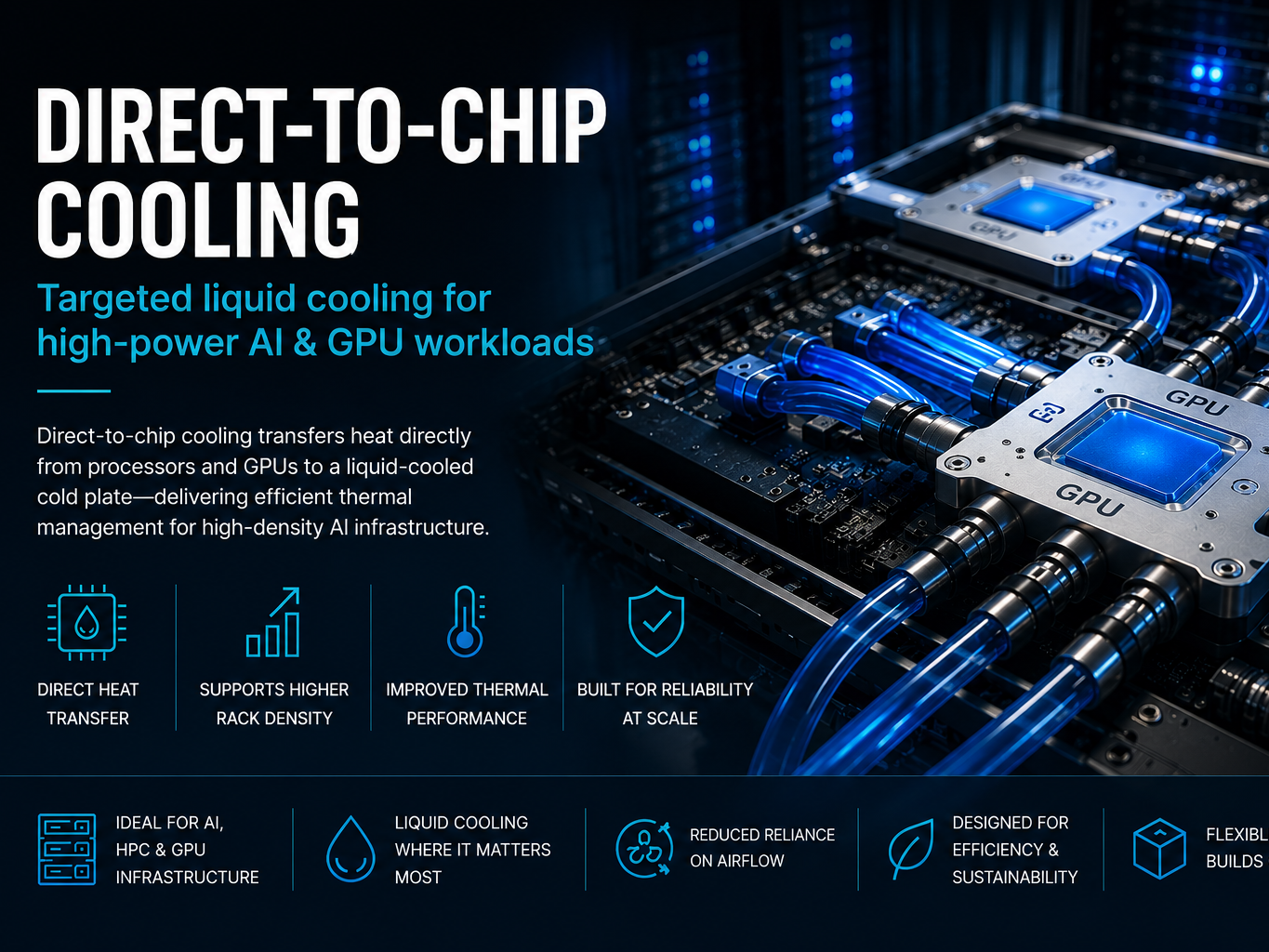
Direct-to-Chip GPU Cooling
Direct-to-chip cooling places a liquid-cooled cold plate directly against the GPU or other high-power processor.
This allows the cooling system to target heat at its source.
Direct-to-chip cooling can be particularly relevant for AI servers and high-density GPU racks where thermal loads are concentrated around the processors.
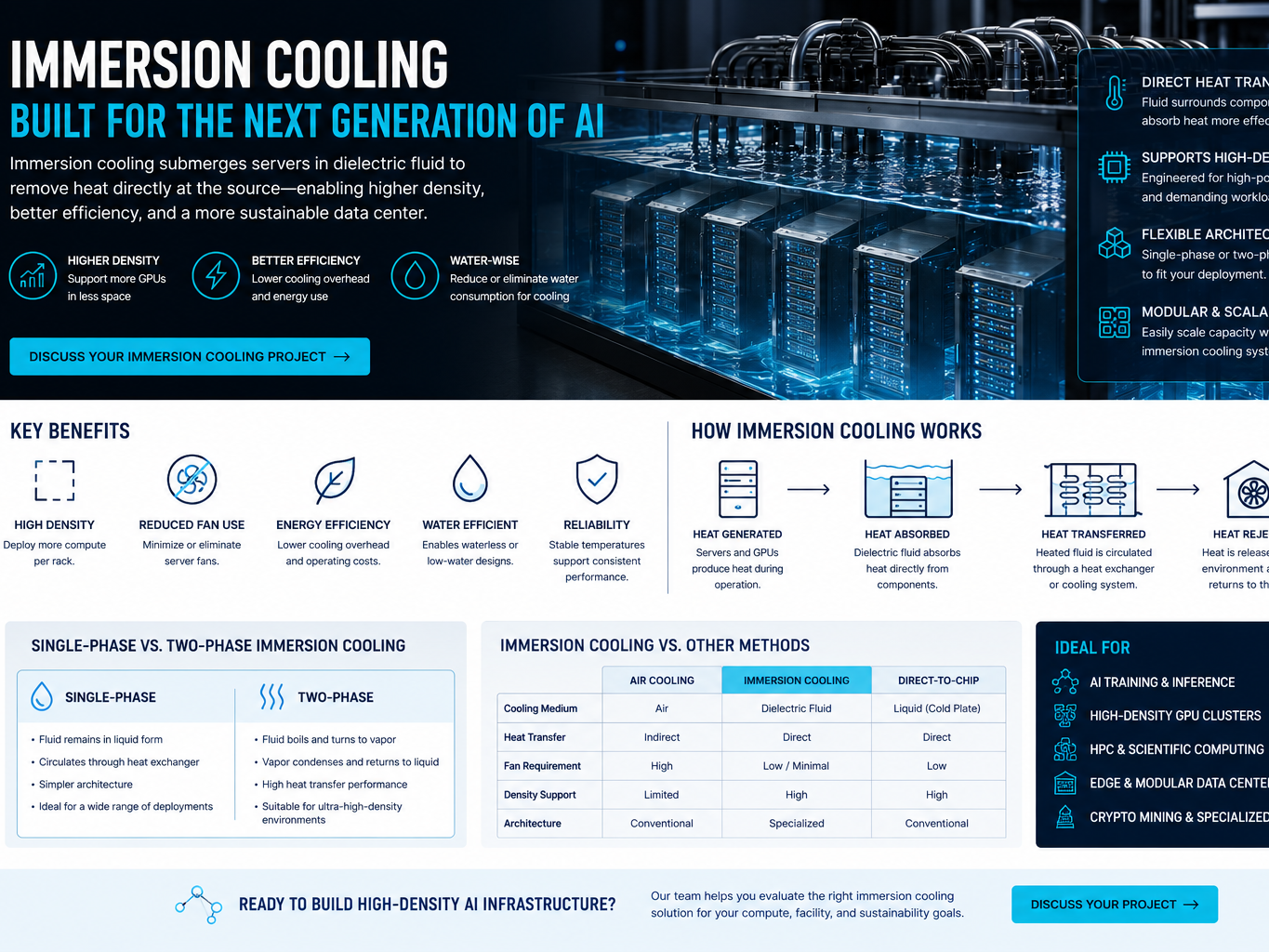
GPU Immersion Cooling
Immersion cooling places servers or selected components in a dielectric cooling fluid.
This approach can be considered for high-density GPU environments where thermal management, space utilization and infrastructure efficiency are important design considerations.
GPU Infrastructure and Rack Density
Rack density is becoming a critical consideration in AI infrastructure.
As more powerful GPUs are deployed, the amount of compute, power and heat concentrated in each rack can increase significantly.
Higher rack density can create challenges around:
• Power delivery
• Cooling capacity
• Airflow
• Cable management
• Rack design
• Floor loading
• Networking
• Heat rejection
• Facility capacity
This means GPU infrastructure should be designed around the expected power and thermal density of the rack, rather than simply the number of servers installed.
GPU Power Infrastructure
Cooling and power are closely connected.
Every additional GPU increases compute capacity, but also increases electrical demand and ultimately the amount of heat that must be removed.
A GPU infrastructure strategy should therefore evaluate:
• Utility power availability
• Power distribution
• Rack-level power
• UPS requirements
• Redundancy
• Power density
• Facility electrical capacity
• Future expansion
For new AI data centers, power availability can become a fundamental constraint on how much GPU capacity can be deployed.
GPU Infrastructure for AI Training and Inference
Different AI workloads can have different infrastructure requirements.
AI Training
Training large AI models can require substantial GPU clusters operating continuously at high utilization.
This can create significant requirements around:
• GPU density
• High-performance networking
• Power
• Cooling
• Storage
• Reliability
AI Inference
Inference environments can have different deployment patterns depending on the application, latency requirements and geographic distribution of users.
Infrastructure may need to support:
• High GPU utilization
• Low latency
• Scalable capacity
• Edge deployments
• Distributed compute
• Flexible expansion
The infrastructure should be designed around the actual workload rather than assuming that all AI compute environments have identical requirements.
GPU Infrastructure for HPC
GPU infrastructure is also fundamental to high-performance computing.
Scientific research, engineering simulation, financial modeling, computational science and other workloads can use GPUs to accelerate complex calculations.
HPC GPU infrastructure can require:
• High-performance GPU clusters
• Low-latency networking
• High-throughput storage
• Advanced cooling
• High-density power
• Scalable facility infrastructure
The same infrastructure principles increasingly apply across AI and HPC as compute densities rise.
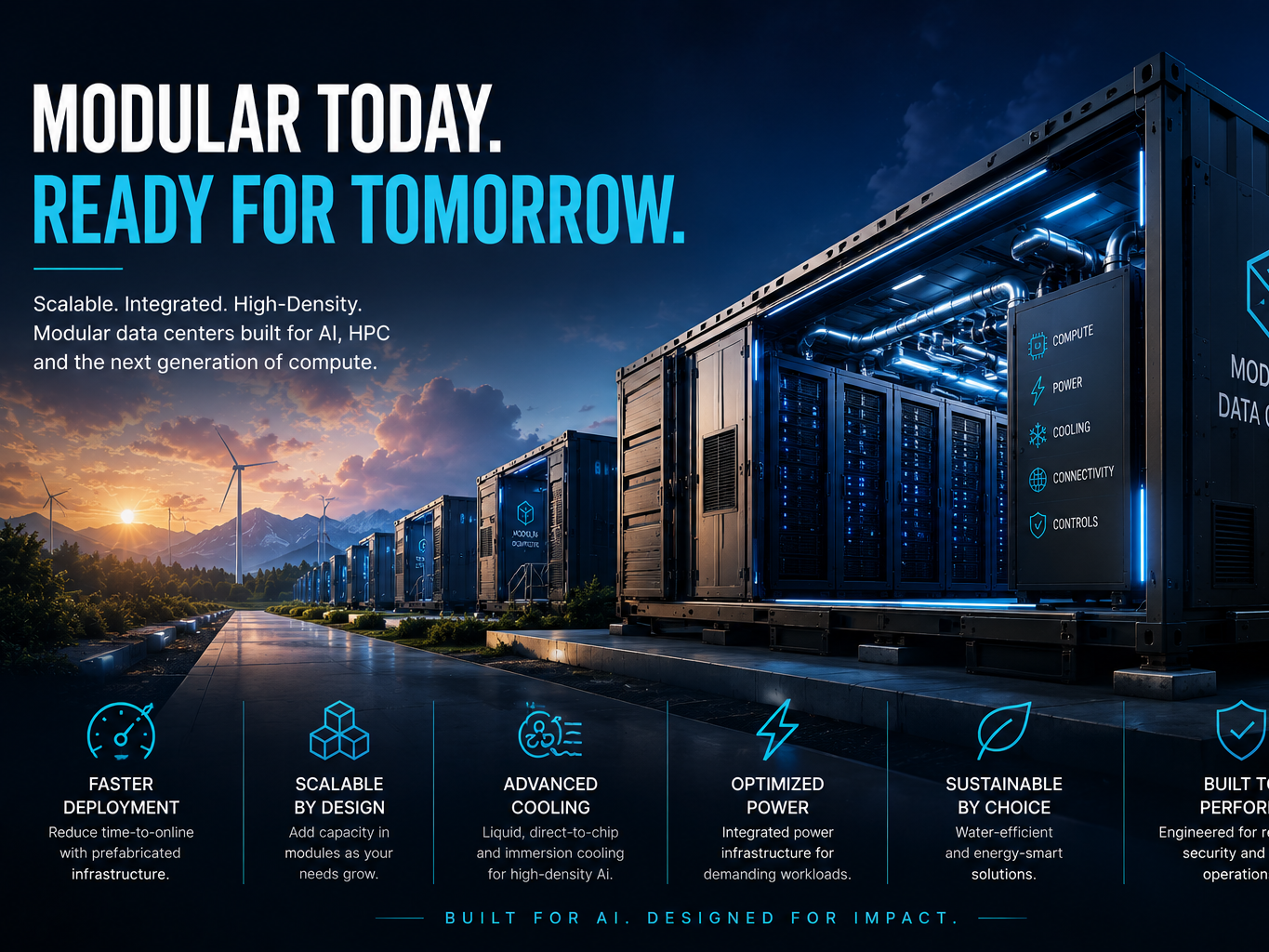
GPU Infrastructure and Modular Data Centers
Modular data centers can provide a flexible deployment model for GPU infrastructure.
By integrating compute, power, cooling and supporting systems into standardized modules, organizations can potentially deploy AI capacity in phases and expand as requirements grow.
A modular GPU deployment can incorporate:
• GPU servers
• High-density racks
• Liquid cooling
• Direct-to-chip cooling
• Power distribution
• Heat rejection
• Networking
• Monitoring and controls
This can be particularly relevant for organizations that need to deploy high-density compute quickly or in locations where conventional data center construction is challenging.
Designing GPU Infrastructure for Future Generations
GPU technology continues to evolve rapidly.
A facility designed around one generation of processors may eventually need to accommodate GPUs with different power, thermal and physical requirements.
Future-ready GPU infrastructure should therefore consider:
• Power headroom
Can the facility support future increases in rack and GPU power?
• Cooling capacity
Can the cooling system manage higher thermal loads?
• Rack density
Can additional compute be deployed without redesigning the entire facility?
• Networking
Can the network architecture support increasing bandwidth requirements?
• Modularity
Can additional capacity be added as demand grows?
• Technology flexibility
Can the infrastructure accommodate different GPU generations and server configurations?
Designing around these questions can reduce the risk of infrastructure becoming the limiting factor as compute requirements increase.
GPU Infrastructure Efficiency
GPU performance should not be evaluated independently from the infrastructure supporting it.
An efficient GPU deployment considers the relationship between:
• Compute performance
• Power consumption
• Cooling energy
• Rack density
• Facility utilization
• Water consumption
• Capital expenditure
• Operating expenditure
For high-density AI deployments, improving infrastructure efficiency can have a significant impact on the total cost of operating compute capacity.
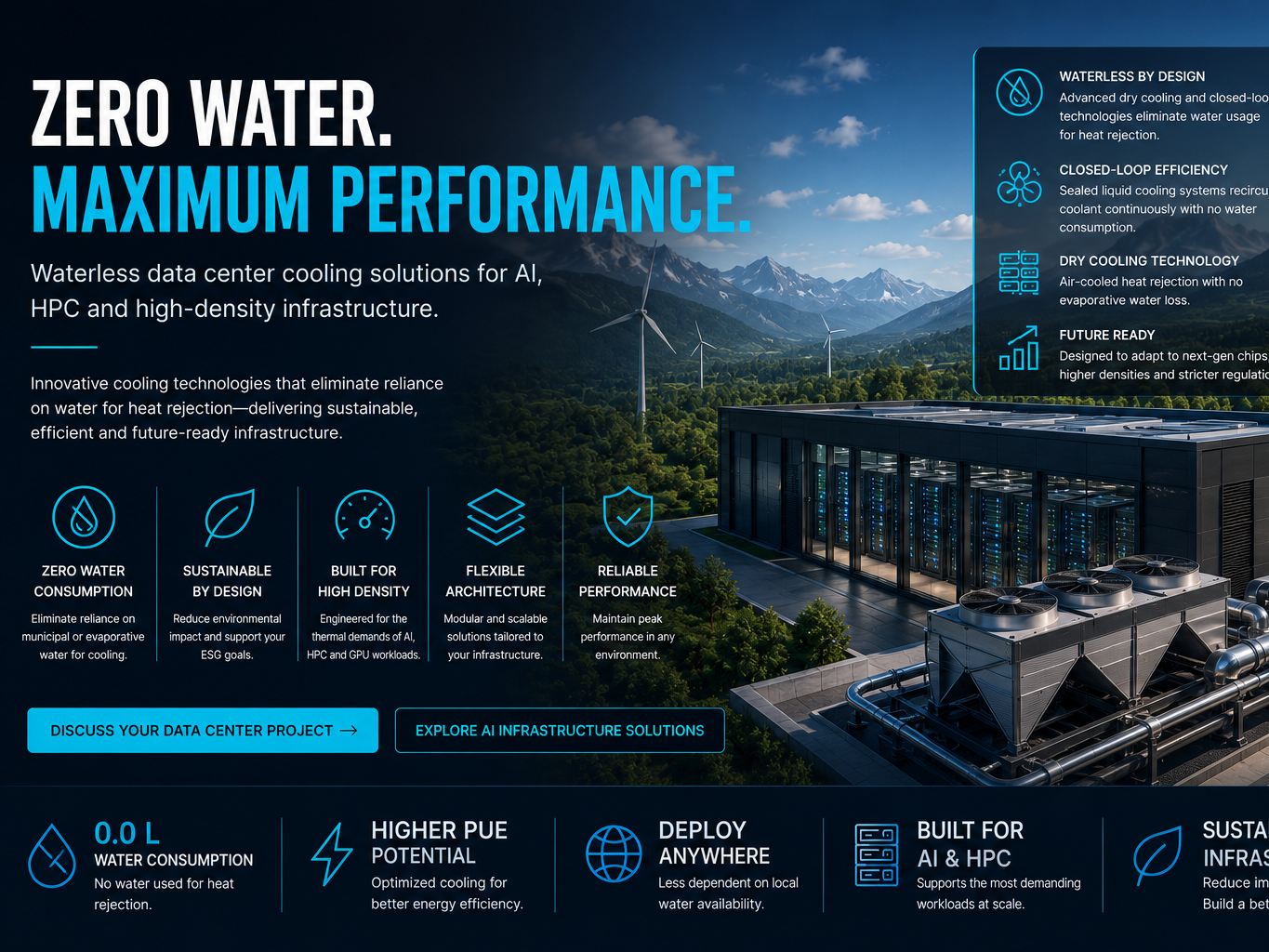
Water-Efficient GPU Infrastructure
The growth of AI is increasing attention on the water requirements associated with data center cooling.
For GPU deployments in water-constrained locations, cooling architecture should be evaluated alongside site selection and infrastructure planning.
Depending on the technology, closed-loop liquid cooling and other water-efficient or waterless approaches can help organizations address water-related constraints.
The right solution depends on the complete facility architecture, climate, heat rejection strategy and operational requirements.
Choosing the Right GPU Infrastructure
There is no single GPU infrastructure architecture that works for every organization.
Before selecting a solution, consider:
• GPU Platform
Which GPUs or AI accelerators will be deployed?
• Workload
Is the infrastructure intended for AI training, inference, HPC, GPU cloud or another application?
• GPU Density
How many GPUs will be deployed per server and rack?
• Power
What is the expected rack and facility power requirement?
• Cooling
Will air, liquid, direct-to-chip, immersion or hybrid cooling be appropriate?
• Networking
What bandwidth, latency and topology requirements does the workload have?
• Facility
Is this a new data center, retrofit, modular deployment or expansion?
• Scalability
How will the infrastructure accommodate future GPU generations?
• Economics
What are the capital, operating and total lifecycle costs?
Planning a GPU Infrastructure Deployment?
Whether you are building an AI data center, deploying a GPU cluster, expanding HPC capacity or evaluating infrastructure for next-generation compute, the right architecture should be designed around the GPU workload from the beginning.
We help organizations evaluate GPU infrastructure, AI data center cooling, liquid cooling, direct-to-chip systems and modular data center solutions based on their compute requirements and deployment objectives.
Where there is a strong fit, we facilitate introductions to experienced technology providers supporting high-density AI, GPU and HPC infrastructure projects.
FAQs
What is GPU infrastructure?
GPU infrastructure includes the servers, racks, power, cooling, networking and facility systems required to deploy and operate GPUs at scale.
What does a GPU data center need?
A GPU data center needs sufficient electrical capacity, high-density racks, advanced thermal management, high-performance networking, storage and facility infrastructure.
Why do GPUs require specialized cooling?
High-performance GPUs can generate substantial amounts of heat, particularly when operating continuously under AI and HPC workloads. Higher GPU power increases the thermal requirements of the surrounding infrastructure.
What is high-density GPU infrastructure?
High-density GPU infrastructure concentrates significant compute capacity into relatively small physical spaces, requiring appropriately designed power and cooling systems.
What is GPU liquid cooling?
GPU liquid cooling uses a liquid-based thermal management system to remove heat from high-power GPUs. Direct-to-chip cold plates and immersion cooling are two possible approaches.
How many GPUs can fit in a data center rack?
There is no universal number. The practical limit depends on server configuration, GPU generation, rack power, cooling capacity, networking and facility design.
How much power does a GPU rack need?
It depends on the GPU platform, number of GPUs, server configuration and other equipment. Rack power should be calculated from the actual deployment rather than using a universal assumption.
Why does GPU infrastructure need to be designed around cooling?
As GPU density increases, thermal management can become a limiting factor on how much compute can reliably be deployed in a rack or facility.