AI Infrastructure Solutions for the Next Generation of Compute
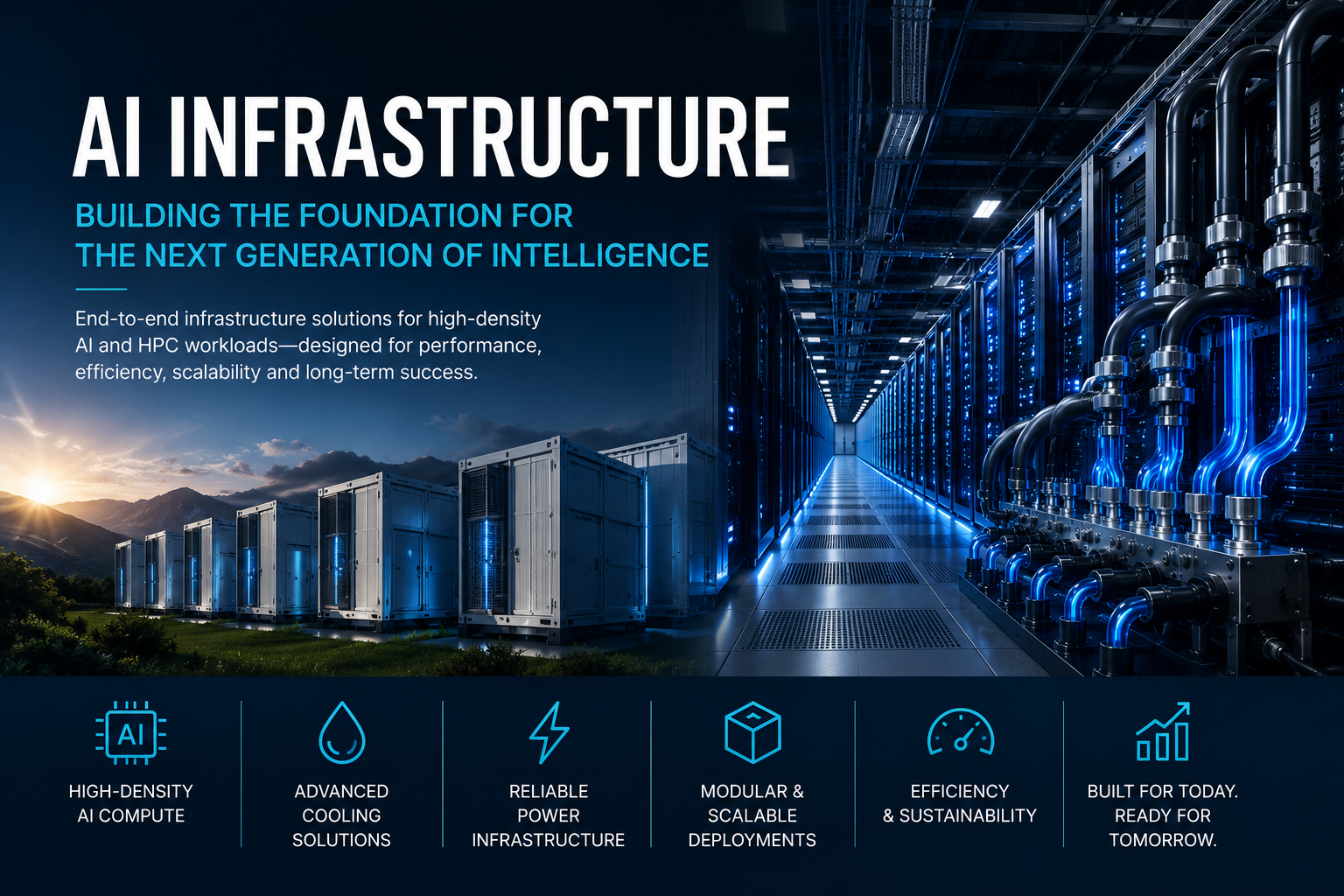
The rapid growth of artificial intelligence is transforming the requirements for data center and compute infrastructure. Higher GPU power, increasing rack densities and demanding AI workloads are creating new challenges across power, cooling, thermal management, scalability and deployment.
We help organizations evaluate AI infrastructure solutions designed for high-density computing, including advanced data center cooling, liquid cooling, direct-to-chip systems, immersion cooling, GPU infrastructure and modular data centers.
Whether you are planning a new AI data center, expanding GPU capacity or evaluating infrastructure for an existing facility, we help you understand the technologies and deployment models available for your project.
Building Infrastructure for the AI Era
AI workloads are fundamentally changing the way data centers are designed.
Traditional infrastructure was largely built around relatively predictable enterprise computing loads. Modern AI and HPC environments can place substantially greater demands on GPUs, racks, power distribution and cooling systems.
As compute density increases, infrastructure decisions that were once separate are becoming increasingly interconnected.
Power. Cooling. Compute density. Water. Space. Deployment speed.
A successful AI infrastructure strategy needs to consider all of them together.
We help organizations evaluate the infrastructure requirements behind high-density AI deployments and identify technologies that can support current workloads while allowing room for future growth.
AI Infrastructure Solutions
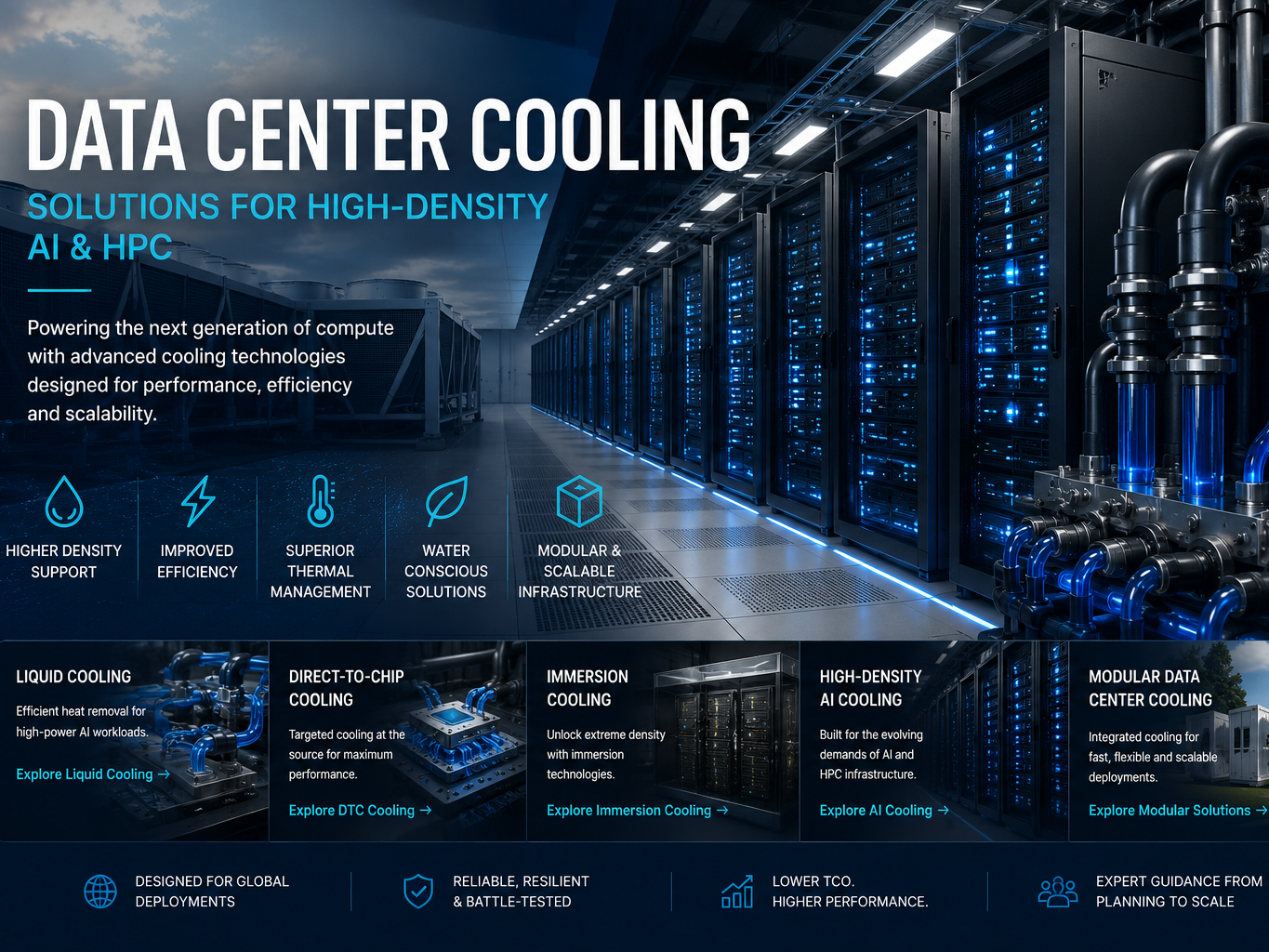
Data Center Cooling
Cooling is one of the most important infrastructure considerations for high-density AI.
As GPU power and rack density increase, conventional air cooling can become increasingly challenging. Modern AI data center cooling can incorporate liquid cooling, direct-to-chip systems, immersion cooling and other advanced thermal management technologies.
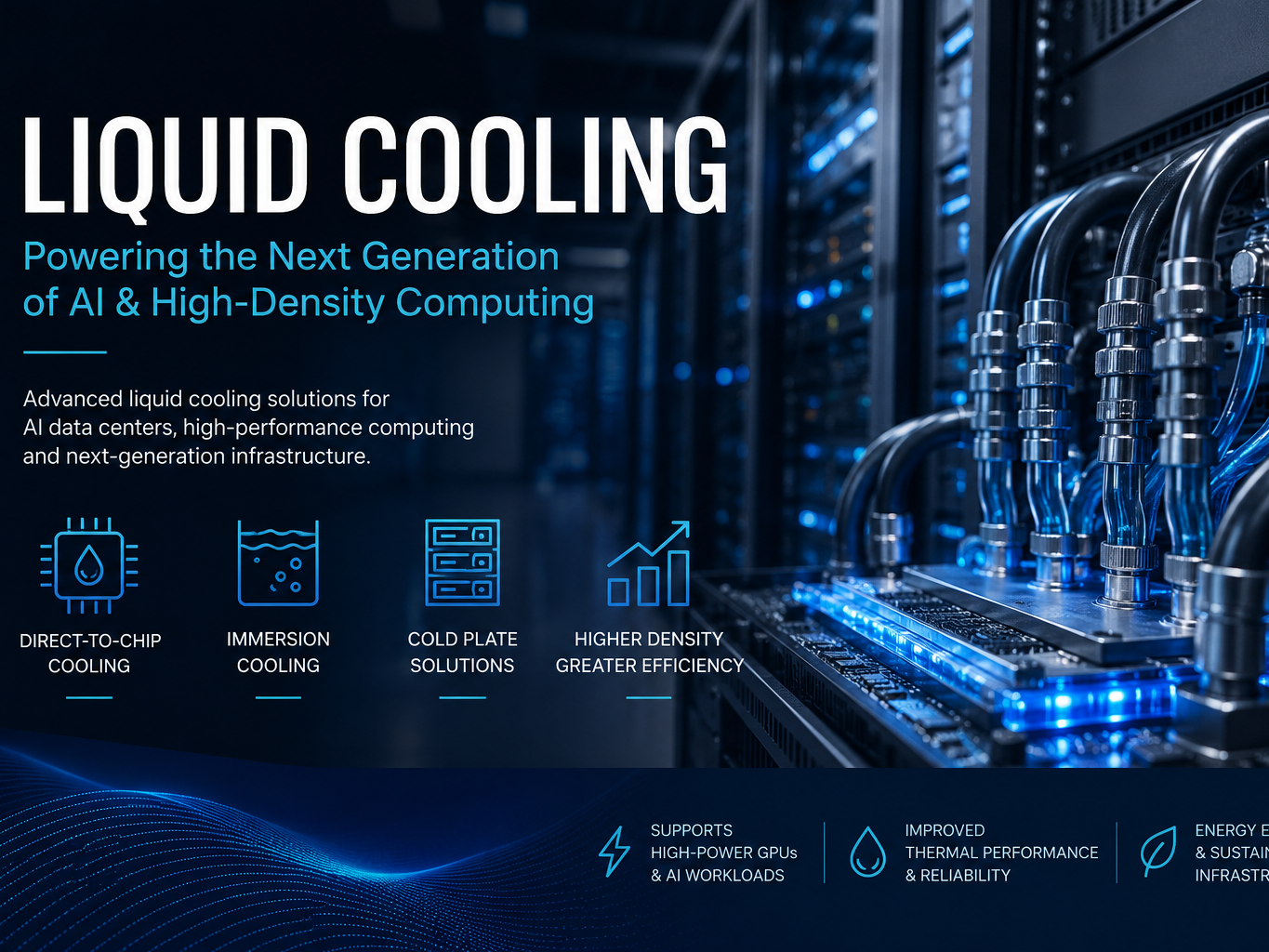
Liquid Cooling
Liquid cooling for AI infrastructure provides an efficient approach to removing heat from high-power processors and GPUs.
Solutions can include direct-to-chip cooling, cold plates, cooling distribution units and immersion technologies, depending on the deployment requirements.
Liquid cooling can support higher rack densities and provide greater flexibility as AI compute requirements continue to evolve.
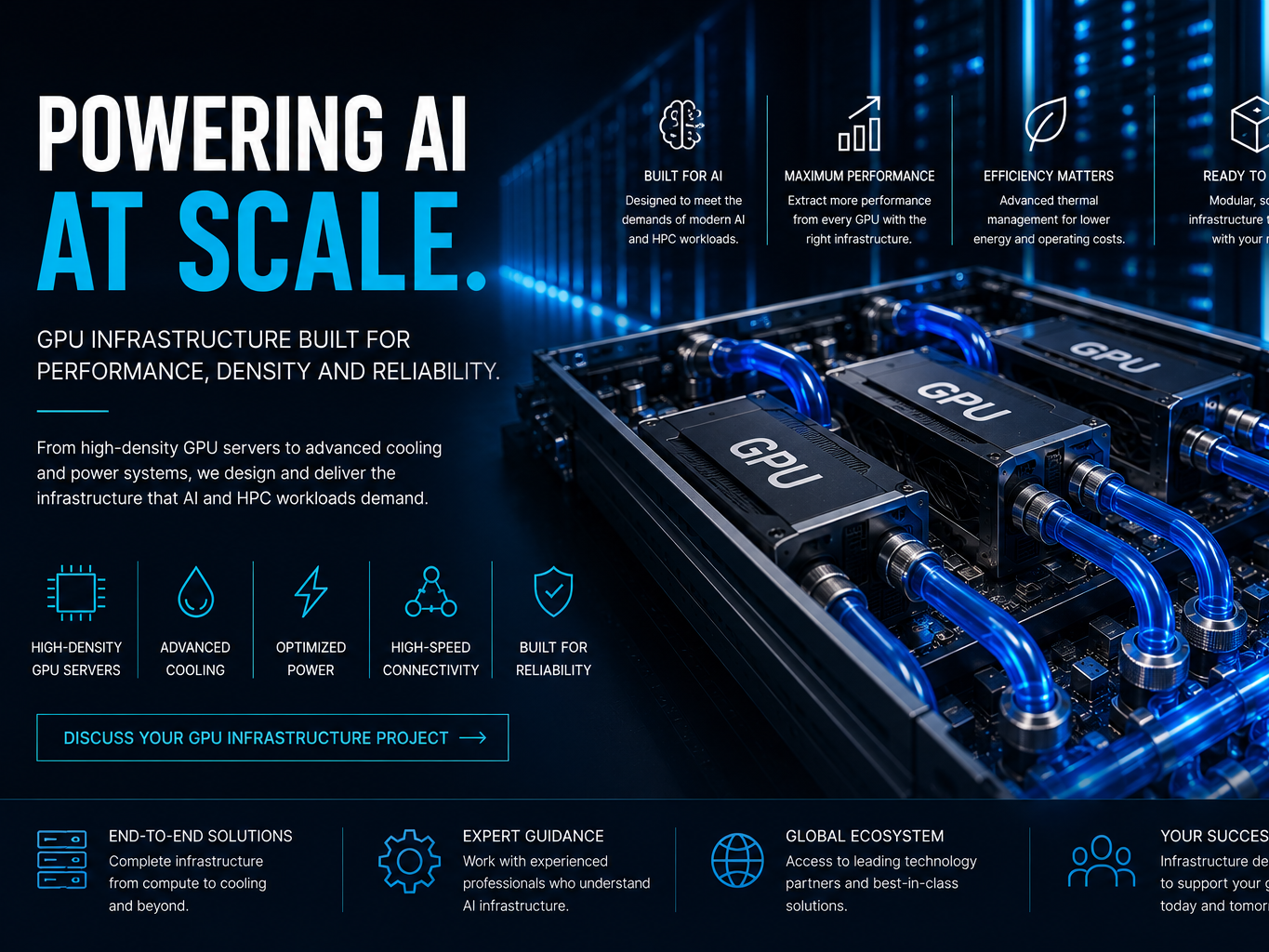
GPU Infrastructure
GPUs are at the center of modern AI compute, but their increasing power requirements are creating new infrastructure challenges.
AI infrastructure planning needs to account for:
• GPU platform and generation
• GPU power requirements
• Number of GPUs
• Rack density
• Thermal load
• Power distribution
• Cooling capacity
• Future expansion
Infrastructure designed around today's GPUs should also consider how future generations may change power and thermal requirements.
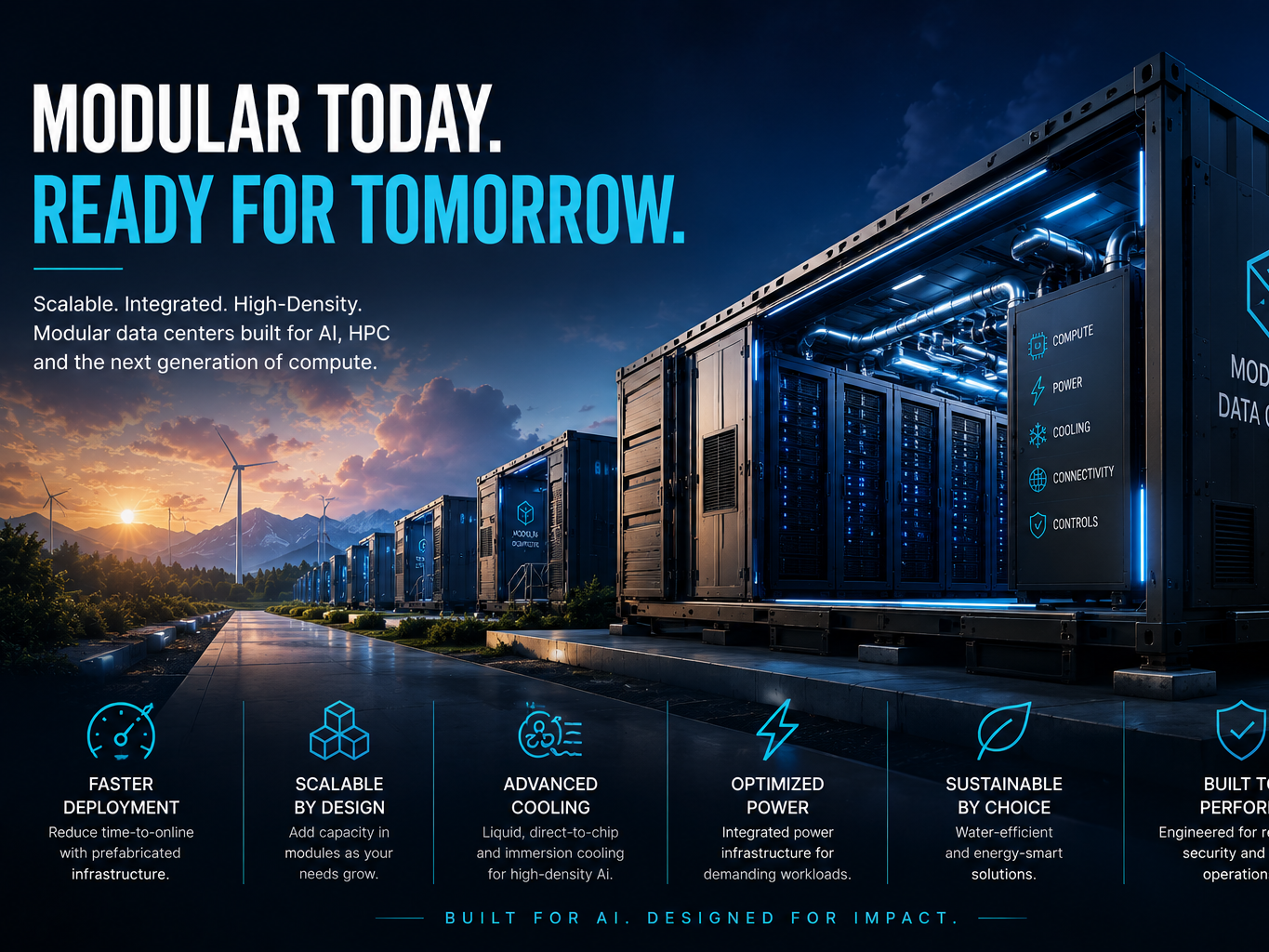
Modular Data Centers
Modular data centers can provide a flexible approach to deploying AI and HPC capacity.
Prefabricated and containerized infrastructure can integrate compute, power, cooling and supporting systems into scalable deployment environments.
This can be particularly useful when speed of deployment, site constraints, geographic flexibility or phased capacity expansion are important.
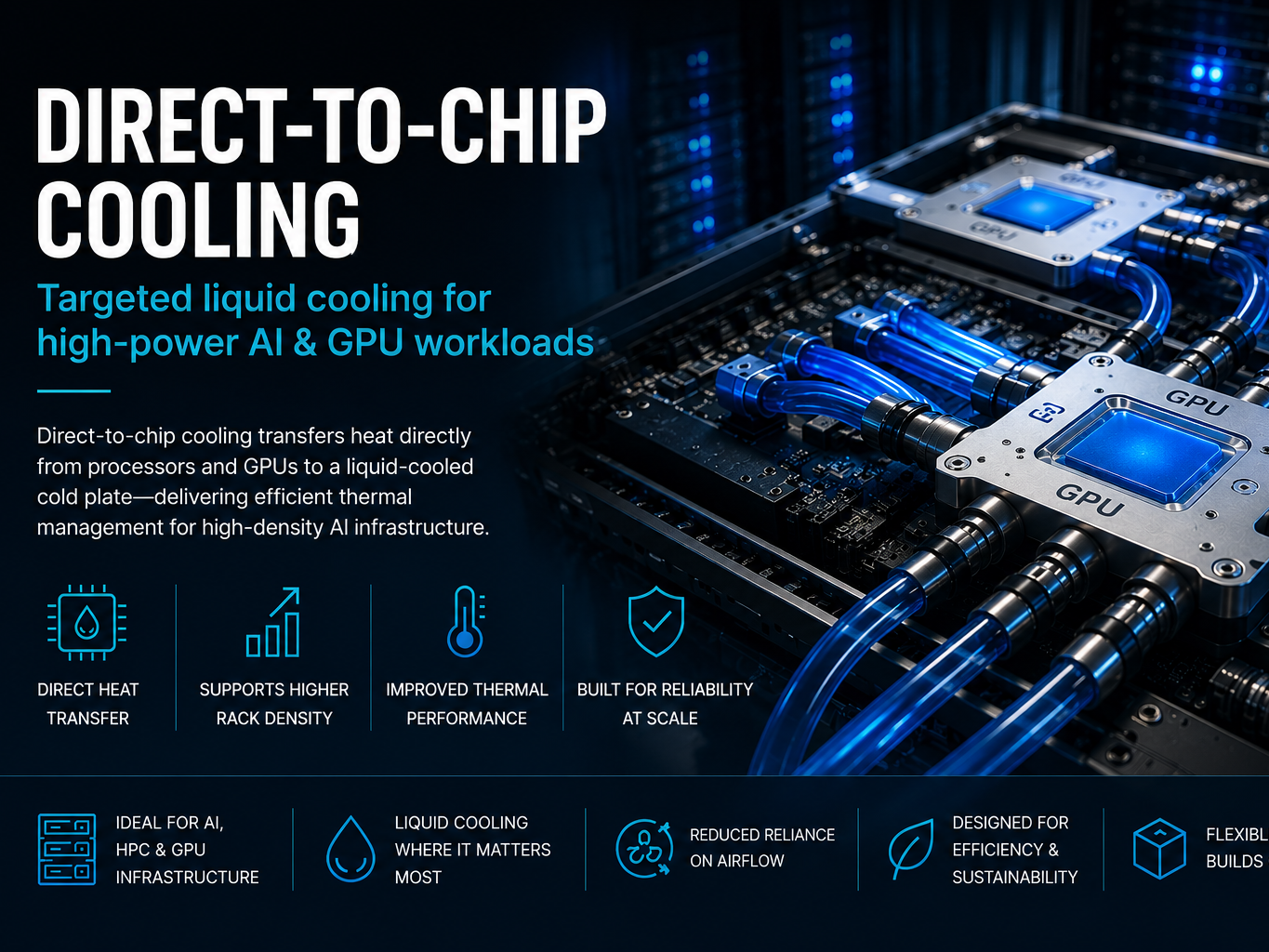
Direct-to-Chip Cooling
Direct-to-chip cooling transfers heat directly from high-power processors to a liquid-cooled cold plate.
For AI servers and high-performance computing environments, this approach can provide targeted thermal management where the highest heat loads are concentrated.
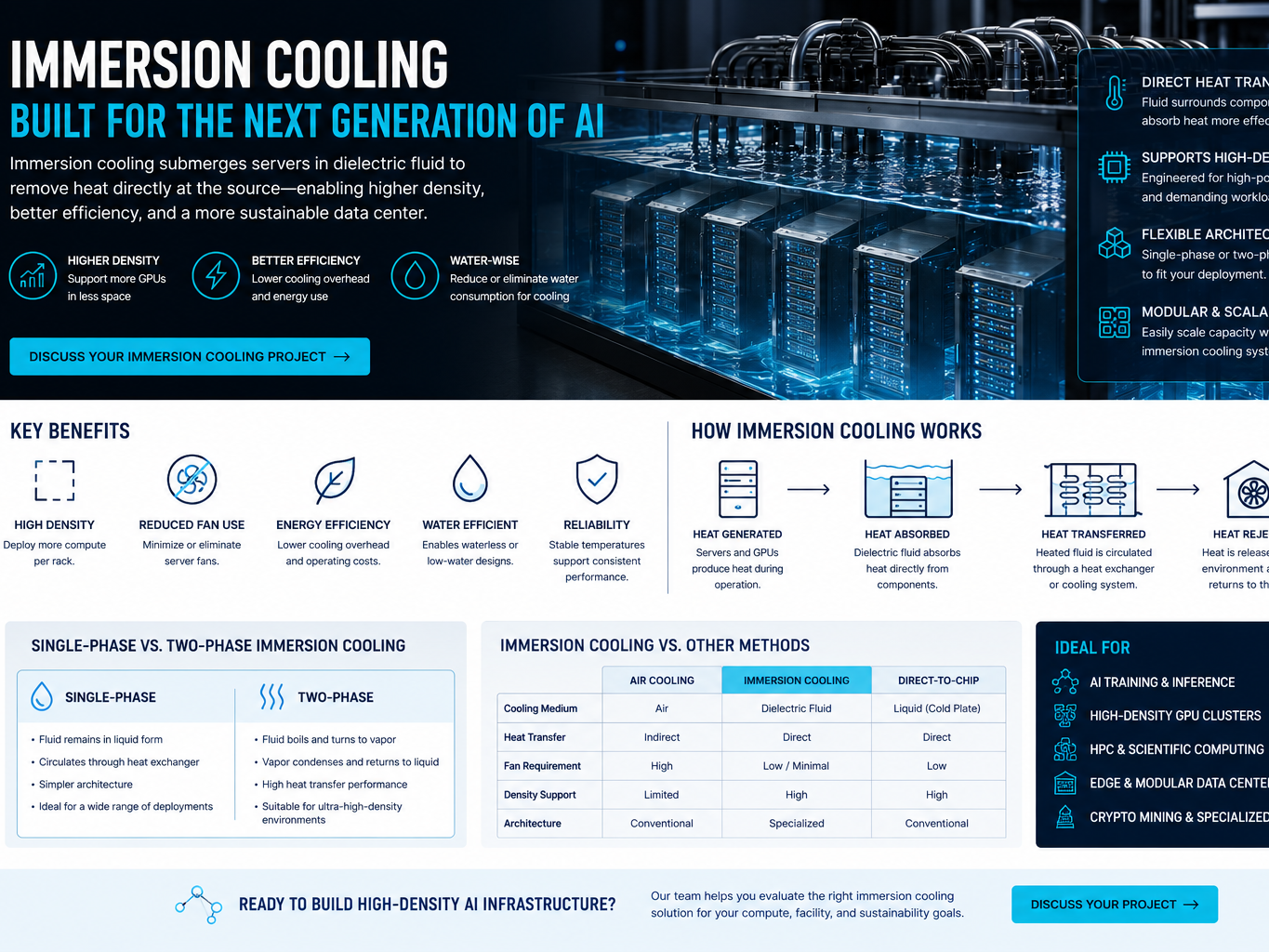
Immersion Cooling
Immersion cooling uses a dielectric fluid to remove heat directly from servers or selected components.
Single-phase and phase-change immersion cooling can be considered for high-density applications where thermal performance, space utilization and energy efficiency are important design considerations.
Why AI Infrastructure Needs to Evolve
The AI infrastructure challenge is not simply about adding more GPUs.
As AI compute scales, every additional unit of compute affects the infrastructure around it.
• Higher GPU Density
More GPUs within a smaller physical footprint can increase rack power and thermal loads significantly.
• Increasing Rack Power
High-density AI racks can require substantially more power and cooling capacity than conventional enterprise infrastructure.
• Thermal Management
The ability to reliably remove heat from high-power processors is becoming a fundamental constraint on compute density.
• Water and Site Constraints
Data center development increasingly requires consideration of water availability, energy efficiency, land use and local infrastructure.
• Speed of Deployment
AI demand can move faster than traditional data center construction cycles, creating demand for modular and prefabricated infrastructure.
• Future Scalability
AI hardware continues to evolve rapidly. Infrastructure needs to accommodate increasing compute density rather than being optimized only for today's requirements.
High-Density AI Infrastructure
The future of AI computing is increasingly defined by density.
More compute capacity is being concentrated into fewer racks and smaller physical footprints. This creates opportunities for greater efficiency, but it also places greater demands on cooling, power delivery and facility design.
High-density AI infrastructure can incorporate technologies such as:
• High-density GPU servers
• Liquid cooling
• Direct-to-chip cooling
• Cold plate systems
• Immersion cooling
• Cooling distribution units
• High-capacity power distribution
• Modular data center systems
• Advanced heat rejection
• Integrated monitoring and controls
The right combination depends on the project's technical, geographic and commercial requirements.
AI Data Center Infrastructure: From Compute to Cooling
AI infrastructure should be viewed as an integrated system rather than a collection of individual components.
A typical high-density AI deployment may involve:
1- Compute
GPUs, CPUs, AI accelerators and high-performance servers.
↓
2- Rack Infrastructure
High-density racks, networking and supporting systems.
↓
3- Power
Power distribution designed for increasing rack and facility loads.
↓
4- Cooling
Air, liquid, direct-to-chip, immersion or hybrid cooling architectures.
↓
5- Heat Rejection
Systems designed to move heat away from the computing environment efficiently.
↓
6- Facility
Modular or conventional data center infrastructure designed around the deployment.
This integrated approach can help organizations avoid designing one part of the infrastructure around assumptions that later constrain another.
Sustainable AI Infrastructure
The expansion of AI is increasing scrutiny around energy consumption, water use and the overall environmental impact of data centers.
Sustainable AI infrastructure does not mean compromising performance. It means considering efficiency and resource consumption as part of the infrastructure design from the beginning.
Areas worth evaluating include:
• Cooling efficiency
• Water consumption
• Power utilization
• Rack density
• Heat recovery
• Facility efficiency
• Equipment lifecycle
• Scalability
• Total cost of ownership
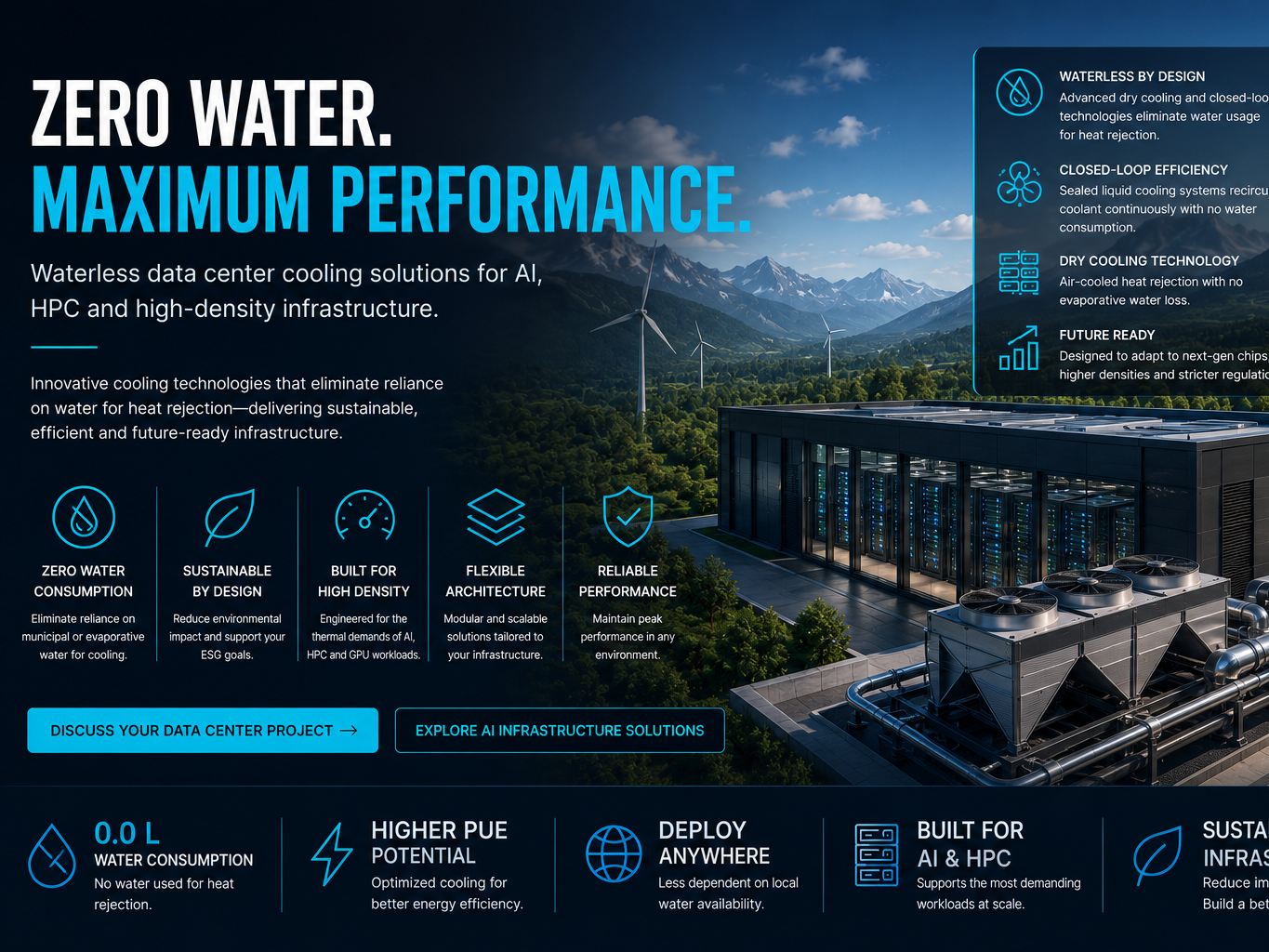
For water-constrained locations, water-efficient and waterless data center cooling can also become an important part of infrastructure planning.
Modular AI Infrastructure
Traditional data center construction can require significant time, capital and site preparation.
Modular AI infrastructure offers another approach.
By integrating compute environments with power, cooling and supporting infrastructure, modular and containerized data centers can allow organizations to deploy capacity in a more standardized and scalable way.
Potential applications include:
• AI data centers
• GPU clusters
• HPC deployments
• Edge AI
• Colocation
• Enterprise AI infrastructure
• Temporary or rapidly deployable compute
• Phased data center expansion
The appropriate approach depends on project scale, location, power availability, cooling requirements and deployment objectives.
Choosing the Right AI Infrastructure
There is no universal AI infrastructure architecture.
The right solution depends on the specific requirements of the deployment.
Before selecting infrastructure, organizations should consider:
• Compute platform
Which GPUs, CPUs or AI accelerators will be deployed?
Which GPUs, CPUs or AI accelerators will be deployed?
• Rack density
How much power and heat will each rack generate?
How much power and heat will each rack generate?
• Total facility load
What is the expected IT and infrastructure power requirement?
What is the expected IT and infrastructure power requirement?
• Cooling architecture
Will air, direct-to-chip, immersion or hybrid cooling be most appropriate?
Will air, direct-to-chip, immersion or hybrid cooling be most appropriate?
• Site constraints
What are the available power, water, space and connectivity resources?
What are the available power, water, space and connectivity resources?
• Deployment timeline
How quickly does the compute capacity need to become operational?
How quickly does the compute capacity need to become operational?
• Scalability
How will infrastructure accommodate future GPU generations and increasing compute density?
How will infrastructure accommodate future GPU generations and increasing compute density?
• Economics
What are the capital, operating and total lifecycle costs?
What are the capital, operating and total lifecycle costs?
A good AI infrastructure strategy connects these decisions rather than treating them independently.
Planning an AI Infrastructure Project?
Whether you are developing a new AI data center, deploying a GPU cluster, expanding HPC capacity or evaluating next-generation cooling technologies, we can help you identify the infrastructure options worth considering.
We work with organizations to understand their AI infrastructure requirements and, where there is a strong fit, facilitate introductions to experienced technology providers specializing in high-density compute, liquid cooling, advanced thermal management and modular data center infrastructure.
What is AI infrastructure?
AI infrastructure is the combination of compute, GPU servers, networking, power, cooling, data center facilities and supporting systems required to deploy and operate AI workloads at scale.
What does an AI data center need?
An AI data center typically requires high-density GPU infrastructure, sufficient electrical capacity, high-performance networking, advanced cooling, heat rejection, monitoring and supporting facility infrastructure.
Why does AI require different data center infrastructure?
AI workloads can concentrate substantially more compute, power and heat into individual servers and racks than many traditional enterprise workloads. This makes power delivery, thermal management and rack density increasingly important infrastructure considerations.
Why is liquid cooling important for AI infrastructure?
Higher GPU and rack power can make traditional air cooling increasingly challenging. Liquid cooling can transfer heat more efficiently from high-power processors and support higher-density AI environments.
What is high-density AI infrastructure?
High-density AI infrastructure is designed to concentrate substantial compute capacity into relatively small physical spaces while providing the power, cooling, networking and facility systems required to operate that compute reliably.
What is the difference between AI infrastructure and traditional data center infrastructure?
The fundamental components are similar, but AI infrastructure typically requires much greater attention to GPU density, rack power, thermal management, high-speed networking and scalability.