GPU Data Center Infrastructure for AI & HPC
Modern AI and high-performance computing depend on more than GPUs.
A high-density GPU deployment requires the right combination of power, cooling, networking, racks, compute infrastructure and heat rejection to operate reliably at scale.
GPU data center infrastructure is designed around these requirements, helping organizations deploy AI training, inference and HPC capacity without allowing power or thermal constraints to become the bottleneck.
Want to know more? Contact me.
What Is GPU Data Center Infrastructure?
GPU data center infrastructure is the physical and supporting infrastructure required to deploy and operate high-density GPU computing.
It can include:
GPU servers and racks
Power distribution
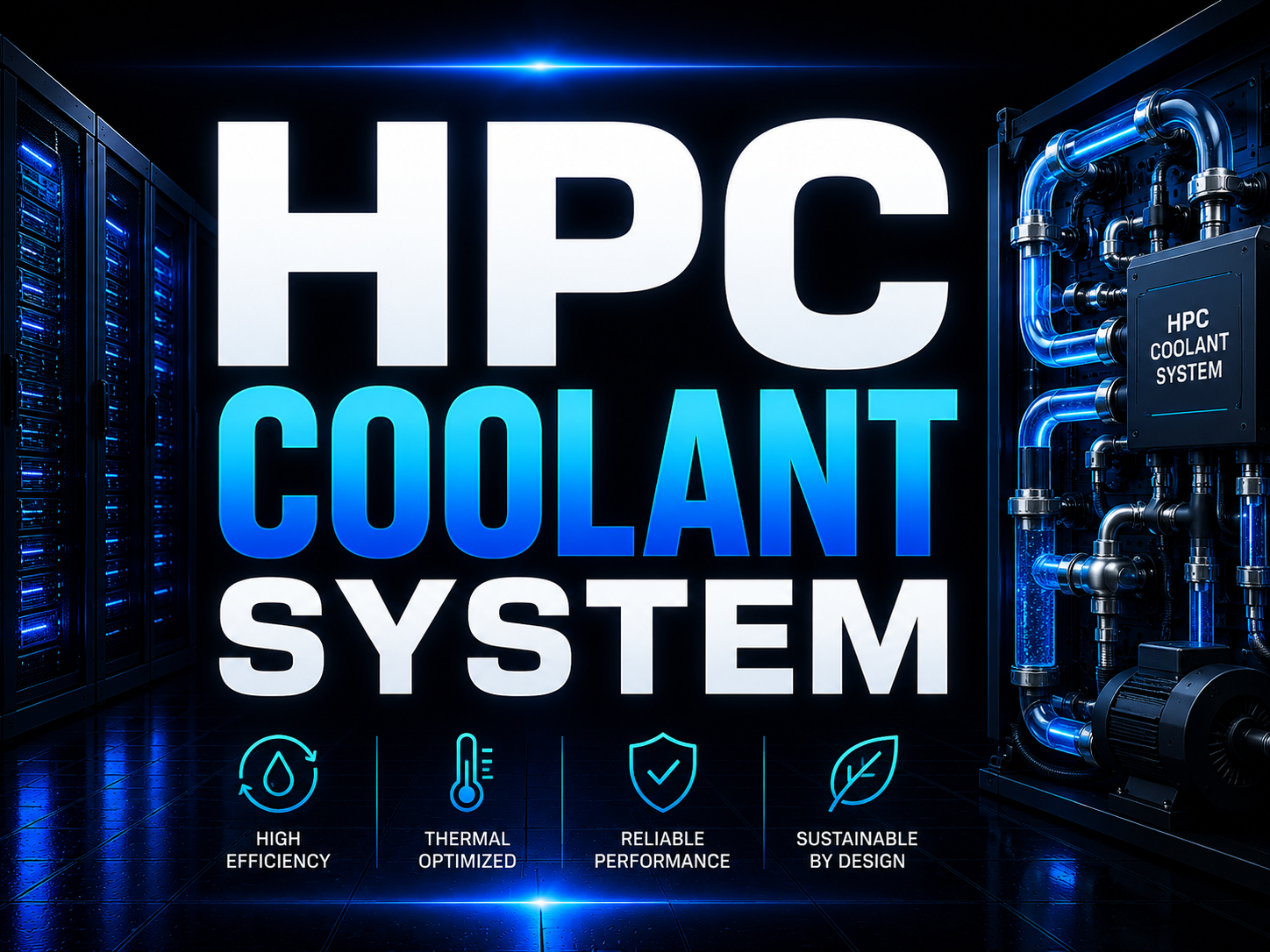
Liquid cooling
Direct-to-chip cooling
Immersion cooling
Networking
Heat rejection
Monitoring and controls
Modular data center infrastructure
The exact configuration depends on the GPU platform, rack density, total IT load and facility requirements.
What Infrastructure Does a GPU Data Center Need?
A GPU data center typically requires five interconnected infrastructure layers:
1. GPU Compute
The GPU servers provide the actual AI or HPC processing capacity.
2. Power
High-density GPU racks can require significantly more electrical capacity than conventional enterprise servers.
Power infrastructure needs to be designed around the GPU configuration, rack density and total IT load.
3. Cooling
The higher the GPU power density, the more important thermal management becomes.
Cooling can include:
• Air cooling
• Direct-to-chip liquid cooling
• Immersion cooling
• Hybrid cooling
4. Networking
AI and HPC workloads require high-bandwidth, low-latency networking to connect GPUs, servers and storage.
5. Heat Rejection
Heat captured from the GPUs ultimately needs to be transferred out of the facility through the appropriate cooling and heat-rejection architecture.
How Much Power Does a GPU Data Center Need?
There is no single answer.
Power requirements depend on:
GPU model
Number of GPUs
GPU utilization
Server configuration
Rack density
Networking
Storage
Cooling infrastructure
Total facility load
For high-density AI infrastructure, power should be evaluated at both the GPU/rack level and the total facility level.
As GPU generations become more powerful, the electrical infrastructure required to support them also needs to evolve.
How Many GPUs Can Fit in a Data Center Rack?
The number of GPUs a rack can support depends on the server configuration, GPU platform, power availability, cooling architecture and physical rack design.
Simply increasing the number of GPUs isn't enough.
A higher GPU density also means:
More compute → More power → More heat → More cooling capacity
This is why GPU density needs to be evaluated together with power and thermal infrastructure.
Do GPUs Require Liquid Cooling?
Not all GPUs require liquid cooling.
However, as GPU power and rack density increase, liquid cooling becomes increasingly important for some high-density AI and HPC deployments.
Liquid cooling options can include:
Direct-to-Chip Cooling
Cold plates transfer heat directly from GPUs and CPUs into a liquid cooling loop.
Immersion Cooling
Servers or components are immersed in a dielectric cooling fluid.
Hybrid Cooling
Liquid cooling handles the highest-power components while air cooling manages other equipment.
Explore Liquid Cooling →
GPU Data Center Cooling
Cooling is one of the most important considerations when designing GPU infrastructure.
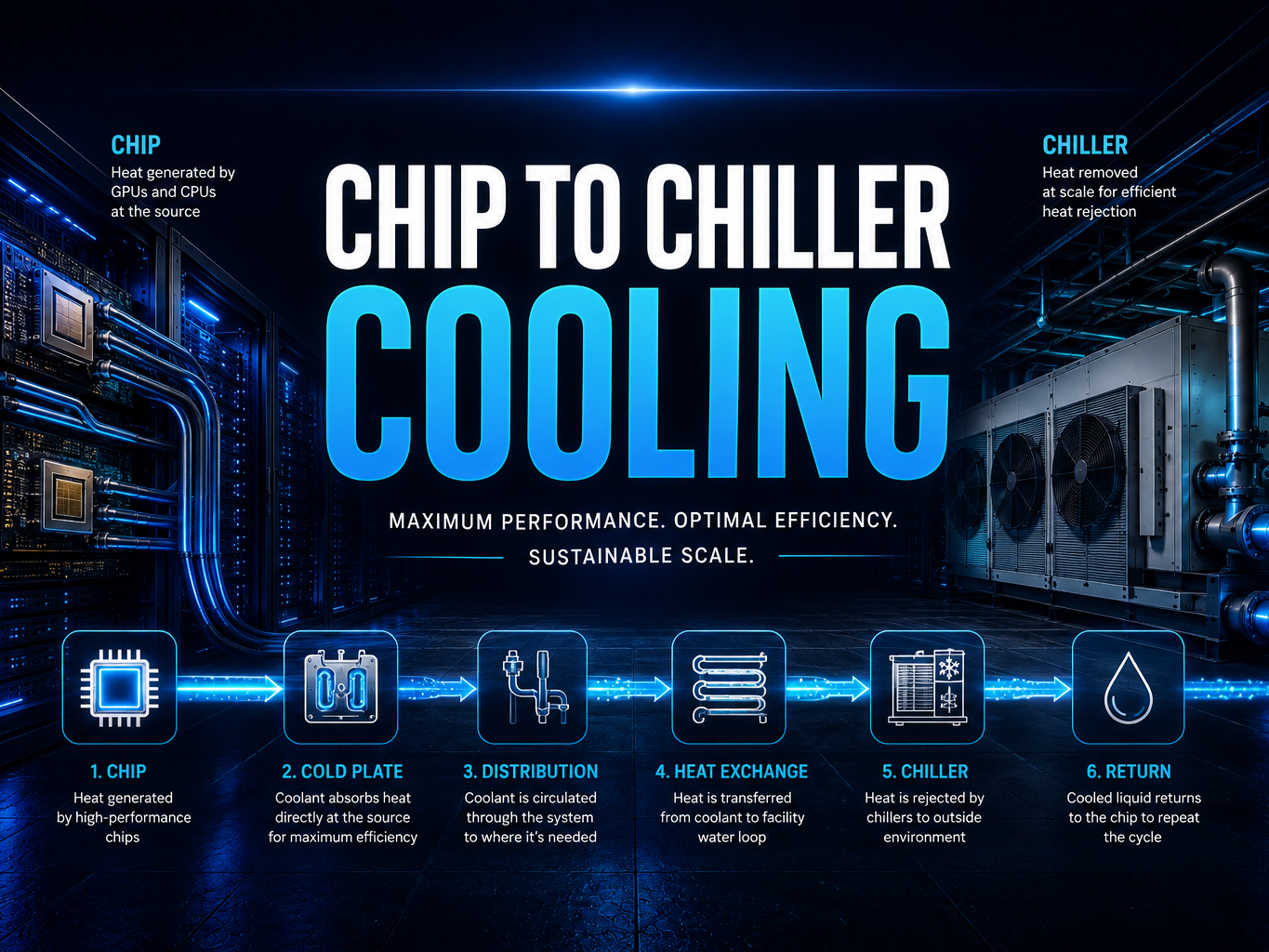
A modern high-density GPU cooling architecture can follow:
GPU → Cold Plate → CDU → Facility Cooling Loop → Heat Rejection
This chip-to-chiller approach considers the entire thermal path rather than simply cooling the server.
For larger AI deployments, cooling should be designed alongside the GPU infrastructure from the beginning.
Explore Chip-to-Chiller Cooling →
GPU Infrastructure for AI
AI workloads can create significantly different infrastructure requirements from conventional enterprise computing.
AI training and inference environments may require:
High GPU density
High-bandwidth networking
High rack power
Advanced liquid cooling
Large-scale power infrastructure
Low-latency connectivity
Scalable thermal management
This makes AI infrastructure design an integrated problem involving compute, power, cooling and networking.
Explore AI Infrastructure →
GPU Infrastructure for HPC
GPU acceleration is also increasingly important for high-performance computing.
HPC environments can require large GPU clusters for:
Scientific computing
Engineering simulations
Research
Machine learning
Computational modeling
High-performance analytics
The same fundamental infrastructure principles apply:
Compute + Power + Cooling + Networking + Heat Rejection
Explore HPC Cooling →
Can GPU Infrastructure Be Modular?
Yes.
High-density GPU infrastructure can be deployed within modular and prefabricated data center architectures.
This can allow organizations to deploy GPU capacity in stages rather than constructing an entire facility upfront.
A modular GPU deployment can integrate:
GPU racks
Power infrastructure
Liquid cooling
Networking
Heat rejection
Monitoring
Facility infrastructure
This approach can be particularly useful when deployment speed and scalability are priorities.
Explore Modular Data Centers →
Do Data Center Providers Supply the GPUs?
It depends on the project.
There is an important distinction between GPU supply and GPU infrastructure.
GPU infrastructure refers to the systems required to power, cool, connect and operate the GPUs.
GPU supply refers to the actual processors or GPU servers.
These can be sourced and contracted separately or incorporated into a broader project scope, depending on the deployment requirements.
How Do I Choose GPU Data Center Infrastructure?
The right infrastructure depends on:
• GPU platform
• Number of GPUs
• Rack density
I• T load
• Power availability
• Cooling requirements
• Networking requirements
• Site conditions
• Deployment timeline
• Future expansion
The key is to design the infrastructure around the compute requirements, rather than selecting the GPUs first and trying to solve power and cooling afterward.
Building a High-Density GPU Data Center?
Whether you're planning an AI training cluster, inference infrastructure or HPC deployment, GPU infrastructure needs to be designed as a complete system.
The GPU is only the beginning.
Power, cooling, networking and heat rejection determine how effectively that compute can actually operate at scale.
Planning a GPU Deployment?
Tell us your GPU requirements, target rack density, power capacity and deployment timeline.
Want to know more? Contact me.