Skid-Based Modular Data Centers
What Is a Skid-Based Modular Data Center?
A skid-based modular data center uses prefabricated infrastructure assembled on a structural skid or frame, allowing key data center systems to be manufactured, integrated and tested off-site before being delivered to the deployment location.
Skid-based solutions can integrate power, cooling, electrical systems and high-density computing infrastructure into a compact, scalable deployment model.
They are particularly relevant for AI, GPU and HPC infrastructure, where speed of deployment, high power density and advanced cooling are increasingly important.
Want to know more? Contact us.
How Does a Skid-Based Data Center Work?
A typical skid-based architecture can bring multiple infrastructure systems together before they arrive on site.
Engineering → Factory Integration → Testing → Delivery → Site Installation → Commissioning
Depending on the project scope, a skid can incorporate:
• Power distribution
• Cooling infrastructure
• Liquid cooling
• Electrical systems
• Controls and monitoring
• GPU or server infrastructure
• Networking
• Supporting mechanical systems
The exact configuration is determined by the required IT load, rack density, cooling architecture and site requirements.
Why Use a Skid-Based Modular Data Center?
Skid-based construction can provide several advantages for high-density computing projects.
Faster Deployment
Systems can be assembled and integrated in a controlled manufacturing environment while site preparation takes place in parallel.
Factory Integration
Major components can be integrated and tested before delivery, reducing the amount of work required on site.
High-Density Infrastructure
Skid-based systems can be designed around the power and cooling requirements of AI and GPU clusters.
Scalable Deployment
Additional infrastructure can be added as compute requirements increase.
Flexible Site Deployment
Prefabricated systems can be suitable for projects where space, construction time or site conditions make conventional construction challenging.
What Can Be Included in a Skid-Based Data Center?
A skid-based solution can be configured around the requirements of the project.
Depending on the scope, this may include:
Power
Electrical distribution and supporting infrastructure.
Electrical distribution and supporting infrastructure.
Cooling
Air cooling, liquid cooling, direct-to-chip or other thermal systems.
Air cooling, liquid cooling, direct-to-chip or other thermal systems.
Compute Infrastructure
GPU servers, racks and supporting systems where included in the project scope.
GPU servers, racks and supporting systems where included in the project scope.
Controls
Monitoring and control systems for power, cooling and equipment.
Monitoring and control systems for power, cooling and equipment.
Networking
Infrastructure required to connect high-performance computing environments.
Infrastructure required to connect high-performance computing environments.
The important consideration is defining the scope of supply before manufacturing begins.
Skid-Based Modular Data Centers for AI & GPUs
AI infrastructure is driving demand for higher rack power and more advanced cooling.
A skid-based architecture can be designed around:
GPU → Rack → Power → Cooling → Facility
For high-density GPU deployments, this can include direct-to-chip liquid cooling, CDUs and advanced heat-rejection infrastructure.
Explore GPU Data Center Infrastructure →
Skid-Based vs. Traditional Data Center Construction
Traditional data center construction relies heavily on site-based assembly.
A skid-based modular approach moves more of the work into a controlled factory environment.
Actual deployment times depend on project scope, site readiness, permitting and equipment availability.
Can Skid-Based Data Centers Support Liquid Cooling?
Yes.
Skid-based infrastructure can be designed around liquid cooling requirements for high-density AI and HPC deployments.
A typical architecture can connect:
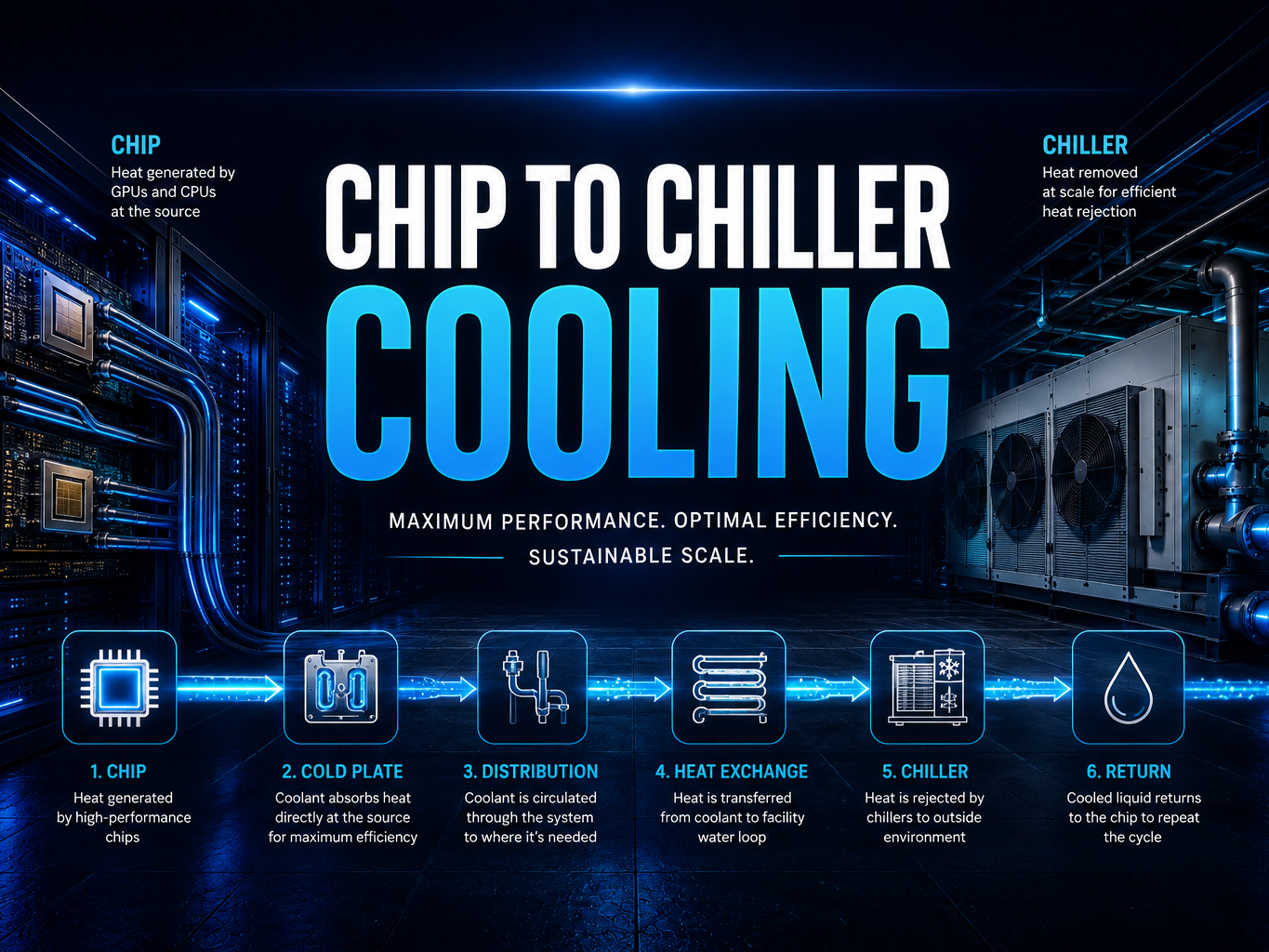
GPU → Cold Plate → CDU → Facility Cooling → Heat Rejection
This allows the cooling infrastructure to be engineered alongside the compute and power requirements.
Explore Direct-to-Chip Cooling →
Can Skid-Based Data Centers Be Expanded?
Yes. One of the advantages of modular infrastructure is the ability to plan for phased capacity expansion.
Organizations can deploy initial compute capacity and add additional modules or infrastructure as requirements grow.
This can be particularly useful for AI deployments where future GPU requirements may be difficult to predict.
How Quickly Can a Skid-Based Data Center Be Deployed?
The timeline depends on:
Project size
• IT capacity
• GPU requirements
• Cooling technology
• Customization
• Manufacturing schedule
• Site preparation
• Power availability
I• nstallation
• Commissioning
Because manufacturing and site preparation can potentially happen in parallel, skid-based modular construction can help accelerate the path from engineering to operational compute.
Frequently Asked Questions
What is a skid-based modular data center?
It is a prefabricated data center infrastructure system assembled on a structural skid or frame and designed for delivery and installation at the deployment site.
What is a data center skid?
A data center skid is a structural platform used to integrate infrastructure such as power, cooling, electrical equipment and other systems into a factory-assembled unit.
Are skid-based data centers suitable for AI?
Yes. They can be designed around high-density GPU, AI and HPC requirements, including advanced liquid cooling.
Can skid-based data centers use liquid cooling?
Yes. Direct-to-chip, rack-level and other liquid cooling architectures can be incorporated depending on the design.
Are skid-based data centers scalable?
Yes. Modular architectures can be designed for phased deployment and future capacity expansion.
Can a skid-based data center be turnkey?
Potentially. The scope can include engineering, manufacturing, infrastructure, installation and commissioning depending on the delivery model.
Skid-Based Modular Data Centers for High-Density Compute
Skid-based modular infrastructure moves critical data center systems from the construction site into a controlled manufacturing environment.
For AI and HPC, this can create a faster and more flexible path to deploying power, cooling and high-density compute infrastructure.
The real advantage is not simply the skid.
It's the ability to integrate the infrastructure around the compute requirement before it reaches the site.
Planning a Skid-Based Data Center?
Tell us your target capacity, GPU requirements, cooling architecture and deployment timeline.
Want to know more? Contact us.